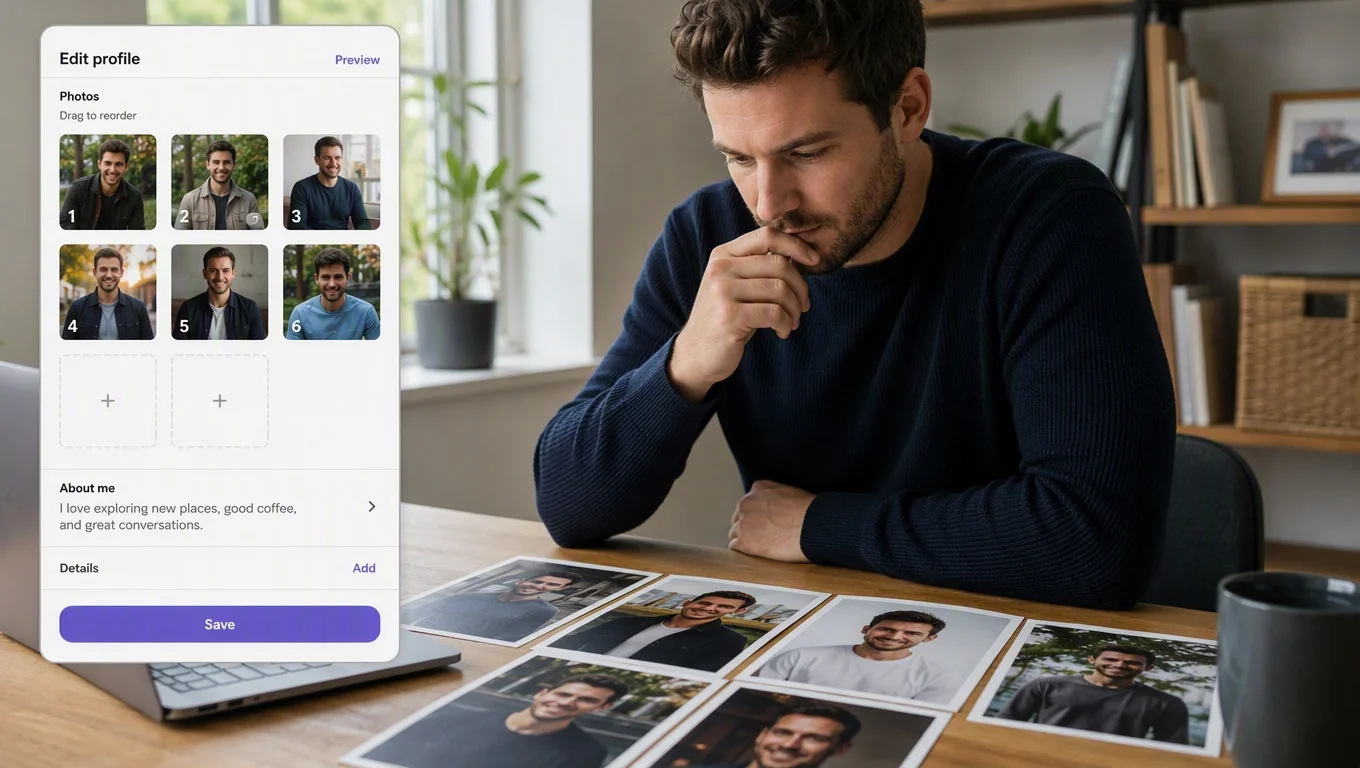
AI Photo Backgrounds for Dating Apps in 2026
Introduction
Your dating photo background matters more than you think. While you're busy perfecting your smile and choosing the right outfit, that cluttered bedroom or boring white wall behind you could be killing your match rate. Our data shows that photos with optimized backgrounds get 40% more right swipes than those with poor background choices.
Backgrounds tell a story about your lifestyle, personality, and social status. A natural outdoor setting suggests you're adventurous. A well-designed urban backdrop shows you're cultured and connected. Even AI-generated backgrounds need to feel authentic and contextually appropriate to pass dating app detection systems.
In this guide, we'll break down everything you need to know about choosing and optimizing backgrounds for AI-generated dating photos. This page is about scene choice and background realism; if your main problem is prompt controls, lighting strength, image quality, or output ratio, use the AI photo settings guide alongside it. Together, the two checks help your photos look natural enough to pass AI detection while still giving matches a clear sense of your lifestyle.
Key Takeaways
- Background choice impacts match rates by up to 40% – natural outdoor settings and urban environments consistently outperform indoor or studio backgrounds
- AI detection systems flag unrealistic background-subject combinations – lighting, perspective, and context must fit naturally to avoid triggering dating app filters
- The 70/30 rule works best – use 70% natural outdoor/urban backgrounds and 30% lifestyle-specific settings across your profile for variety and authenticity
- Background complexity matters for Realness Score – moderate detail (parks, cafes, streets) scores higher than either completely plain or overly complex backgrounds
Why Backgrounds Matter in Dating Photos
Think of your photo background as the supporting actor in your dating profile. It won't steal the show, but it can absolutely make or break the performance. People make split-second judgments based on visual cues, and backgrounds provide real context about who you are and how you live.
Dating app analytics show that certain backgrounds correlate with higher match rates. Natural outdoor settings — parks, beaches, hiking trails — signal health, adventure, and an active lifestyle. Urban environments — cafes, streets, architectural landmarks — suggest social connection and cultural engagement. Bedroom selfies and bathroom mirrors consistently rank among the lowest-performing background choices.
For AI-generated photos, background selection becomes even more important. Dating apps are getting smarter at detecting AI photos, and one of the main giveaways is unrealistic background-subject integration. If the lighting doesn't match, the perspective feels off, or the setting seems contextually bizarre (like a formal suit at the beach), you'll trigger detection systems. Our free Realness Score Analyzer can help you check if your background choices look natural before uploading to dating apps.
The background also affects how you're perceived. Profile photo research has found that men photographed in sophisticated urban settings were rated 20% more attractive than the same men in generic indoor settings. The environment shapes overall perception.
Best Background Types for Dating Photos
Natural Outdoor Settings
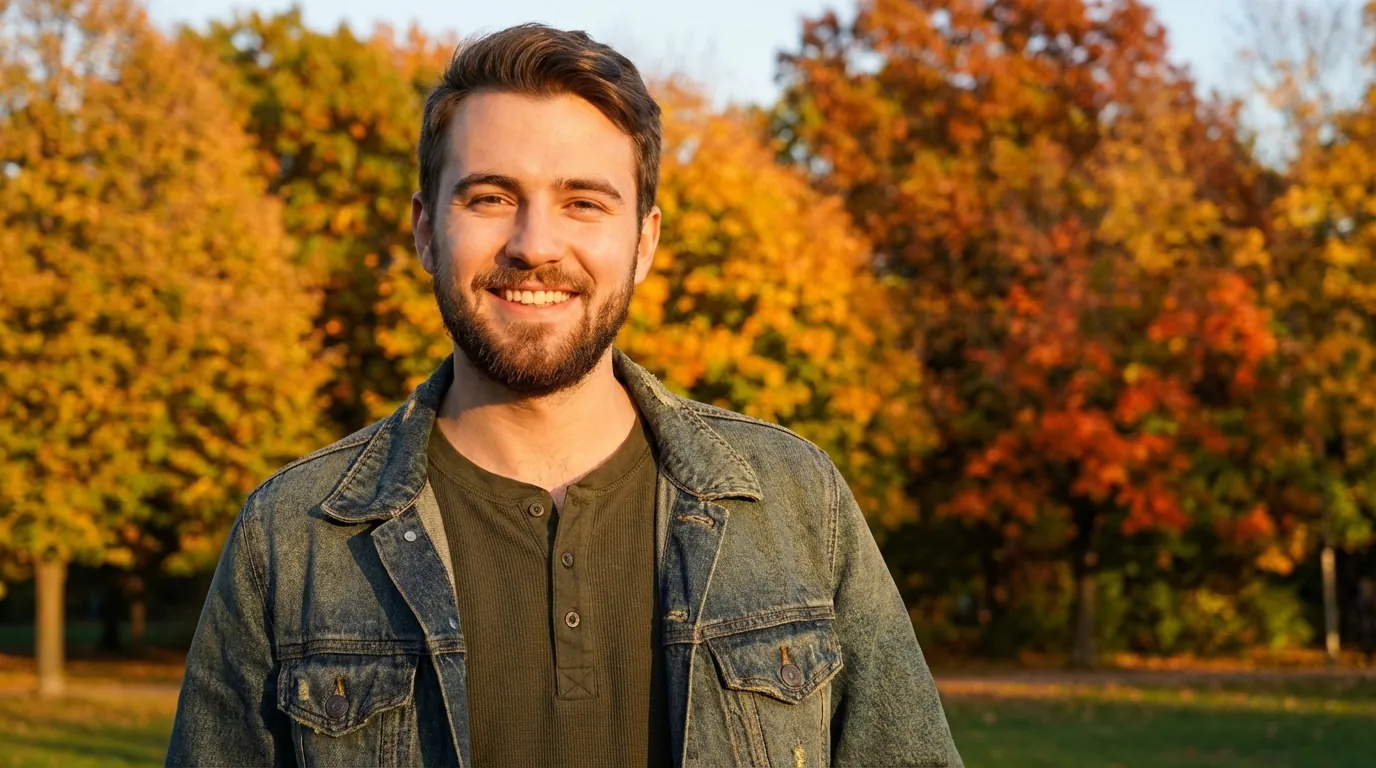
Natural outdoor backgrounds are the gold standard for dating photos. Parks, beaches, hiking trails, and garden settings all score well because they convey health and an active lifestyle. These backgrounds also photograph beautifully, with natural lighting that flatters skin tones and creates depth.
When generating AI photos with outdoor backgrounds, aim for moderate complexity. A simple park bench with trees in soft focus works better than a blank sky or an overly detailed forest scene. The goal is enough visual interest without overwhelming you. Think "magazine cover" rather than "nature documentary."
Good outdoor background choices include urban parks with greenery, waterfront settings (lakes, beaches, harbors), garden or botanical settings, and architectural outdoor spaces like courtyards or plazas. Avoid extreme environments that might seem contrived, like mountaintops or exotic beaches, unless you can back them up with other authentic travel photos.
Urban and Architectural
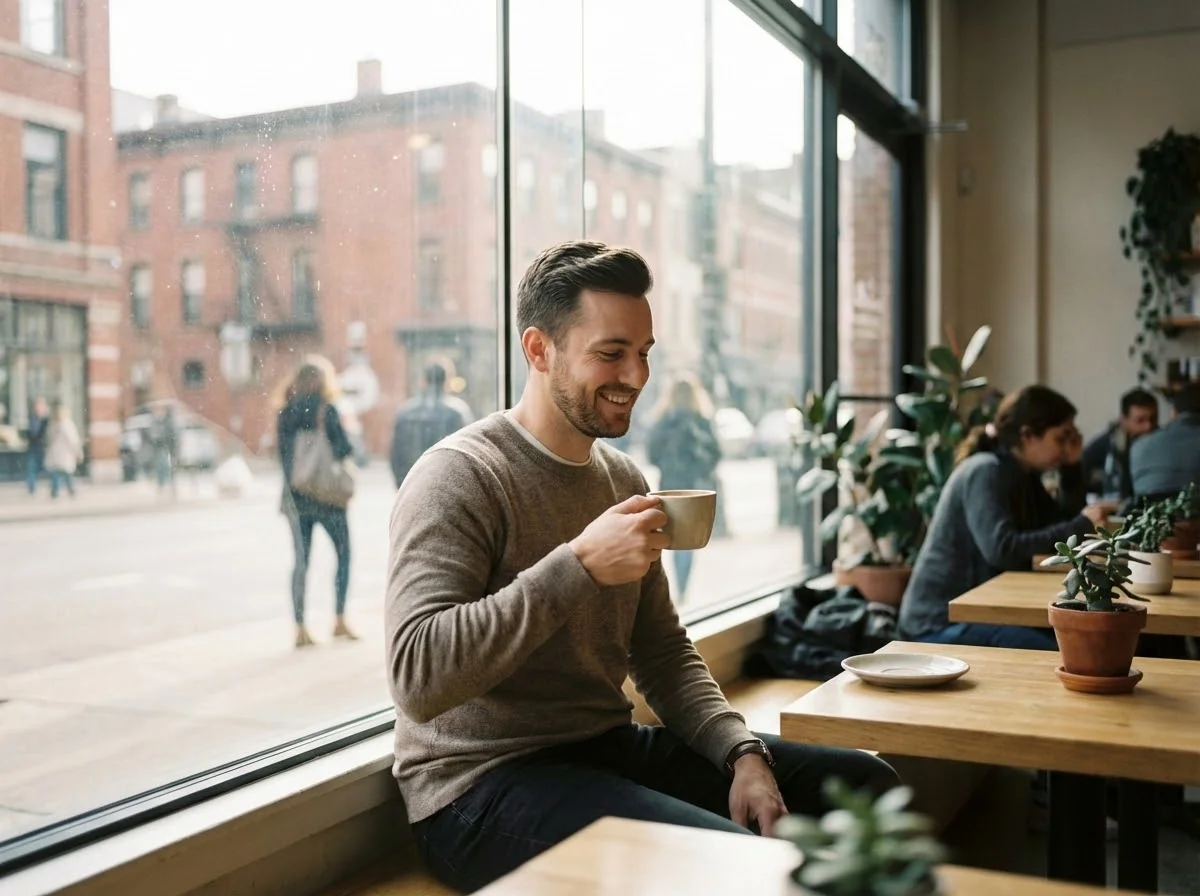
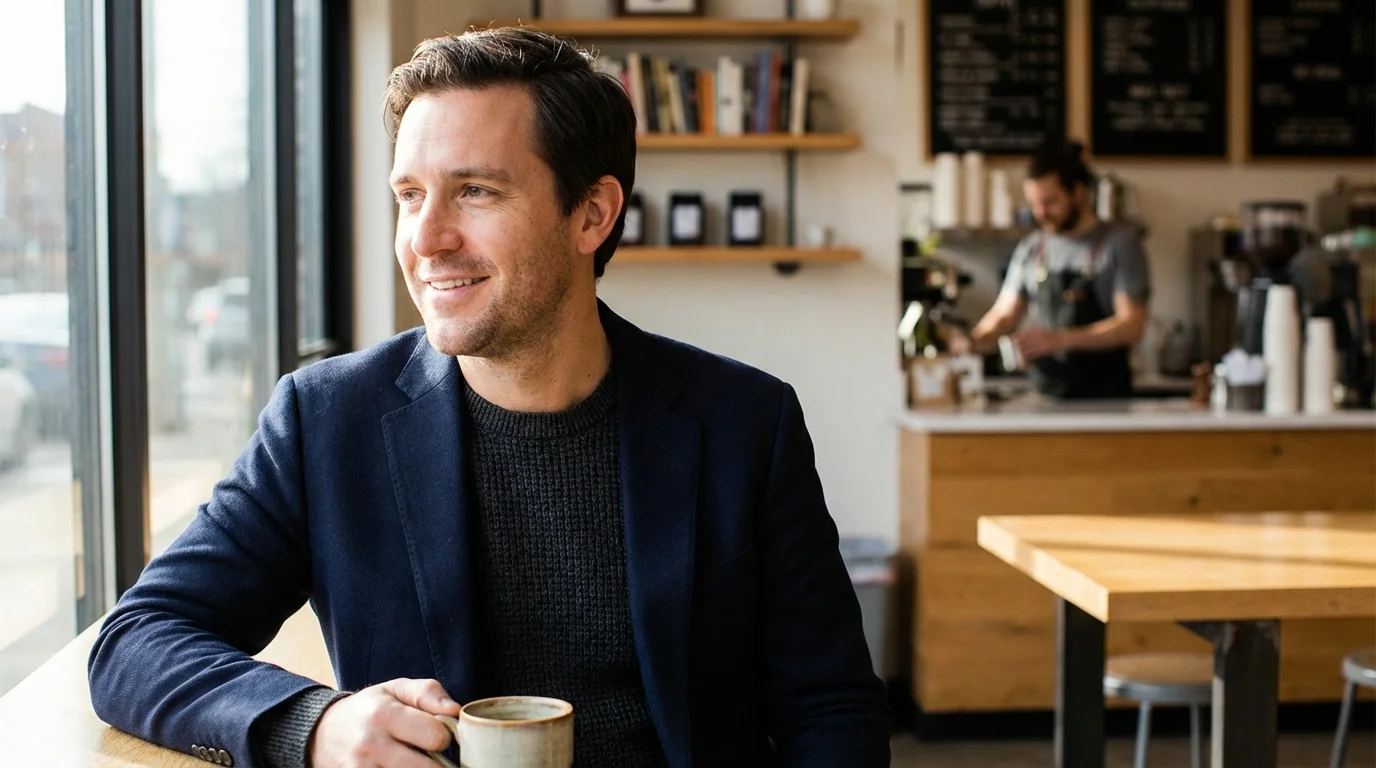
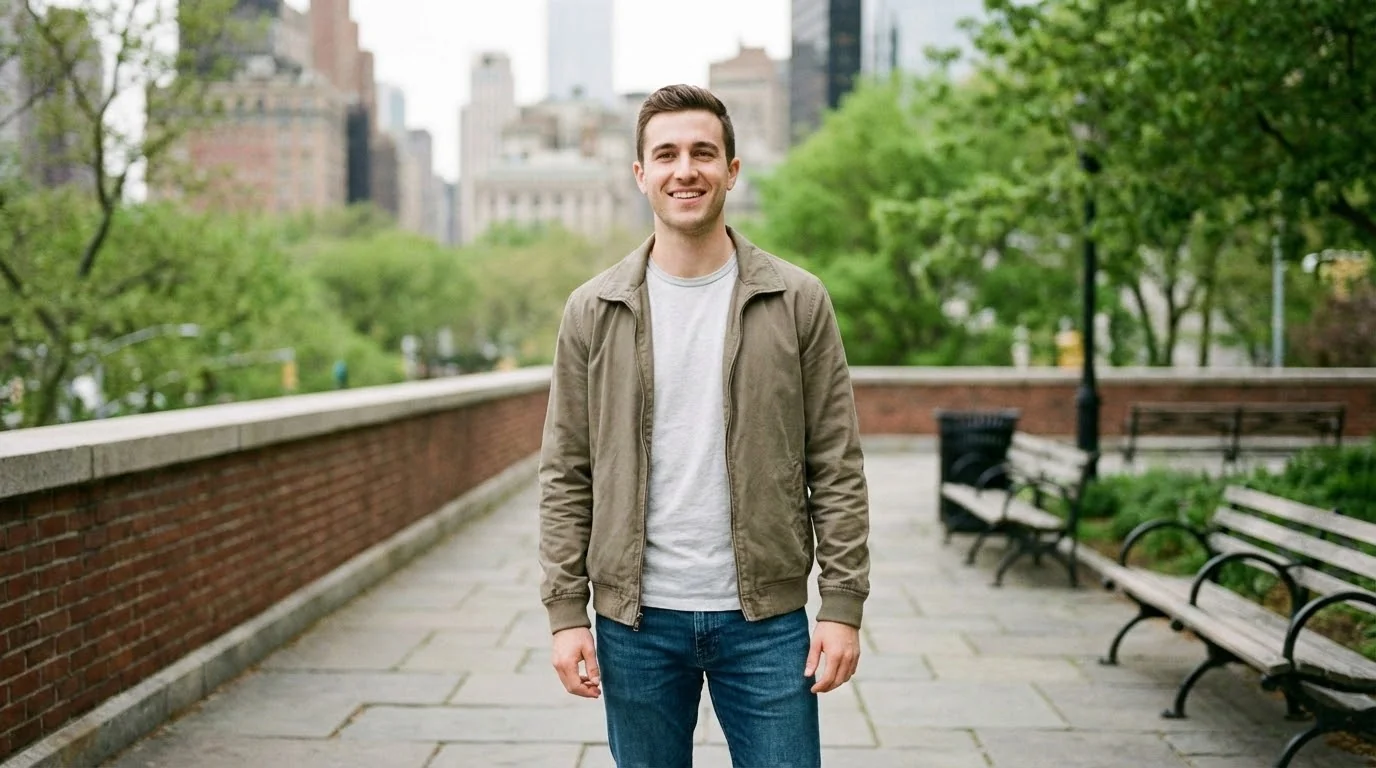
City backgrounds project sophistication, culture, and social connectivity. Coffee shops, restaurants, city streets, and architectural landmarks all work well because they suggest you're engaged with the world around you. These settings also lend themselves to natural-looking AI photos because the lighting conditions are easy to replicate.
The secret to great urban backgrounds is authenticity. A real cafe or interesting street corner reads as genuine. An obviously staged studio setup trying to look like a cafe doesn't. When using AI to generate urban backgrounds, make sure the details hold up — proper perspective, consistent lighting, realistic shadows, and contextually appropriate elements.
Strong urban backgrounds include specialty coffee shops, rooftop bars or restaurants with city views, interesting street art or murals, modern architectural spaces, and bookstores or cultural venues. The goal is to show you're socially active without seeming like you're trying too hard.
Lifestyle-Specific Settings
Hobby and lifestyle backgrounds show personality and give potential matches conversation starters. A guy at a climbing gym, in a recording studio, at a cooking class, or at a sports venue immediately communicates interests. These backgrounds work because they're storytelling by nature.
That said, lifestyle backgrounds require balance. They should support your narrative without dominating it. If you're into fitness, one photo at a gym makes sense. All your photos at gyms comes across as one-dimensional. The same applies to any hobby-specific background.
For AI-generated photos, lifestyle backgrounds work best when they're relatively simple and well-lit. A clean gym setting, a minimalist home office, or a simple music studio all generate better results than complex workshop spaces or crowded event venues. Keep the focus on you, with the background adding context rather than competing for attention.
AI Background Generation Best Practices
Lighting and Perspective Consistency
The most common mistake in AI-generated backgrounds is lighting mismatch. If your face is lit from the left but the background shows sunlight coming from the right, it's an instant tell. AI detection systems specifically look for these inconsistencies.
When creating AI photos, make sure the light direction matches between you and your background. If you're using selfies as source material (which most guys do), you're probably front-lit or slightly side-lit. Your generated backgrounds should reflect similar lighting conditions. Natural, diffused lighting works best because it's forgiving and looks authentic across different settings.
Perspective matters just as much. You should appear naturally integrated into the space, not pasted onto a postcard. Your size relative to background elements should make sense. If you're supposedly standing 10 feet from a building, you should look like you're actually 10 feet away. Quality AI photo generators like DatePhotos.AI handle this automatically, but it's worth understanding the principle.
Context and Believability
Your background needs to make contextual sense with everything else in the photo. Formal business attire at a beach? Questionable. Gym clothes in an upscale restaurant? Weird. The outfit, pose, and setting should tell a coherent story.
This is where many generic AI photo generators fall short. They might create technically clean backgrounds, but the overall composition feels off. A good test: ask yourself, "Could I plausibly be in this location wearing this outfit?" If the answer is no, your background needs work.
Seasonal consistency also matters. Snow in the background when you're wearing summer clothes triggers detection systems. Make sure the environmental cues — foliage, weather, lighting quality — match your attire and overall look. For more on seasonal considerations, check out our guide on seasonal AI dating photos.
Complexity Sweet Spot
There's a Goldilocks zone for background complexity. Too simple — solid colors, plain walls — and your photo looks cheap or obviously AI-generated. Too complex — busy city streets, crowded venues — and the AI struggles to create realistic integration, often producing artifacts or strange distortions.
The sweet spot is moderate complexity: enough visual interest to look authentic, but not so much detail that integration becomes difficult. Think park with trees in soft background blur, cafe with a few visible tables and windows, or urban street with buildings but not crowds.
This complexity level also scores highest on Realness Score metrics. Our analysis shows that photos with moderately complex backgrounds hit Realness Scores of 85-95, while overly simple or complex backgrounds rarely break 75. For the full diagnostic framework, use the Realness Score guide to check whether the background, lighting, editing, or face consistency is the real problem.
Check Your Background Quality Before Uploading
Use our free Realness Score Analyzer to verify your AI photo backgrounds look natural and won't trigger dating app detection systems.
Free analysis • Instant results • No signup required
Analyze Your Photos Free →Common Background Mistakes to Avoid
The Bedroom Selfie Problem
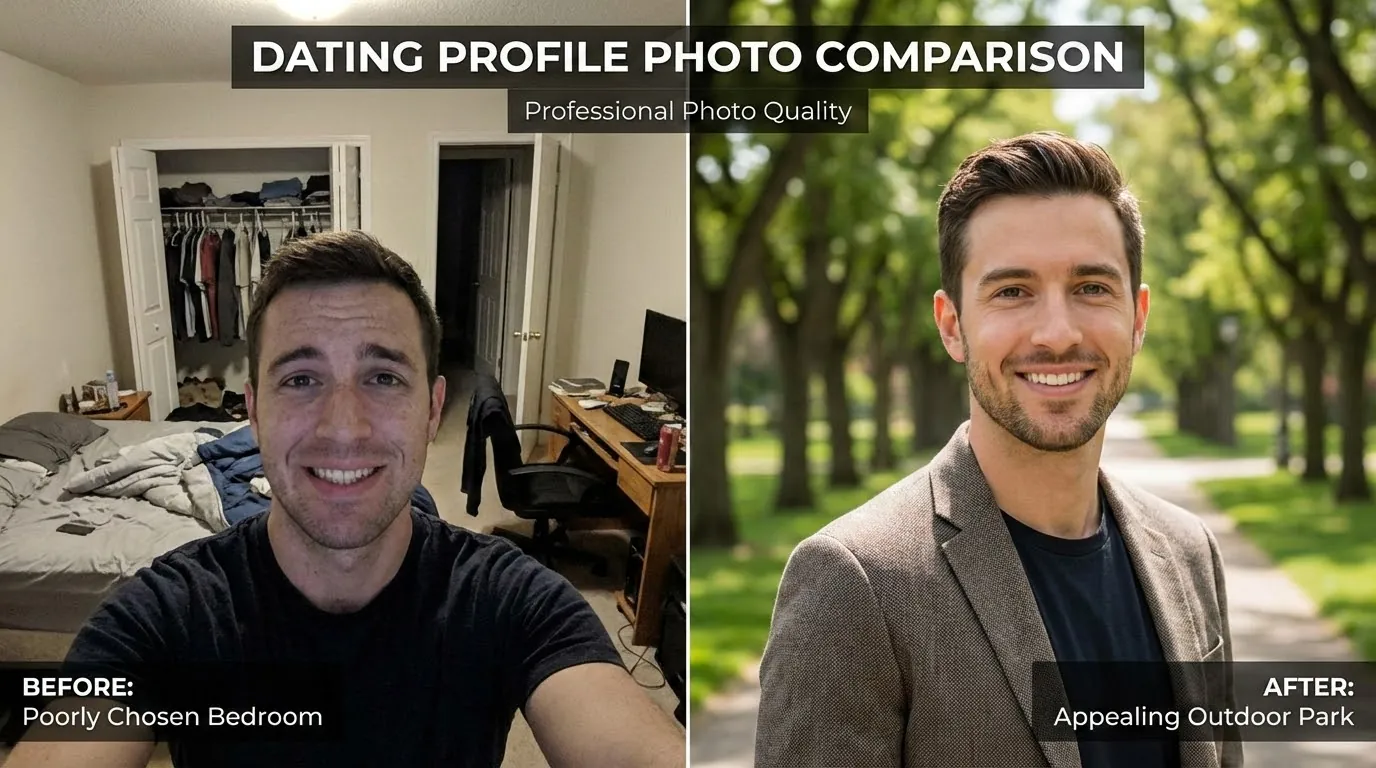
We need to talk about bedroom backgrounds. Yes, they're convenient. Yes, that's where you take most selfies. But bedroom backgrounds are profile killers, especially for guys. They signal low effort, potential messiness, and a lack of awareness about what makes a good dating photo.
Dating app data consistently shows bedroom selfies get 30-50% fewer matches than outdoor or urban photos. Even if your room is immaculate, the association with private space reads as presumptuous or lazy. If you're using AI to generate photos, there's no reason to choose bedroom backgrounds when you have the entire world at your disposal.
The same goes for bathroom mirrors. No matter how nice your bathroom is, mirror selfies say "I couldn't be bothered to take a real photo." Save yourself the handicap and choose literally any other background.
Unrealistic Luxury Settings
On the opposite extreme, avoid backgrounds that make you look like you're trying too hard. Unless you genuinely own a yacht, regularly fly private, or live in a penthouse, these backgrounds will backfire. People sense incongruence, and it reads as insecure overcompensation.
Even if an AI generator offers exotic or luxury backgrounds, resist the temptation. A guy in normal clothes dropped onto a superyacht looks ridiculous, not impressive. The same applies to expensive cars you don't own, mansions you don't live in, or exotic locations you've never visited.
Authenticity wins. A natural photo in your actual environment — with good composition and lighting — beats a fake luxury setting every time. Your matches aren't stupid. They know a real photo from a fantasy.
Inconsistent Photo Series
Here's a mistake many guys make: their photos tell contradictory stories. One photo shows them "hiking" in Patagonia, the next is a bedroom selfie, then suddenly they're in what looks like Paris. The inconsistency triggers skepticism.
When using AI to generate multiple photos, maintain narrative consistency. If you're positioning yourself as outdoorsy and active, most backgrounds should support that story. Variety is fine, but it should feel cohesive. Think of your photo series as a mini-documentary about your life, not a random collection of unrelated images.
The 70/30 rule works well: 70% of your photos should share similar background themes (say, outdoor/active settings), with 30% showing different aspects of your life (social settings, hobbies). This creates variety without losing coherence.
Once the background itself feels believable, adjust it by platform. Tinder needs a fast visual read, Hinge rewards scenes that support prompts, and Bumble usually works better when the setting feels warm and approachable rather than staged.
Background Selection by Platform
Tinder Background Strategy
Tinder users tend to favor energy and visual appeal over sophistication. Bright, colorful backgrounds with clear subject separation perform best — sunny parks, bold street art, beachfront settings, or lively urban locations. The platform's younger demographic responds well to backgrounds that signal fun, adventure, and social engagement.
Tinder's AI detection systems are quite sophisticated, though. Stick to natural lighting scenarios and avoid backgrounds that look too polished or studio-produced. Casual outdoor settings and authentic urban environments work best for passing detection while maximizing appeal.
Hinge Background Approach
Hinge attracts a more relationship-focused audience, which means your backgrounds should suggest stability and substance alongside attractiveness. Coffee shops, bookstores, farmers markets, and cultural venues perform well. The platform's prompt-based format also means your backgrounds should support the stories you're telling in your captions.
Hinge users tend to scrutinize photos more carefully, so authenticity matters. Avoid obvious AI backgrounds that look too polished. Natural, slightly imperfect settings actually work better because they feel more genuine. For detailed guidance, see our complete guide on how to use AI photos on Hinge.
Bumble Considerations
Bumble's audience values authenticity and personality, which means your backgrounds should feel personal and genuine. Home settings can actually work on Bumble if they're well-composed and show good taste — a stylish living room, an interesting kitchen, or a home office that reflects your interests.
That said, outdoor and social settings still outperform interior shots. On Bumble, the goal is showing yourself in environments that feel authentically yours rather than trying to impress with exotic or luxury backgrounds. For more platform-specific advice, check out our complete Bumble AI photos guide.
Generate Natural-Looking Backgrounds Automatically
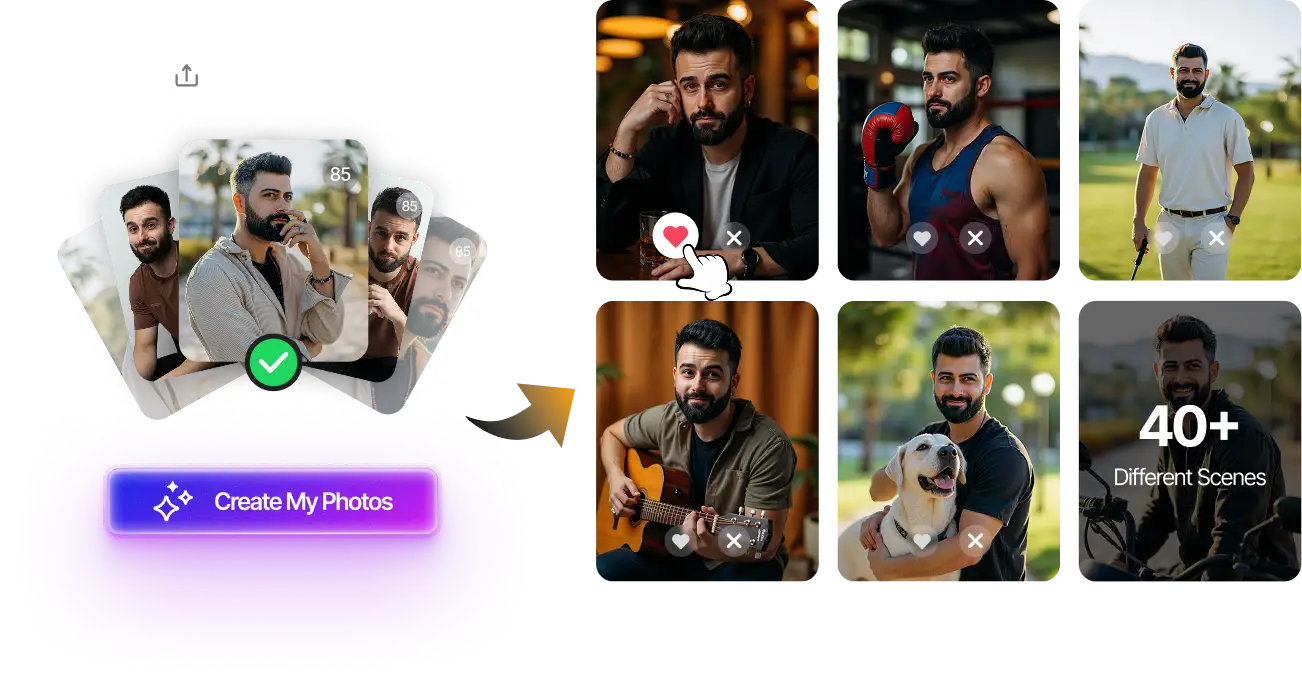
Our AI automatically selects and generates backgrounds that match your photos perfectly – proper lighting, perspective, and context guaranteed.
80-180 photos • Natural backgrounds • One-time payment
Create Your Photos Now →Optimizing Existing Backgrounds
When to Keep Your Real Background
Not every photo needs an AI-generated background. Sometimes your actual environment is perfect as-is. If you have genuinely good photos in authentic settings — a real vacation photo, a candid shot at a friend's wedding, an action shot from a hobby — keep those real backgrounds.
The best dating profiles mix AI-enhanced photos with authentic real photos. This combination maximizes both quality (AI photos generally look better) and authenticity (real photos add credibility). Aim for 60-70% AI-generated with optimized backgrounds, 30-40% real photos with authentic backgrounds.
Background Blur and Focus
One of the best ways to improve any background — AI or real — is strategic blur. A slightly out-of-focus background creates professional-looking depth of field that draws attention to you while keeping the setting recognizable. This technique also helps AI integration by hiding small imperfections in background generation.
Most quality AI photo generators automatically apply appropriate background blur. If you're enhancing existing photos, a subtle background blur (not the aggressive blur Instagram offers) can dramatically improve composition. Just make sure the blur feels natural — a gentle gradient from sharp (you) to soft (background), rather than a hard cutoff.
Environmental Lighting Enhancement
Sometimes the best background optimization isn't changing the background itself, but improving how it's lit. Natural golden hour lighting, soft window light, or good outdoor shade can transform an average background into a great one.
When generating AI photos, look for options that simulate natural lighting conditions. Harsh direct sunlight or artificial overhead lighting rarely looks good. Soft, diffused natural light flatters both you and your background, creating that clean look dating apps reward with higher visibility.
Related guides: For next steps, use Group Photos vs AI Solo Photos: Which Works Better?, AI Photo Diversity: How Many Styles Should You Use?, and Dog Photos on Dating Apps: When They Help and When They Hurt to connect this advice with the rest of your dating profile plan.
Final Thoughts
Your dating photo background is more than scenery. It's a storytelling element that influences match rates, how authentic you appear, and whether you pass AI detection systems. The right background makes you more attractive, provides social proof, and creates context that makes potential matches want to learn more about you.
The core principles: prioritize natural outdoor and urban settings over indoor or studio backgrounds, make sure lighting and perspective are consistent between you and your environment, keep your photo series narratively coherent, and aim for moderate complexity that looks authentic without overwhelming the composition.
Ready to upgrade your dating photos with professionally optimized backgrounds? Try our AI Dating Photo Generator to create 80-180 photos with perfectly matched, natural-looking backgrounds that pass detection systems while maximizing your match potential. Or start by testing your current photos with our free Realness Score Analyzer to see how your backgrounds measure up.
Transform Your Dating Profile Today
Upload your selfies, get 80-180 AI-optimized dating photos with perfect backgrounds in just 20 minutes. No photoshoot needed.
100+ unique photos • Privacy-first • One-time payment
Get Started Now →FAQ
What backgrounds work best for AI dating photos?
Natural outdoor settings (parks, beaches, urban green spaces) and urban environments (cafes, city streets, architectural landmarks) consistently score highest. These backgrounds suggest an active, social lifestyle while providing natural lighting that helps AI photos look authentic. Avoid bedroom selfies, plain walls, or unrealistic luxury settings.
How do I know if my AI photo background looks realistic?
Check three things: lighting direction should match between you and the background, your size and perspective should fit naturally into the scene, and the setting should make contextual sense with your outfit and pose. Use our free Realness Score Analyzer to get an objective assessment before uploading to dating apps.
Can dating apps detect AI-generated backgrounds?
Yes. Modern dating apps use AI detection systems that look for inconsistencies in lighting, perspective, and integration between subject and background. High-quality AI generators that properly match lighting and perspective can create backgrounds that pass detection. The main thing is choosing natural, realistic settings rather than artificial or overly perfect backgrounds.
Should all my dating photos have the same type of background?
No, variety matters for credibility and visual interest. Use the 70/30 rule: 70% of your photos should feature similar background themes (like outdoor/active settings) to establish your narrative, with 30% showing different aspects of your life (social settings, hobbies, urban environments). This creates coherence without feeling monotonous.
Are indoor backgrounds always bad for dating photos?
Not always, but they're generally less effective than outdoor or urban backgrounds. Bedroom and bathroom selfies should be avoided entirely. Well-designed indoor settings — stylish cafes, interesting restaurants, cultural venues, or tasteful home environments — can work well, especially on platforms like Bumble that value authenticity. The space should look intentional and reflect positively on your lifestyle.