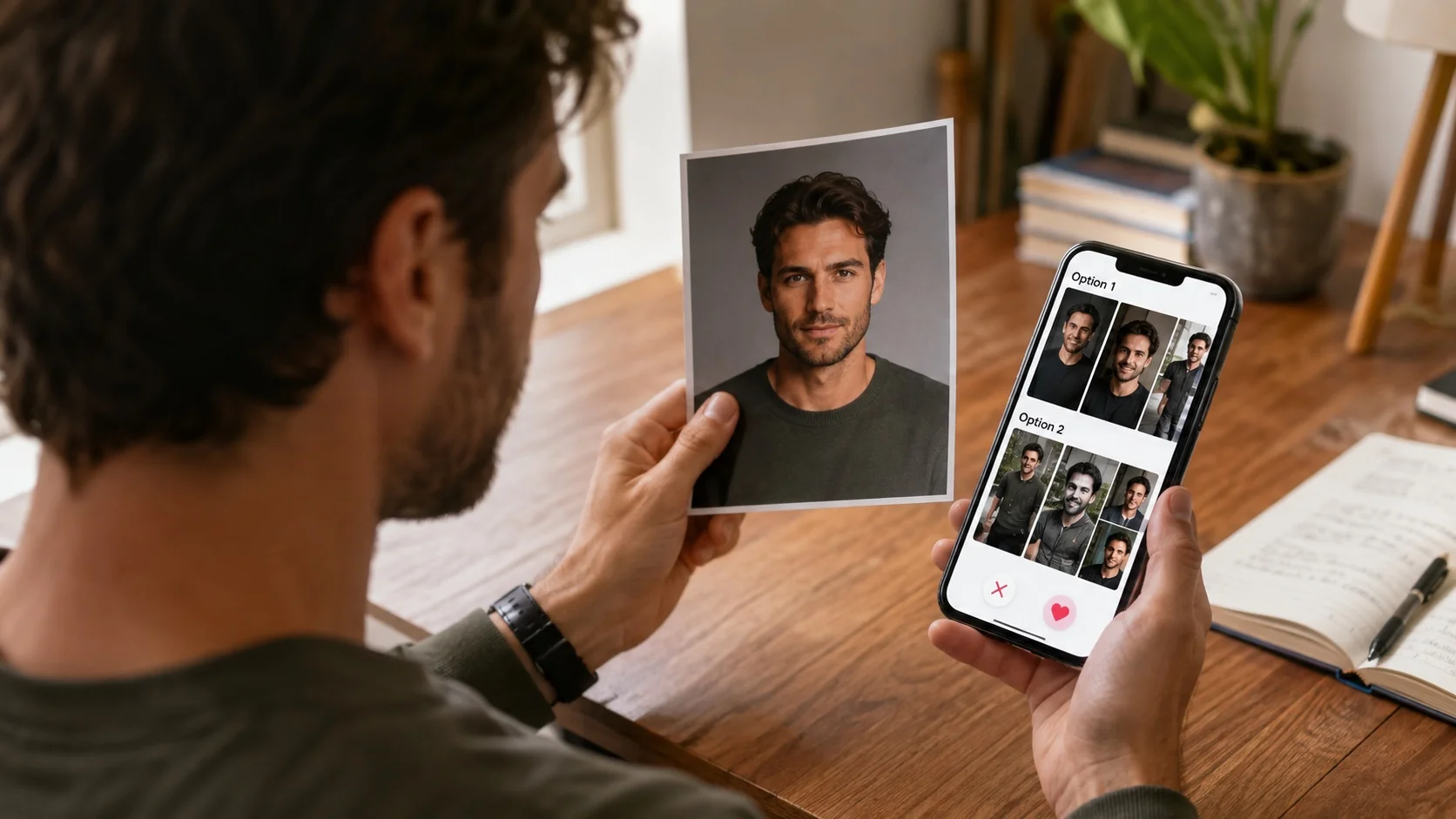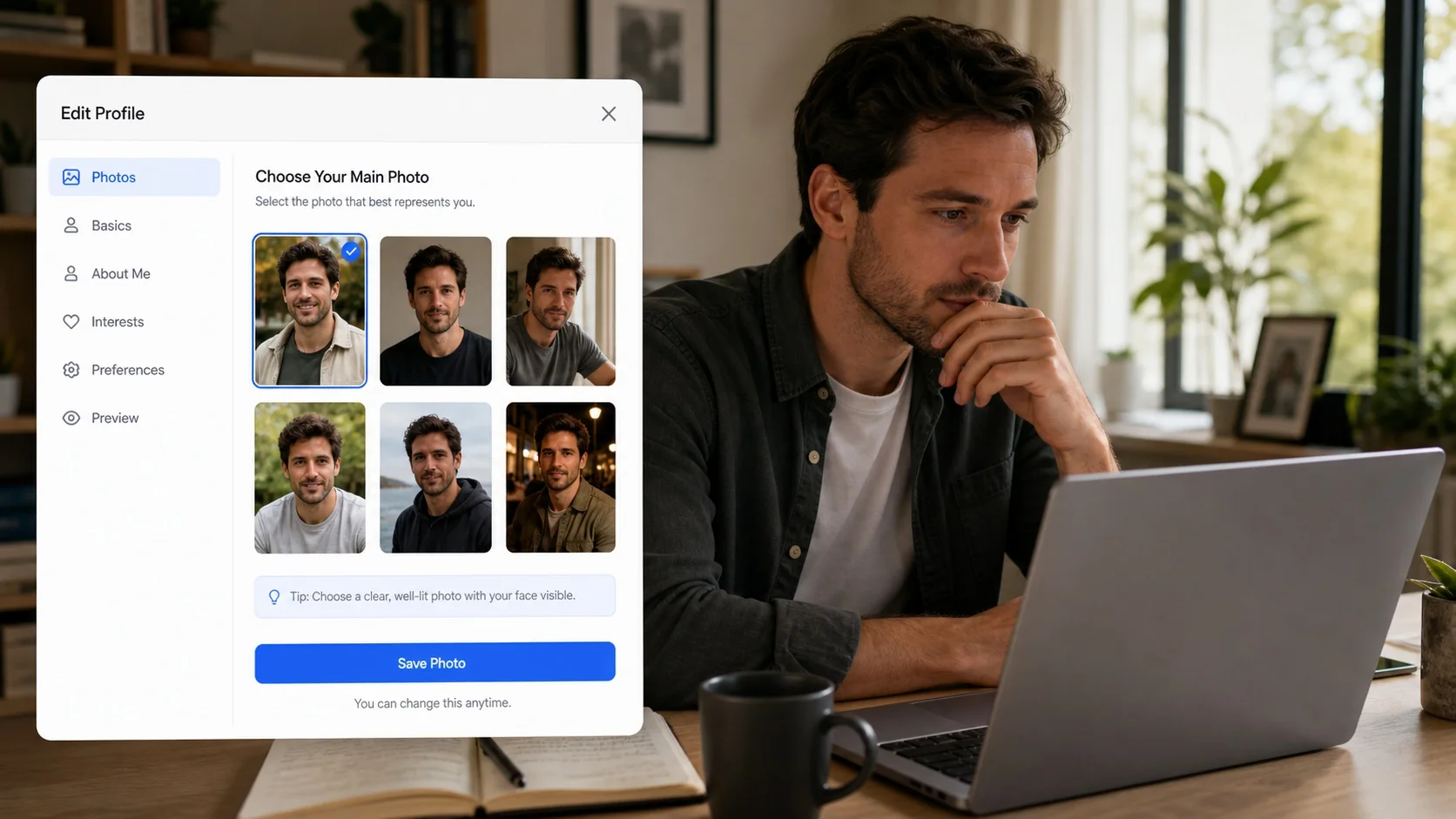
The Authenticity Paradox: Why AI Dating Photos Are More 'Real' Than Your Selfies in 2026
The Photo on Your Profile Isn't Really You — And You Know It
Here's an uncomfortable truth: that selfie you took in bathroom lighting, holding your phone at a desperate angle? That isn't really you either. That's a stressed version of you, on a Tuesday afternoon, squinting at a 6-inch screen trying to look effortlessly attractive. And yet somehow, the debate around authentic dating photos in 2026 keeps treating AI-generated photos as the fake ones and phone selfies as the honest ones.
It doesn't hold up. Once you look at what "authenticity" actually means on a dating app, the whole argument flips. The real question isn't whether your photos were taken by a camera or generated by AI. The real question is: which photo actually looks like the best, most confident version of yourself?
Let's break down the authenticity paradox — and why more men are realizing that AI photos look more real in 2026 than anything they could capture with their phone.
Key Takeaways
- Authenticity ≠ unedited. Every photo you take gets compressed, filtered, and processed algorithmically before it reaches your profile. AI photos are just one step further along that spectrum.
- Selfies systematically misrepresent you. Bad lighting, awkward angles, and photo anxiety produce images that don't reflect how you look in person.
- AI photos trained on your face are based on you. They show your actual features in optimal conditions, not a stranger's face.
- Dating app algorithms reward quality. Better photos get more visibility, which means higher-quality images lead to better representation of your dating potential.
- The meeting test is what matters. If someone meets you and thinks "you look just like your photos," the photos were authentic — regardless of how they were made.
What Does "Authentic" Actually Mean on a Dating App?
Before we can resolve the authenticity paradox, we need to be clear on what the word means here. Most people mix up two different things:
- Process authenticity: How the photo was taken (phone camera, DSLR, AI generator)
- Representational authenticity: Whether the photo accurately represents how you look and who you are
Dating only cares about the second one. Nobody on Tinder audits your Lightroom history. They're asking one thing: Does this person look like someone I'd want to meet?
And here's the thing — representational authenticity is where selfies fail. A study by researchers at the University of California found that standard front-facing smartphone cameras introduce lens distortion that can make noses appear up to 30% wider than they actually are. The selfie you hate isn't failing because it's honest. It's failing because it's a distortion — a technically "real" photo that produces a false impression of your appearance.
An AI photo trained on 20–30 of your actual selfies learns your real facial geometry, your eye shape, your jawline — and renders it without those distortions. The output is a photo of your actual face, not a warped lens artifact. In terms of representational authenticity, which is more "real"?
This is the core of the AI vs real photos dating debate that most people get completely backwards.
Why This Matters More in 2026 Than Ever Before
The stakes around dating photo authenticity have risen. In 2026, dating apps are more sophisticated about photo quality, profile verification, and user expectations have shifted. Here's why the old "just use real photos" advice no longer holds:
Everyone's Photos Are Processed Now
Think about what happens to a photo between your phone and your dating profile. Your camera applies computational photography, multi-frame processing, and AI-enhanced HDR. Instagram and Snapchat apply beautification filters. The apps compress and reformat images. By the time your "authentic" selfie appears on someone's screen, it's been through four to six layers of algorithmic processing. The idea that there's some pure, unprocessed photo somewhere in that chain is a myth.
Dating App Algorithms Penalize Low-Quality Photos
Platforms like Tinder and Hinge use photo quality signals in their matching algorithms. Blurry, poorly lit, or low-resolution photos don't just look bad to humans — they score lower in automated quality assessments that affect your visibility. A bad selfie doesn't just fail to impress. It actively reduces how many people see your profile. In 2026, poor representational authenticity has real algorithmic consequences.
The Competition Has Upgraded
Men who previously dominated dating apps with mediocre phone photos are increasingly using professional-quality images — whether from photographers or AI generators. If your competitors show up with optimized, well-lit, professionally framed photos, your bathroom selfies aren't "more authentic." They just make you look like you put in less effort. In 2026, dating app authenticity partly means showing that you take the process seriously.
Transform Your Dating Profile Today
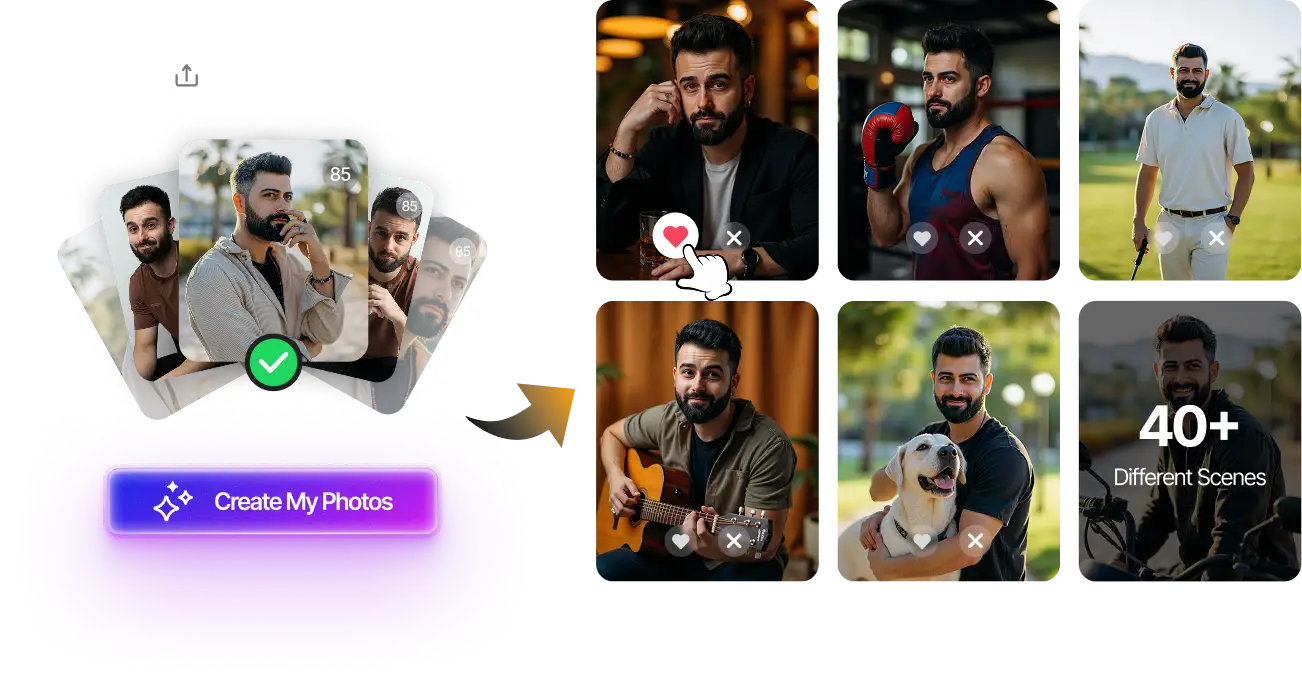
Upload your selfies, get 80-180 AI-optimized dating photos in just 20 minutes. No photoshoot needed.
100+ unique photos • Privacy-first • One-time payment
Get Started Now →How AI Dating Photos Actually Work (And Why They're Based on the Real You)
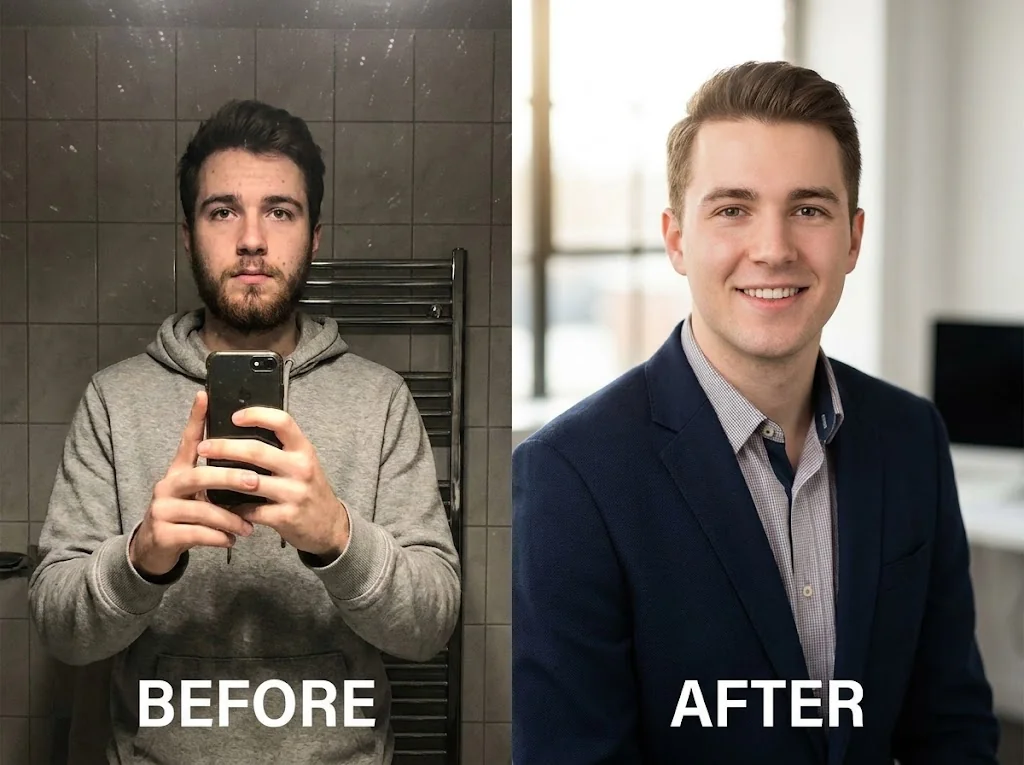
One common misconception about AI dating photos is that they replace your face with someone else's — like a filter that makes you look like a different person. That's not how modern AI photo generation works.
Here's what actually happens when you use a service like DatePhotos.AI:
- You upload 20–30 of your own photos. These can be selfies, casual photos, anything you already have. The AI trains specifically on your face.
- The system builds a personalized model of your appearance. This model understands your facial structure, skin tone, eye shape, and other features unique to you.
- New photos are generated using your face. Different lighting setups, backgrounds, outfits, and expressions — all of them rendered using the same underlying face model based on your real features.
- The output shows you under optimal conditions. Great lighting, flattering angles, natural expressions — the same factors a professional photographer would control for.
Notice what this process doesn't include: using someone else's face, inserting fictional features, or fabricating an appearance you don't have. The AI does something closer to what a skilled portrait photographer does — finding the best version of the subject.
When you compare this to a selfie taken under fluorescent bathroom lighting with fish-eye lens distortion, which photo gives the viewer a more accurate impression of your actual appearance? The answer is increasingly obvious.
If you're new to this, our complete guide to creating AI dating photos walks through every step, including how to select your best source photos for training.
The Meeting Test
There's a practical authenticity benchmark that cuts through the philosophical debate: what happens when you actually meet someone from a dating app? If they immediately recognize you and say "you look just like your photos," the photos were authentic. Period. Multiple users who've used AI-generated dating photos report exactly this. The AI didn't make them look like someone else. It made them look like themselves in good lighting, which is what happens when you meet someone in a well-lit restaurant rather than a dimly lit bathroom.
Best Practices for Authentic-Feeling AI Dating Photos
Just because AI photos can be authentically representative doesn't mean all AI photos are automatically great. There's real skill and judgment involved in making AI-generated images that feel natural. Here's what works:
Use Variety, Not Perfection
One telltale sign of poorly done AI photos is that every shot looks identical — same pose, same lighting, same pristine background. Real life has variation. Use AI to generate photos across different settings: outdoors, indoors, casual, slightly more dressed-up. This variety signals authenticity because it mirrors how real photos accumulate over time.
For guidance on building a well-rounded photo mix, the breakdown on 10 photo types every dating profile needs is useful — the same principles apply whether your photos are AI-generated or phone-taken.
Match the Photos to Your Real Life Contexts
If you live in a city and go on coffee dates, don't generate AI photos showing you hiking in Patagonia in gear you've never owned. The contexts should reflect your actual lifestyle. AI gives you flexibility to choose any setting — use it to represent who you actually are, not who you wish you were. A remote worker might generate photos in a coffee shop or home office. Someone active might choose outdoor settings. The point is that contexts should be plausible and true to your life.
Keep Your Expression Recognizable
The best AI photos maintain consistency with how your face actually moves and expresses. Avoid generating images with unnatural expressions or ones you'd never actually make. A genuine-looking slight smile almost always works better than a forced wide grin — and better reflects how you'd actually look on a date.
Don't Over-Optimize Into Uncanny Valley
There's a risk of over-editing AI photos into something that looks too perfect — skin that's too smooth, symmetry that's too precise, lighting that's too even. Counterintuitively, a small amount of natural imperfection increases perceived authenticity. Choose photos from your AI batch that feel slightly more casual and spontaneous, not just the ones that look like magazine covers.
Understanding your AI photo realness score is one of the best ways to calibrate whether your images hit the right balance between quality and natural appearance.
Pair AI Photos with 1–2 Genuine Candid Shots
A profile mixing high-quality AI photos with one or two genuine, less-polished photos reads as more authentic than an entirely perfect profile. The candid shot might be a group photo from an event, a vacation photo, or an in-the-moment capture. This combination signals: "I look good, and here's evidence that this is genuinely me."
Transform Your Dating Profile Today
Upload your selfies, get 80-180 AI-optimized dating photos in just 20 minutes. No photoshoot needed.
100+ unique photos • Privacy-first • One-time payment
Get Started Now →Common Mistakes That Make AI Photos Feel Inauthentic
If AI dating photos sometimes feel "off," it's almost never because they're AI-generated. It's because specific, avoidable mistakes were made in the generation or selection process. Here's what to watch for:
- Generating a face that doesn't match your source photos. If the AI model wasn't trained well, the output might not accurately represent your features. Always use clear, well-lit source photos from multiple angles.
- Choosing extreme close-up shots only. Profiles showing nothing but face close-ups feel oddly anonymous. Include some full or three-quarter length shots.
- Using identical backgrounds across every photo. Five photos with the exact same blurred wall behind you is a red flag. Vary your settings.
- Ignoring your bio. The most authentic-feeling profile combines great photos with a bio that sounds genuinely like you. AI photos paired with a generic or template-generated bio creates a disconnect that undermines both. See common bio mistakes that ruin your AI photos to avoid this.
- Going too aspirational on contexts. Photos showing you in implausible contexts (a yacht you don't own, a penthouse that isn't yours) might look great initially but set up a jarring mismatch at the first date. Authenticity is about managing expectations accurately.
Final Thoughts
The authenticity paradox comes down to this: we've been measuring dating photo authenticity by the wrong metric. Whether a human hand held the camera has very little to do with whether the photo accurately shows who you are. By the metric that actually matters, AI photos trained on your face often outperform selfies. Not because they're deceptive, but because they eliminate the technical distortions that selfies systematically introduce.
In 2026, the men getting the most matches aren't necessarily the most photogenic — they're the ones who've figured out how to present their genuine selves in the best possible light. AI is simply the most efficient tool available for doing that. If someone meets you after seeing your AI photos and thinks you look just like your profile, you haven't deceived them. You've just shown up as the best version of yourself — which is what every great first impression requires.
Ready to see what your authentic best looks like? Try DatePhotos.AI and generate 80–180 optimized dating photos based entirely on your own face, in under 20 minutes.
Transform Your Dating Profile Today
Upload your selfies, get 80-180 AI-optimized dating photos in just 20 minutes. No photoshoot needed.
100+ unique photos • Privacy-first • One-time payment
Get Started Now →FAQ
- Are AI dating photos considered deceptive or catfishing?
- Not when they're generated from your own face. AI photos trained on your actual photos represent your real appearance — they're not using someone else's face or fabricating features you don't have. The key test is whether someone recognizes you when you meet in person. Most users who use AI photos report that matches say they look just like their profile, which is the definition of non-deceptive.
- Do dating apps in 2026 allow AI-generated profile photos?
- Policies vary by platform, but most major dating apps including Tinder, Hinge, and Bumble permit AI-generated photos as long as they represent the real user and aren't used deceptively. The key is that the photos should accurately represent your appearance. Platforms are more focused on preventing catfishing and fake accounts than on the technical method used to create photos.
- Why do my selfies look worse than I do in person?
- Front-facing smartphone cameras use wide-angle lenses that introduce significant distortion, particularly affecting facial proportions — noses can appear up to 30% wider than they actually are. Additionally, bathroom or indoor lighting flattens features and creates unflattering shadows. This is why many people find that selfies don't reflect how they actually look in person. AI photos eliminate these distortions by rendering your face under optimal, controlled conditions.
- How do I make sure my AI dating photos look like me?
- The quality of your AI photos depends heavily on the quality and variety of the source photos you provide for training. Use 20–30 clear, well-lit photos that show your face from different angles and in different lighting conditions. Avoid using filtered or heavily edited source photos — the AI should learn your real face. When selecting final photos from the generated batch, choose ones where the face most closely matches your reflection in a mirror.
- Should I mix AI photos with real photos on my dating profile?
- Yes — a mixed profile often performs best. Use 3–4 high-quality AI photos as your primary profile images to create a strong first impression, then include 1–2 genuine candid or casual photos to add variety and reinforce that the photos represent a real, consistent person. This combination tends to feel more authentic to viewers than an entirely perfect gallery, while still maintaining the quality advantage that AI photos provide.