Tinder, Hinge & Bumble AI Photo Policies in 2026
Tinder, Hinge & Bumble AI Photo Policies in 2026
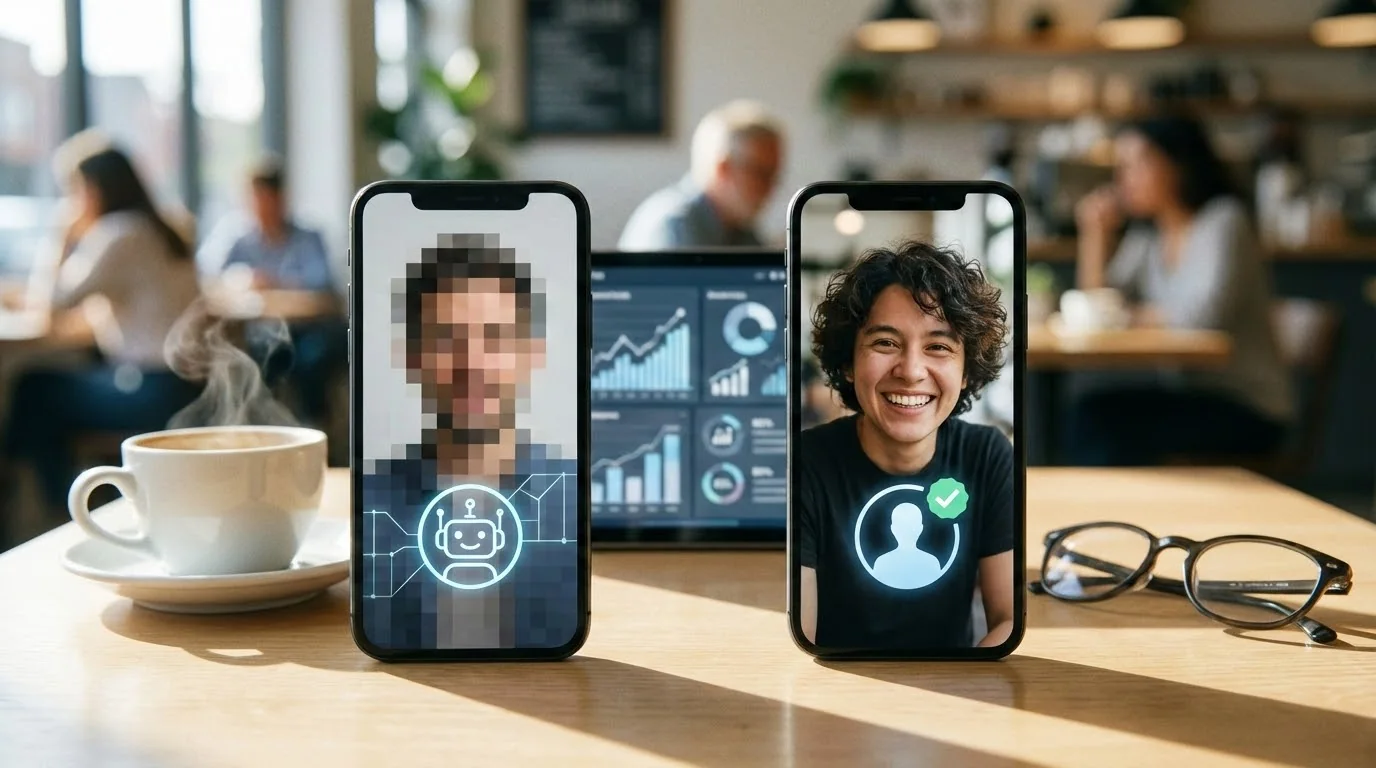
Short answer: Tinder, Hinge, and Bumble do not treat every AI-assisted dating photo the same way. The public rules focus on authenticity, identity, and whether a photo misleads people about what you actually look like.
For Tinder specifically, the safer route is realistic AI Tinder photos that keep your face, age, and everyday style consistent while improving the first-swipe lineup.
This guide compares the practical AI-generated photo policy risk across Tinder, Hinge, and Bumble in 2026. Use it as a decision framework: what is lower risk, what is likely to create reports or moderation review, and how to keep AI dating photos realistic enough for dating apps and real matches.
For broader profile feedback beyond photo policy, use the free dating profile optimizer to check your bio, app angle, and photo mix before you upload a full AI photo set.
Key Takeaways
- Tinder AI photo policy risk is highest when photos suggest a fake identity, spam behavior, or a version of you that does not match real life.
- Bumble AI photo policy risk centers on inauthentic profiles, verification trust, user reports, and whether your photos feel misleading.
- Hinge AI photo policy risk is tied to misrepresentation and whether AI-generated content could deceive matches.
- AI dating photos are not the problem by themselves; deceptive likeness changes, fake lifestyles, and synthetic-looking full profiles are the problem.
- The safest 2026 strategy is personalized generation, realistic settings, real-photo mixing, and gradual profile updates.
Platform-by-Platform AI Photo Policy Snapshot
Public app rules change, and the platforms do not reveal every ranking or moderation signal. The stable SEO answer is this: treat AI dating photos as acceptable only when they remain an accurate representation of you.
| App | Public rule to respect | Lower-risk AI photo use | Higher-risk behavior |
|---|---|---|---|
| Tinder | Community guideline expectations around safe, authentic use and account integrity | Photos trained on you that match your current appearance | Fake identity cues, spammy profile behavior, misleading edits, or ban evasion |
| Bumble | Inauthentic profile rules around misleading identity or behavior | Realistic AI-assisted photos mixed with clear real photos | Celebrity lookalikes, stock-photo aesthetics, heavy retouching, or unverifiable profile sets |
| Hinge | Terms that prohibit misrepresentation and misleading use of generated content | Photos that look like a natural, current version of you | Non-representative AI likenesses, fantasy scenes, or photos that surprise people in person |
Tinder: Accuracy and Account Trust Matter
Tinder risk is usually not about one polished photo. It is about the whole trust pattern: fake-looking images, suspicious account behavior, misleading identity signals, or repeated reports. Keep your AI dating photos grounded in your real appearance and avoid changing every photo at once.
Bumble: Verification and Authenticity Matter
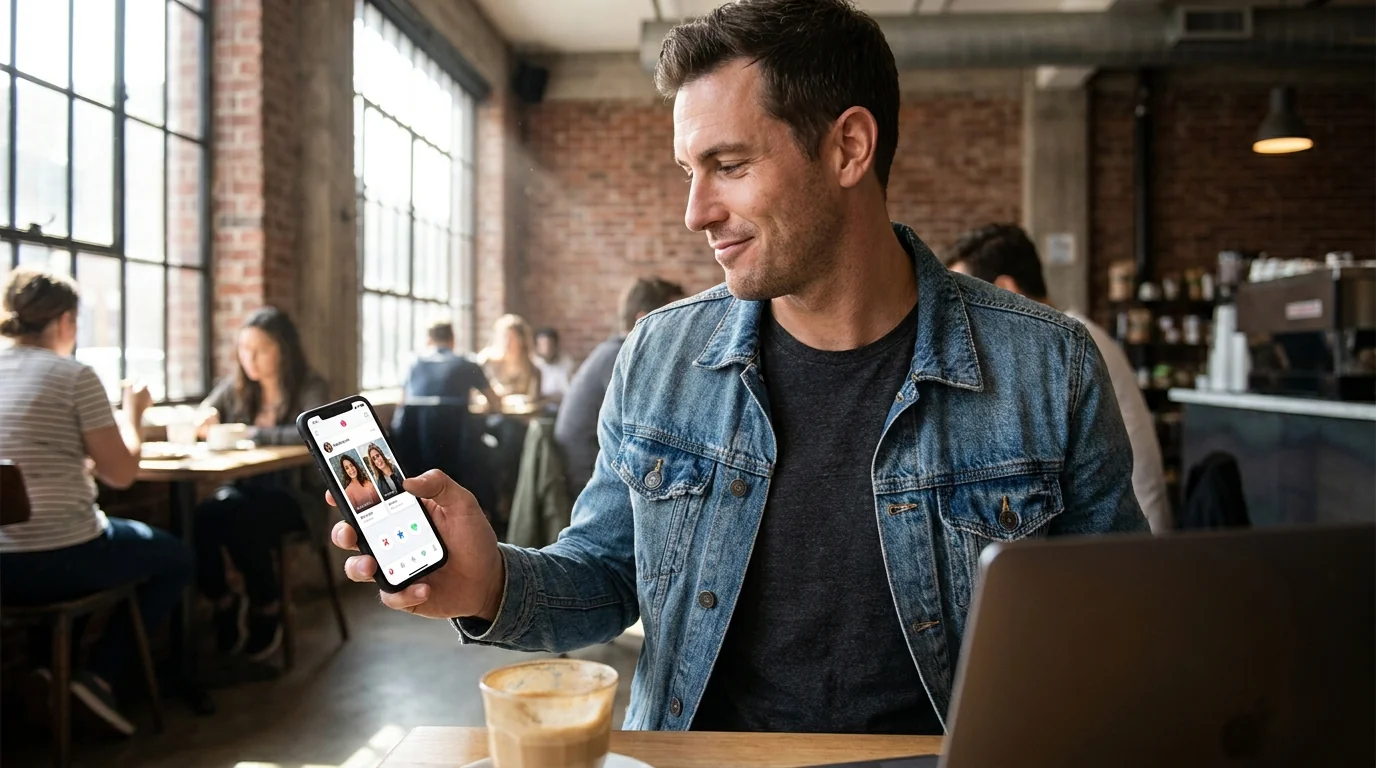
Bumble users are especially sensitive to whether a profile feels real. AI photos should support trust, not replace it. Mix generated photos with real candids, keep your face consistent, and avoid scenes that look like ads or stock images.
Hinge: Representation and Match Expectations Matter
Hinge profiles invite comments on specific prompts and photos, so mismatched or over-polished AI images can create user skepticism quickly. The safest Hinge AI photo looks like a real moment from your life, not a perfect render of someone similar to you.
Are Your AI Photos Safe for 2026?
Use our free AI Realness Score Analyzer to check if your photos meet the new 2026 authenticity standards across Tinder, Bumble, and Hinge.
Free analysis • Instant results • No signup required
Check Your Photos Free →Do Tinder, Hinge & Bumble Detect AI Photos in 2026?
Short answer: none of the three apps runs a public, confirmed AI-image classifier that scans every profile photo. What they do run is verification and moderation systems that unrealistic AI photos reliably trip. What actually gets people caught: failing verification, getting reported, or looking "off" enough that matches assume they're fake.
Does Tinder detect AI photos?
Tinder does not systematically scan profile photos for AI generation. Its main line of defense is Photo Verification: a video selfie matched against your profile photos with 3D face mapping. If your AI photos don't look like the person in the video selfie, you lose the blue checkmark or fail verification entirely. AI photos trained on your real face that keep your current appearance pass; heavily idealized ones don't. The second detection path is user reports: profiles that read as "too perfect" get reported as fake, which triggers human review.
Does Hinge detect AI photos?
Hinge relies on Selfie Verification plus moderation signals rather than a dedicated AI-photo scanner. Photos that keep natural skin texture, consistent lighting, and your real facial features pass review in practice; plastic-looking skin, warped backgrounds, and mismatched features are what get profiles flagged. We break down the full mechanism, and what happens if you're flagged, in our guide to using AI photos on Hinge.
Does Bumble detect AI photos?
Bumble is the most proactive of the three. Since 2024 it has run a Deception Detector, machine learning that blocks fake and inauthentic profiles (most before any human sees them), alongside photo verification. That system targets identity deception, not AI-assisted photography itself: realistic AI photos of the actual account owner are a different case from a fabricated persona. The practical bar on Bumble is the same as everywhere else, just enforced harder: your photos must look like you and hold up next to a verification selfie.
The pattern across all three: detection targets fakes, not AI tools. If your photos are trained on your own face and stay realistic, the systems above have nothing to catch. If they're idealized past recognition, every one of these apps will surface it: at verification, at moderation, or on the first date.
Your 2026 AI Photo Strategy: What Actually Works Now
The platforms shifted, but the fundamentals of a good AI photo strategy remain the same — they've just gotten stricter. Here's what a smart approach looks like in 2026.
Prioritize Likeness Over Idealization
The biggest mistake people make with AI dating photos is using them to become someone else. The tools are powerful enough to make you look dramatically different — but that's exactly what gets accounts flagged and dates canceled.
The goal isn't to look perfect. It's to look like the best, most confident, most photogenic version of yourself. AI tools that train on your personal photos — like a LoRA-based system — do this far better than generic generators that produce a handsome face that happens to resemble you.
If you want to understand why personalized AI training produces better and safer results, the breakdown in our personalized AI training vs generic AI photos guide is worth reading before you choose a tool.
The 70/30 Mix Still Works — With a Catch
The blended profile approach — roughly 70% AI-optimized photos, 30% candid real photos — remains effective in 2026. It signals authenticity to both the algorithm and the person swiping.
The catch is that your real photos need to match your AI photos. If there's a visible quality gap between your AI photos and your candid shots, it raises red flags for matches. Worse, if your AI photos look dramatically better than your real photos, you're setting yourself up for poor conversion from matches to dates.
Platform-Specific Adjustments
Don't use the same photo set on every platform. Each app has a different visual culture:
- Tinder: High-energy, confident. Lead with a strong close-up. AI headshots with natural backgrounds perform well. Avoid anything that looks like a fashion shoot — it reads as fake to Tinder's audience.
- Bumble: Lifestyle-forward. AI photos showing you in context (coffee shop, outdoors, casual social setting) outperform studio-style shots. Complete the video verification badge before uploading.
- Hinge: Story-driven. Hinge profiles reward variety — your AI photos should span different settings and moods. A consistent, ultra-polished set across all six slots looks suspicious; mix in one or two candid-style images.
What Works on All Three Platforms in 2026
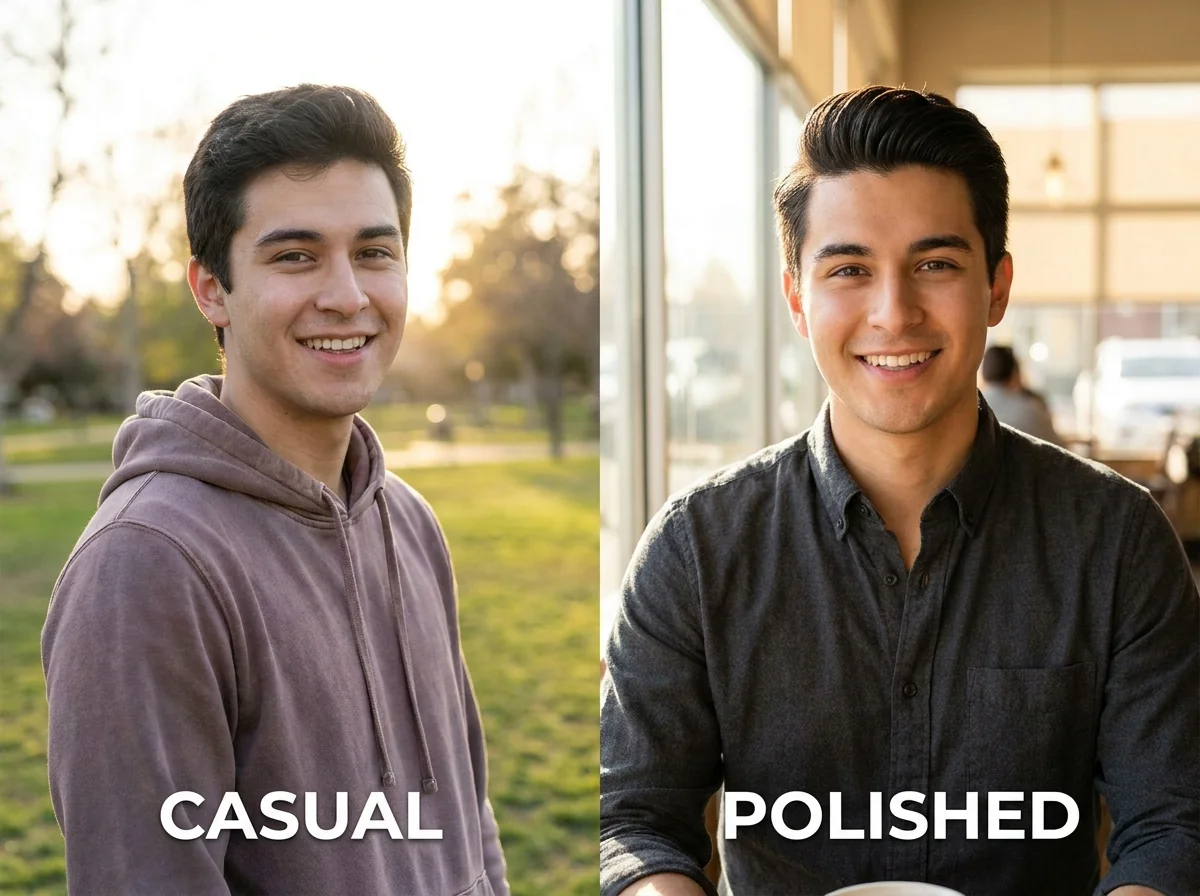
Despite their differences, Tinder, Bumble, and Hinge converge on the same core signals when assessing whether an AI photo is acceptable. Photos that check these boxes pass on all three:
Accurate Facial Representation
Your face in the AI photo should match your face in person. Same jawline, same skin tone, same eye shape. It's fine to optimize lighting and expression — that's what good photography does anyway — but structural changes to your face are where detection systems trigger and where real humans feel deceived.
Realistic Environments and Lighting
Photos with natural-looking backgrounds and realistic lighting score significantly better on authenticity metrics. Outdoor settings, indoor casual environments, natural light — these all work. Hyper-stylized backgrounds, impossible lighting, or obviously digital environments are red flags across all platforms.
Natural Expressions and Body Language
Stiff poses and overly symmetrical expressions are a giveaway. Good AI photo tools now create genuine-looking smiles, relaxed body language, and slight asymmetries that make images read as real. If your photos look like they're from a stock photography catalog, they'll trigger both automated detection and human skepticism.
Passing the Realness Score Threshold
Across all three platforms, photos with a Realness Score of 80 or above are consistently safe. Below 70, you're in risky territory — not necessarily banned, but more likely to be flagged, especially on Tinder and Bumble's updated systems.
Running your photos through the Realness Score Analyzer before uploading is the fastest way to identify which images are safe and which need adjustment. Think of it as a pre-flight check — catching issues before the platforms do.
Check Your Photos Before the Platforms Do
Our Realness Score Analyzer checks your AI photos against the same authenticity signals that Tinder, Bumble, and Hinge now use. Free, instant, no account needed.
Free analysis • Instant results • No signup required
Analyze Your Photos Free →What to Avoid on Tinder, Bumble & Hinge in 2026
The new policies have sharpened the lines around what gets accounts actioned. These behaviors most commonly lead to photo removal, account flags, or bans in 2026:
- Photos that significantly alter your physical appearance — This is the #1 trigger. If you're using AI to change your body shape, skin tone, facial structure, or age significantly, you're violating Tinder, Bumble, and Hinge's updated guidelines simultaneously.
- Generic AI faces that don't match your selfies — Using a generic AI portrait generator (not trained on your photos) and uploading the result as if it's you. These photos often don't pass basic facial consistency checks.
- Over-polished studio aesthetics on casual platforms — A photo that looks like it belongs in a luxury fragrance ad is a mismatch for Tinder's swiping environment. It reads as inauthentic even if it technically represents your likeness.
- Uploading on Bumble without completing verification — Since Bumble's 2026 badge system launched, AI photos from unverified accounts get far more scrutiny. This is an easy fix — just complete the verification step first.
- Using AI photos that you can't replicate in person — If you couldn't reasonably show up to a first date looking like your photos, you're setting yourself up for bad outcomes regardless of whether you get past detection.
Step-by-Step: Setting Up Your 2026 AI Photo Profile

Here's the practical playbook for building a compliant, high-performing AI photo profile on all three platforms in 2026.
Step 1: Generate Photos That Are Trained on You
Use a personalized AI photo tool — one that trains a model on 10–20 of your own selfies and then generates new photos in your likeness. This is non-negotiable in 2026. Generic AI portraits won't pass facial consistency checks on Tinder or Bumble, and they won't match you in person for Hinge's report-based system.
If you're evaluating tools, the 2026 AI dating photo generator comparison ranks the current options by quality, realism, and policy compliance.
Step 2: Check Your Realness Score Before Uploading
Before uploading to any platform, run each photo through the Realness Score Analyzer. Target 80+ on all photos you plan to use. Any photo scoring below 70 should be regenerated or replaced.
Step 3: Build a Blended Profile Set
For each platform, create a set of 6–9 photos:
- 3–4 high-quality AI photos (your best, most natural-looking outputs)
- 2–3 candid real photos (phone camera, natural settings, real-life moments)
- 1 activity or context photo (doing something you enjoy)
The AI photos carry the visual quality. The real photos provide authenticity anchoring. Together they pass both automated detection and human judgment.
Step 4: Complete Platform Verification Steps
On Bumble: complete the video selfie verification before uploading your AI photo set. On Tinder: use the photo verification feature if prompted — it helps establish your identity. On Hinge: link your social accounts if possible; it signals legitimacy to both the algorithm and potential matches.
Step 5: Monitor Performance and Stay Updated
Dating app policies continue to evolve. Watch for in-app notifications about photo guidelines, and periodically recheck your photos if you notice a drop in match rate — it can sometimes signal that your photos have been quietly downranked.
Final Thoughts
The smartest 2026 AI dating photo strategy is not trying to beat moderation. It is making photos that are accurate enough for the platforms and believable enough for real people.
Across Tinder, Bumble, and Hinge, the common rule is representation: your AI dating photos should look like you, match your current appearance, and fit the life you actually live. Personalized generation, realistic settings, and a mix of real photos make that much easier.
Before uploading a full new set, check the obvious risk signals: uncanny face details, changed body type, synthetic hands, fake luxury scenes, and a profile that feels too polished from top to bottom.
Transform Your Dating Profile Today
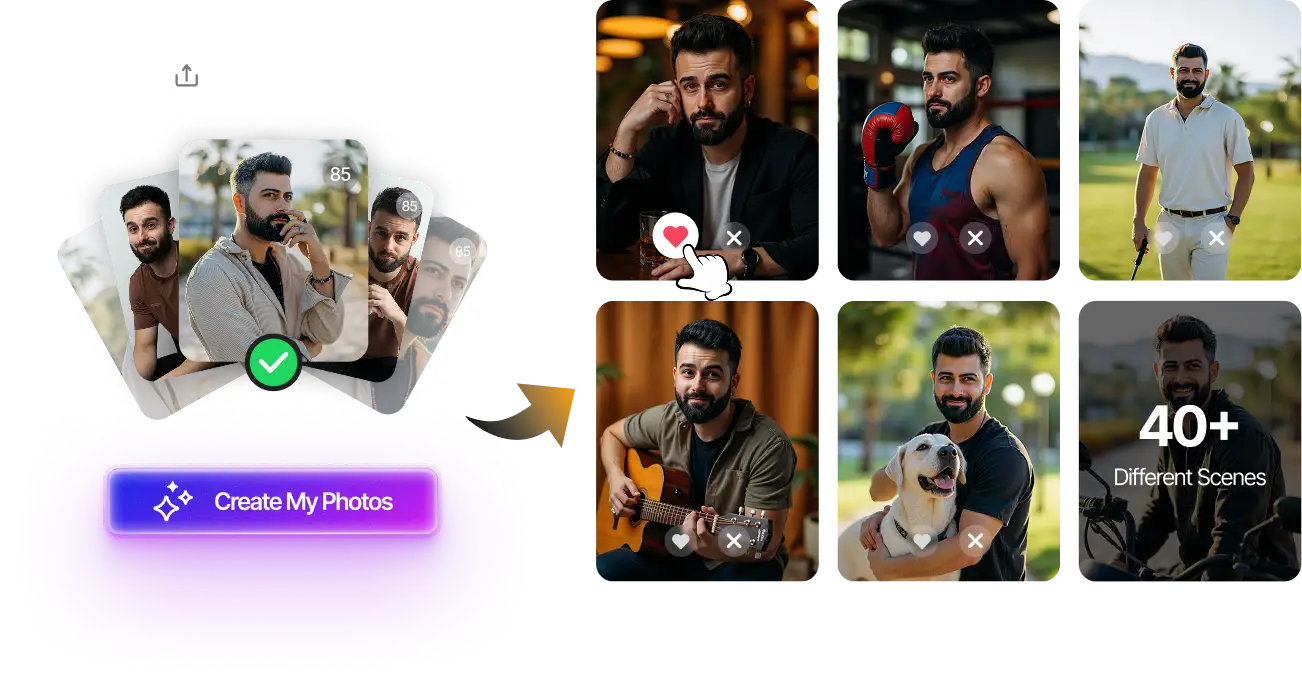
Upload your selfies, get 80–180 AI-optimized dating photos in just 20 minutes. Personalized to you, built to pass Tinder, Bumble & Hinge's 2026 standards.
100+ unique photos • Privacy-first • One-time payment
Get Started Now →Frequently Asked Questions
What is Tinder AI-generated photos policy in 2026?
Tinder does not publish a simple public rule that every AI-generated photo is banned. The safer interpretation is that photos must support an authentic profile and should not mislead people about your identity, appearance, or account behavior.
What is Hinge AI-generated photos policy in 2026?
Hinge risk centers on misrepresentation. AI-assisted photos are lower risk when they look like a current, natural version of you. Photos that create a fake likeness, fake lifestyle, or misleading expectation are more likely to cause reports or removal.
Does Bumble allow AI-generated photos in 2026?
Bumble focuses on authentic profiles and user trust. Realistic AI-assisted photos can be used more safely when they are trained on your own images, mixed with real photos, and do not change your face, age, body type, or identity.
Are AI dating photos banned on dating apps?
A blanket ban is not the practical standard to optimize around. The real risk is deception: fake identity, major appearance changes, obvious AI artifacts, or a full profile that looks synthetic and does not match you in real life.
Can dating apps detect AI photos?
Dating apps do not reveal all detection signals. They may use automated systems, verification, reports, and manual review. Treat detection as one part of the risk model; user trust and accurate representation matter just as much.
What is the safest way to use AI photos on Tinder, Bumble, and Hinge?
Use a personalized AI photo generator trained on your own selfies, choose realistic scenes, keep facial structure and body type accurate, mix AI-assisted photos with real photos, and update your profile gradually instead of replacing everything at once.