The New Dating Profile Problem Isn't Looks. It's Trust.
If you're getting profile views but not matches, the problem usually isn't your face. It's dating profile trust. In 2026, daters scroll through profiles assuming half of them are catfish, bots, or AI-generated fakes, so they look for reasons to swipe left long before they decide you're attractive. A profile that feels inconsistent, over-polished, or stitched together loses the swipe in under two seconds, even if every photo is technically a 9/10.
Disclosure: This article contains links to DatePhotos.AI products. We may earn revenue if you sign up through these links, at no additional cost to you.
This guide breaks down what trust signals actually look like on a modern dating profile, why daters have become so skeptical (Pew Research shows nearly half of users report negative experiences with deception), and the exact checklist to audit your own profile. The fix is rarely "better photos." It's making sure the photos, bio, and lineup feel like one real person.
Key Takeaways
- Trust beats attractiveness when daters are scanning fast. A consistent 7/10 profile out-converts an inconsistent 9/10 one.
- The trust killers are inconsistency (different face, body, or style across photos), over-polish (everything looks like a magazine), and missing context (no lifestyle, no personality, no real environments).
- Trust signals stack: matching wardrobe seasons, varied real-world backgrounds, a bio that matches the photos, and prompts that sound like a human wrote them.
- AI photos are not the problem, bad AI photo strategy is. Used with intention, AI photos can actually raise trust by removing weird lighting and out-of-date shots.
- Use the 10-point checklist in this guide to audit your profile in 5 minutes before you spend another dollar on photos or premium features.
Why Trust Replaced Looks as the #1 Profile Problem
Five years ago, the dominant profile advice was simple: get better photos. That advice worked because most profiles had bad lighting, bad angles, and bad framing. Once everyone got the message, the bar moved.
Today, almost every active profile has at least one objectively decent photo. AI photo tools, smartphone cameras, and a decade of Instagram practice raised the floor. So the differentiator stopped being "how good do they look" and became "do I believe this is a real person I'd actually meet?"
Three forces created this shift:
- Catfish fatigue. Users have been burned enough times that they assume anything too polished is fake until proven otherwise.
- AI awareness. Mainstream coverage of AI-generated photos means daters now consciously scan for tells: same face, plastic skin, weird hands, identical lighting across shots.
- Verification creep. Apps like Tinder, Hinge, and Bumble now offer photo verification badges, training users to look for proof signals before swiping right.
The result: your profile is being graded on a trust rubric you may not even know exists. Views without matches is the symptom. Low perceived trust is the cause.
Trust Signals vs. Trust Killers: The Quick Reference Table
Before we get into the audit, here's the high-level map of what daters subconsciously check. Use this as a reference while you scroll your own profile.
| Trust Signal (do more) | Trust Killer (avoid) |
|---|---|
| Same recognizable face across all photos | Face that subtly shifts shape, age, or jawline shot-to-shot |
| Varied real environments (outdoors, with friends, hobby) | All shots in studio lighting or identical background |
| One or two casual, imperfect photos in the mix | Every photo looks magazine-retouched |
| Seasonal wardrobe variety (jacket, tee, sweater) | Same outfit and weather across multiple "different" days |
| Bio that references something visible in a photo | Generic bio that could belong to anyone |
| Verification badge enabled where the app offers it | No verification + glossy photos = instant suspicion |
| Prompts written in your actual voice | ChatGPT-sounding prompts with em-dashes everywhere |
None of these individually wins the swipe. But together, they form the unconscious "this person is real" signal that turns a profile view into a match.
Check Your Photos Before Tinder Does
Use our free AI Realness Score Analyzer to check if your photos might trigger detection systems or trust red flags.
Free analysis • Instant results • No signup required
Analyze Your Photos Free →How Daters Actually Scan Your Profile (In Seconds)
To fix trust, you have to understand the speed at which it's evaluated. Eye-tracking studies on dating apps consistently suggest users spend only a brief moment on the first photo before deciding whether to swipe or expand. If they expand, you get a few more seconds across the rest of the lineup.
Inside that window, three trust checks happen almost subconsciously:
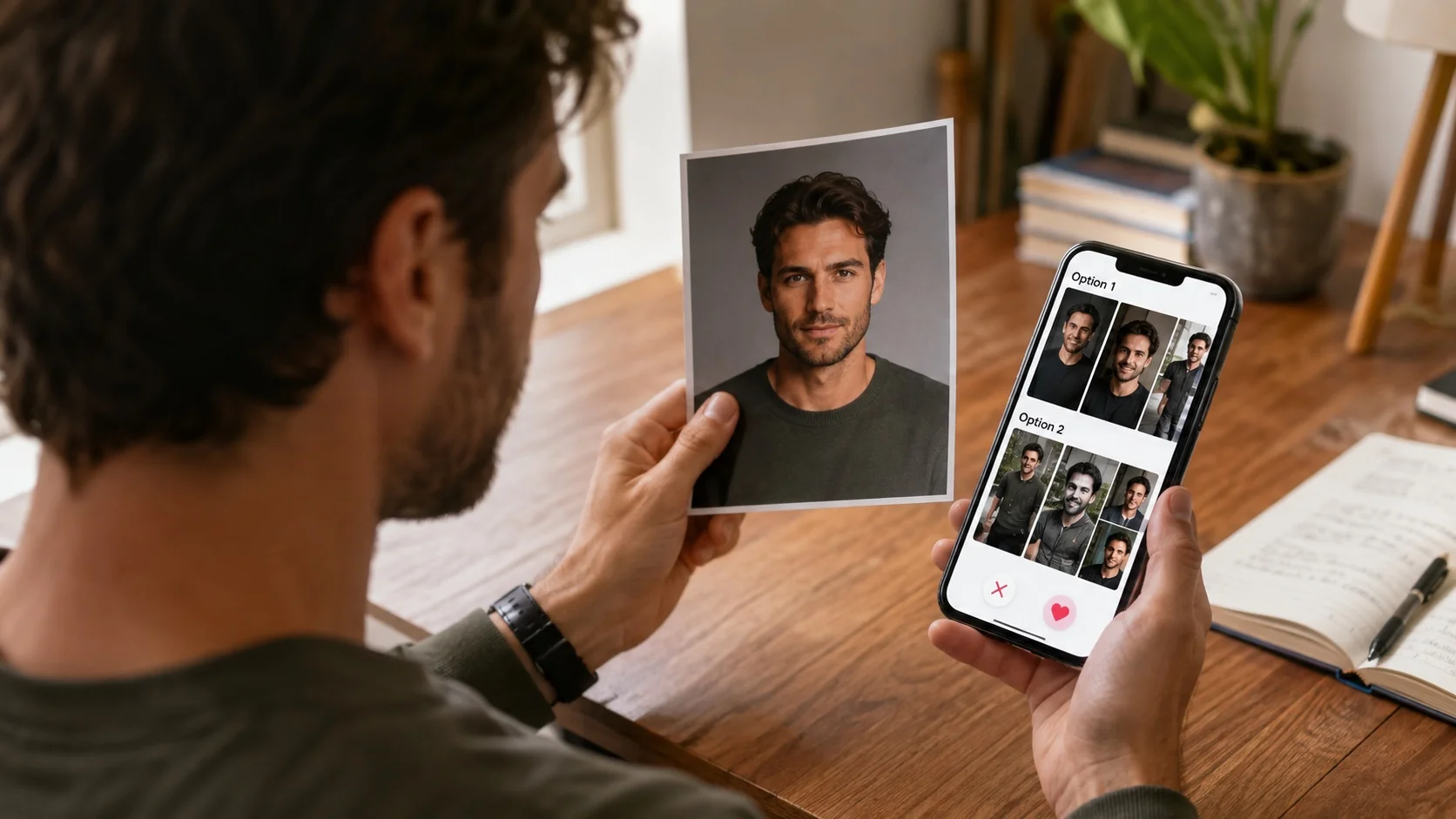
- Face match check. Does the face in photo #2 look like the same person from photo #1? Daters are surprisingly good at catching subtle changes in jaw, hairline, or skin texture, even if they can't articulate what feels off.
- Lifestyle plausibility check. Do these photos tell a coherent story about who this person is? A profile with one gym shot, one suit shot, one beach shot, and one with a dog reads as a real life. Four identical headshots read as a stock library.
- Effort-to-polish ratio. A profile that's too polished, perfect lighting in every shot, zero candid moments, triggers suspicion faster than one good photo plus three decent ones.
This is why the old advice of "only use your best photos" backfires. Your best photo as photo #1 is good. But your second-best, third-best, and fourth-best photos should look like they came from your actual life, not from the same shoot.
The 10-Point Dating Profile Trust Checklist
Run your profile through this checklist before you change anything else. Most low-trust profiles fail on several of these points. Fixing even a few usually moves match rate noticeably within a week.
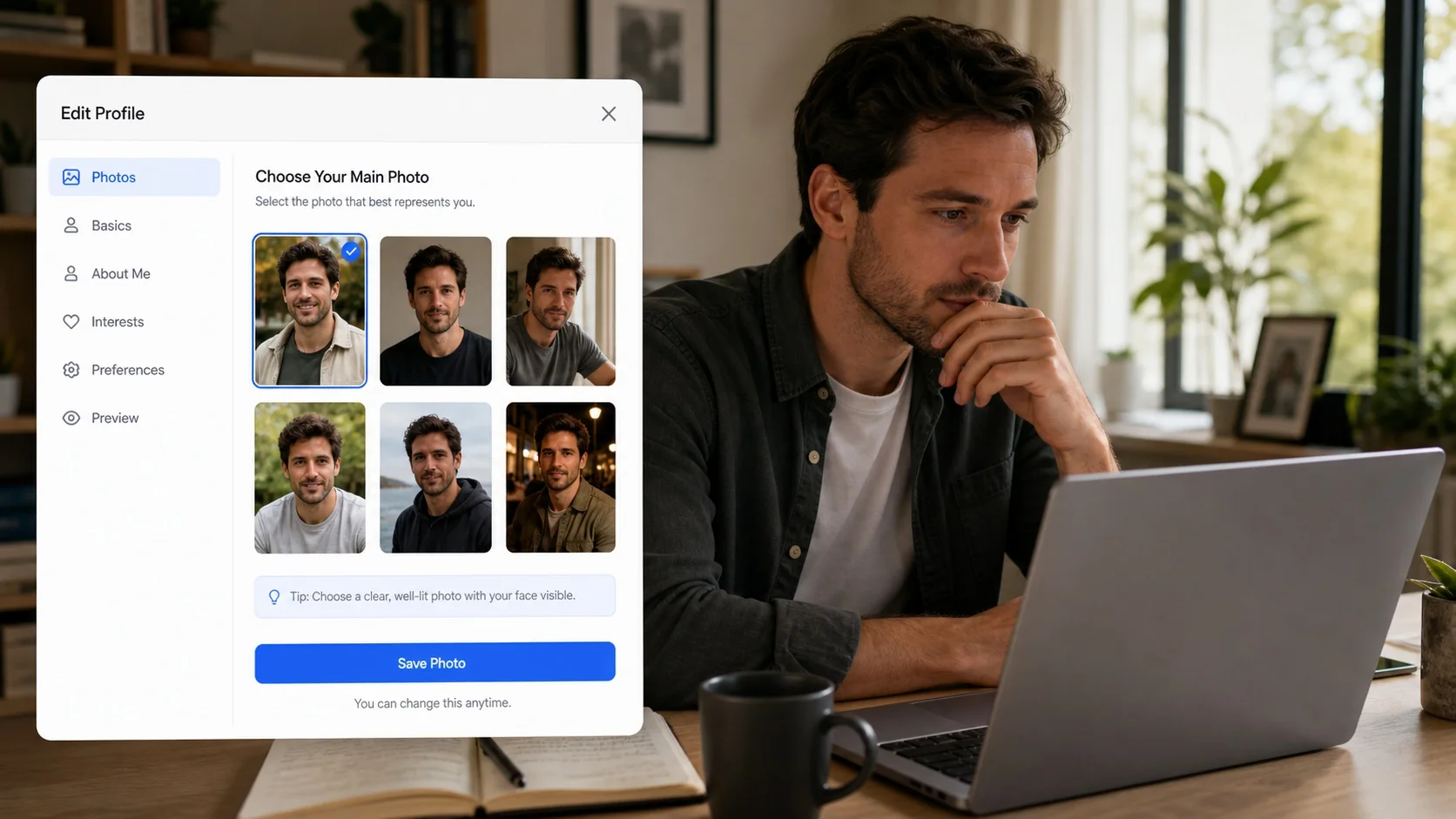
- Face consistency. Open all your photos side by side. Does the same person appear in every shot? Look at jawline, ear shape, and hairline. These don't change shot-to-shot in real life.
- Background variety. At least 3 different real-world environments across your lineup. No more than one studio or formal shot.
- Wardrobe variety. 4+ different outfits, ideally across different seasons or contexts.
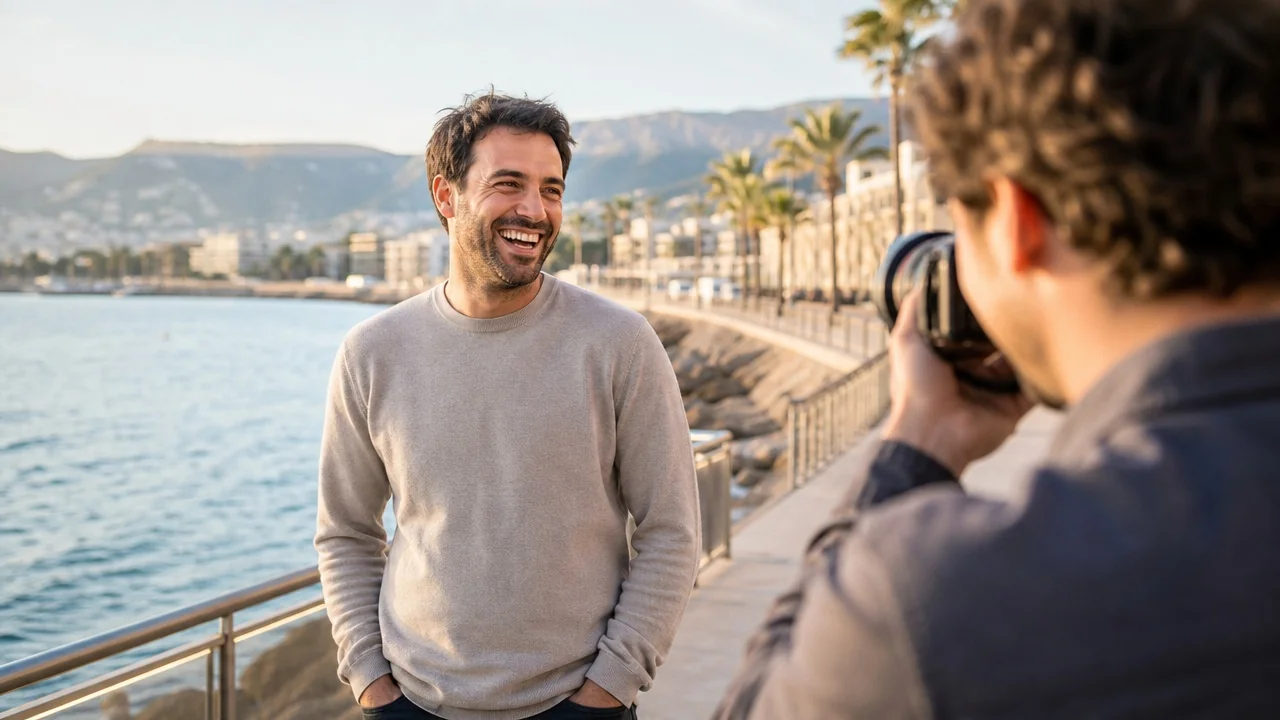
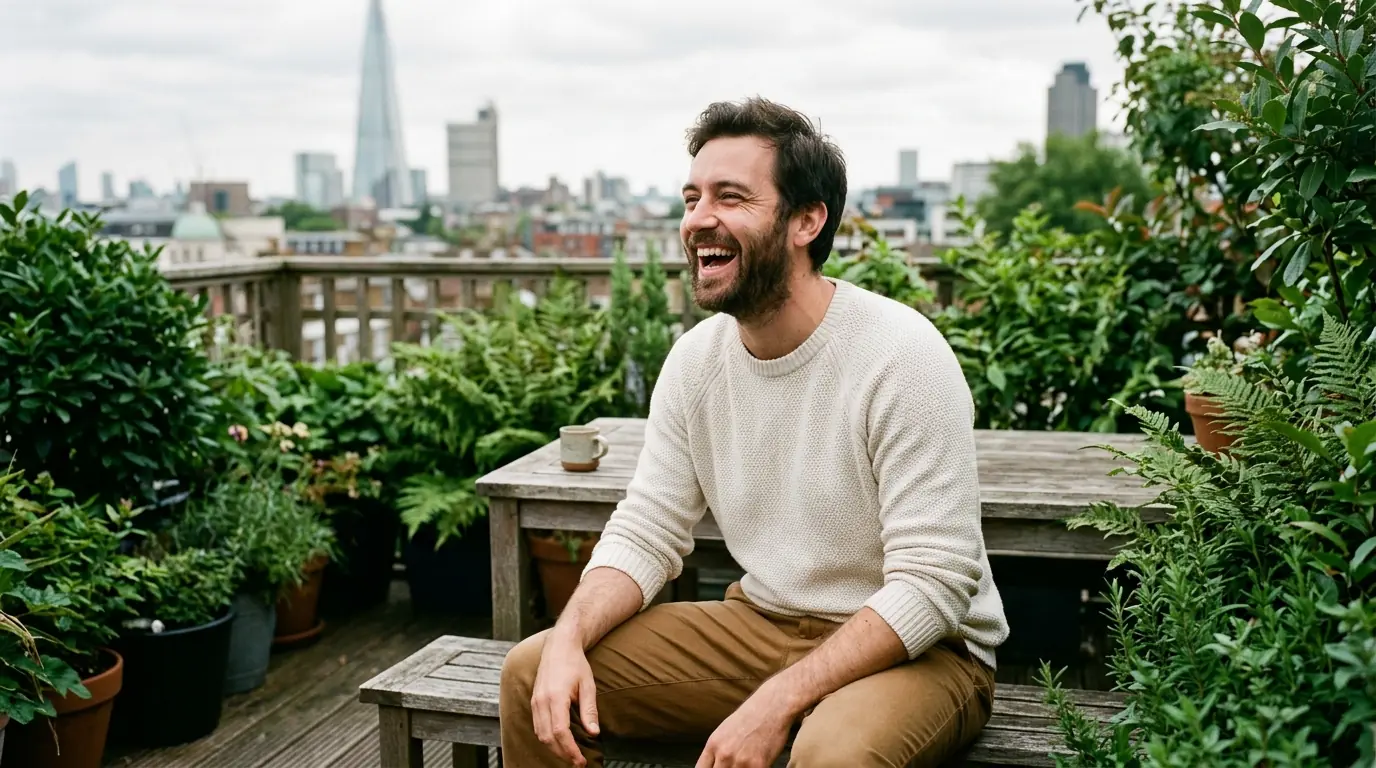
- One "imperfect" photo. A casual moment, laughing, mid-activity, slightly off-center, to balance any polished shots.
- A context photo. One shot that shows what you do for fun. Cooking, hiking, with a pet, playing music. This tends to be one of the highest-converting photo types.
- No mystery photo #1. Your first photo must clearly show your face. Sunglasses, hats covering eyes, and side profiles in slot one are trust killers.
- No group photo confusion. If you use a group shot, you must be in slot 1 or 2 first, alone and unambiguous.
- Bio matches photos. If your photos show outdoor activity, your bio shouldn't be a list of jobs and zodiac signs. The two should reinforce each other.
- Verification badge. If the app offers photo verification, do it. Tinder's verification guide walks through the process step by step.
- Prompt voice. Read your prompts and bio out loud. If they don't sound like you'd actually say them, rewrite them in plain language.
For a deeper breakdown of how this checklist interacts with photos, bio, and settings, see our full profile optimization checklist for AI photo users. And if you're not sure which photo types you're missing, the 10 photo types every dating profile needs covers the full lineup logic.
Where AI Photos Fit Into a High-Trust Profile
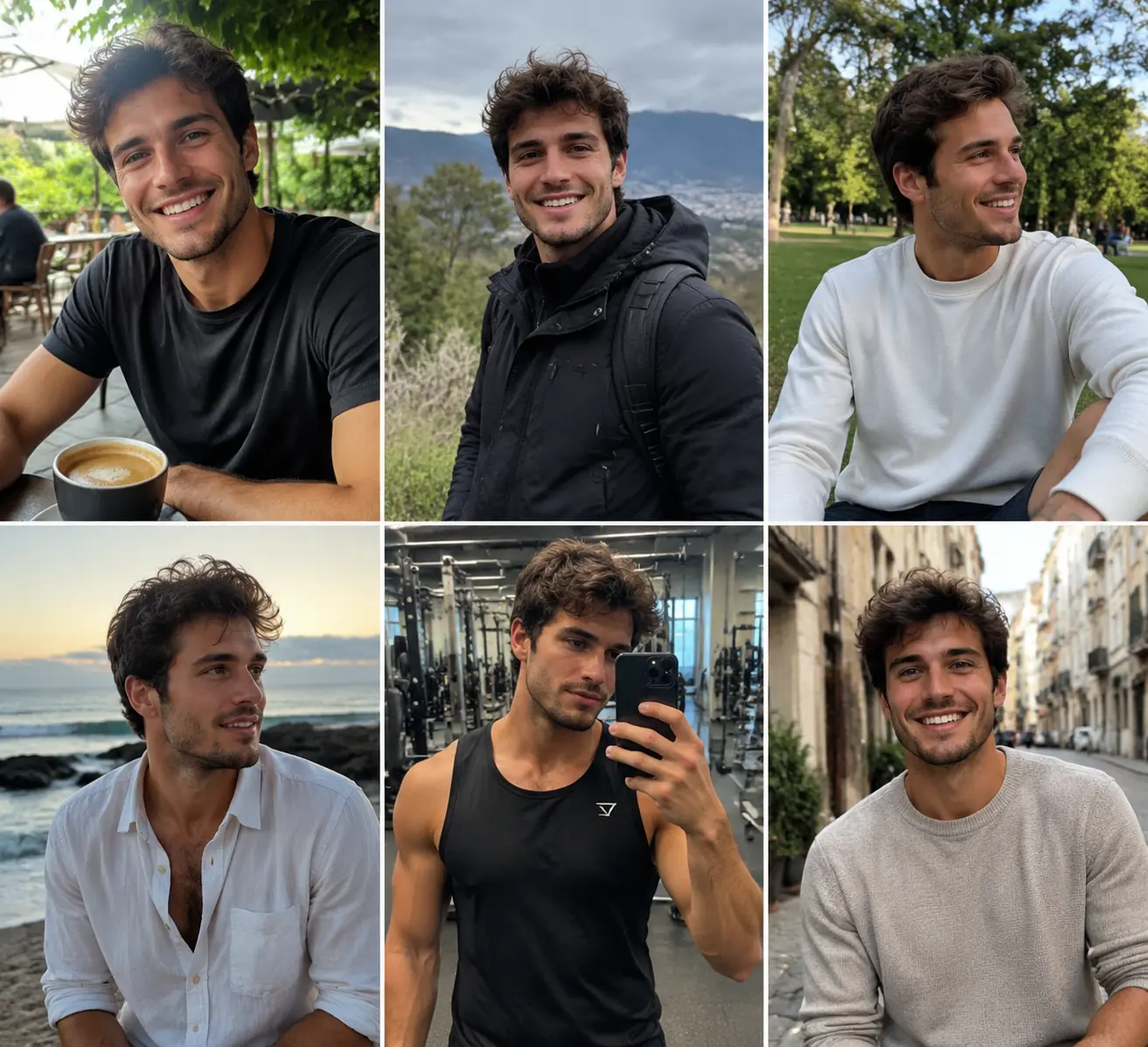
AI dating photos have a complicated relationship with trust. Done badly, they're a major trust killer on modern profiles: same face, same lighting, plastic skin, hands that look almost-but-not-quite right. Done well, they can actually raise trust by replacing the worst photos in your lineup (the blurry one, the years-old one, the one with your ex cropped out) with consistent, well-lit shots.
The rule of thumb: AI photos should never be your entire lineup, and they should never feel like they came from the same shoot. A trust-positive AI strategy generally looks like this:
- A handful of AI photos covering scenarios you don't have real photos for (a clean headshot, an outdoor shot, a hobby shot)
- Several real photos including at least one slightly imperfect candid
- Wardrobe and background varied across the AI photos themselves, not just between AI and real
- A bio that doesn't try to hide that you took your photos seriously
If you're starting from a profile that's getting views but no matches, the leverage isn't usually "add more AI photos." It's "audit the lineup for trust coherence first, then fill the gaps with the right photo types." Our guide to how many photos and what AI/real mix to use walks through the ratios that tend to perform best.
If you've done the audit and know you need to rebuild the lineup, a tool like the DatePhotos.AI Profile Optimizer will give you a per-photo trust read and suggest which shots to keep, drop, or replace, without you having to guess.
Common Trust Mistakes (Even Good-Looking People Make)
These are the patterns that show up over and over in profiles that get views but stall on matches. They're not about being unattractive. They're about looking uncertain.
- The "shoot day" lineup. All six photos clearly taken on the same afternoon, same haircut, same lighting. Even if every shot is good, the lineup reads as a marketing campaign, not a person.
- The "old me" mix. One photo from several years ago mixed with photos from this year. Daters spot the age gap instantly and assume the recent ones are the lie.
- The over-cropped group. Half-visible arms, mysterious shoulders, awkward crops. Suggests something is being hidden, even if nothing is.
- The mirror selfie in slot one. Outside of fitness contexts, this combines low-effort signaling with poor lighting. Move it to a later slot or replace it.
- The bio that fights the photos. Photos say "adventurous outdoorsman," bio says "corporate lawyer who loves wine." Pick a lane or show both visually.
If you suspect your profile has slipped into low-trust territory without you noticing, the fastest diagnostic is to ask a friend you trust to scroll your profile and tell you the first thing that felt "off." That instinctive reaction is exactly what daters experience in their quick swipe window.
Best Practices for Rebuilding Trust Fast
If your audit revealed a low-trust profile, here's the order to fix it in. Resist the urge to nuke everything at once. Change too much and you'll lose the data that tells you what's working.
- Fix photo #1 first. This is the biggest single driver of your swipe outcome. Clear face, good lighting, neutral expression, no obstructions.
- Add one missing context photo. Whichever lifestyle shot is missing (hobby, outdoor, with a pet) add one. This single addition often moves match rates more than swapping three other photos.
- Remove the weakest photo, don't replace it. A tighter lineup of strong shots outperforms a longer lineup with one drag-down. Quality of average matters more than count.
- Rewrite one prompt in your real voice. Read it aloud. If it sounds like a template, it is one.
- Wait about a week before changing anything else. Dating apps need time to re-evaluate your profile. Constant editing can reset your ranking.
Trust is cumulative. You're not trying to convince a stranger you're the perfect partner in three seconds. You're trying to give them no reason to doubt that you're real.
Final Thoughts
The new dating profile problem isn't looks. It's dating profile trust, the unconscious read daters make in the first few seconds about whether you feel like a real, coherent person worth meeting. Daters in 2026 are sophisticated, skeptical, and fast. They reward consistency over polish and authenticity over perfection.
The good news: trust is fixable, and it's fixable cheaply. Run the 10-point checklist, fix the two or three things that are obviously off, and give your profile a week to settle before judging the result. Most profiles getting views without matches don't need a new photoshoot. They need a tighter, more honest lineup that says the same thing across every photo and every prompt.
Transform Your Dating Profile Today
Upload your selfies, get 80-200 AI-optimized dating photos in just 20 minutes. Built-in trust signals, natural variety, and Realness Score guidance.
100+ unique photos • Privacy-first • One-time payment
Get Started Now →FAQ
What is a dating profile trust signal?
A dating profile trust signal is any element of your profile (a photo, prompt, bio detail, or verification badge) that helps a stranger quickly believe you're a real, coherent person. Strong trust signals include face consistency across photos, varied real environments, verification badges, and a bio that matches what the photos show.
Why am I getting views but no matches?
Getting views without matches usually means your photo #1 is good enough to earn a tap, but something in your lineup is breaking trust on the second or third photo. The most common causes are inconsistent face appearance across photos, over-polished shots that feel staged, and a bio that doesn't match the vibe of your photos.
Do AI dating photos hurt your trust score?
Not automatically. Poorly executed AI photos hurt trust: same face, same lighting, identical "shoot day" feel. Well-executed AI photos with varied wardrobe, real-looking environments, and a mix of AI and real photos in the lineup can actually raise trust by replacing your weakest existing shots.
How many photos should I have on my dating profile?
Most apps perform well with a handful of strong photos rather than a longer lineup that includes weak shots. The goal is variety in outfit, background, and activity, not maximum quantity.
Should I get my dating profile verified?
Yes, whenever the app offers it. Verification badges are one of the cheapest, fastest trust signals you can add and only take a couple of minutes on Tinder, Hinge, and Bumble. They're especially important if your photos are well-lit or include any AI-generated shots.