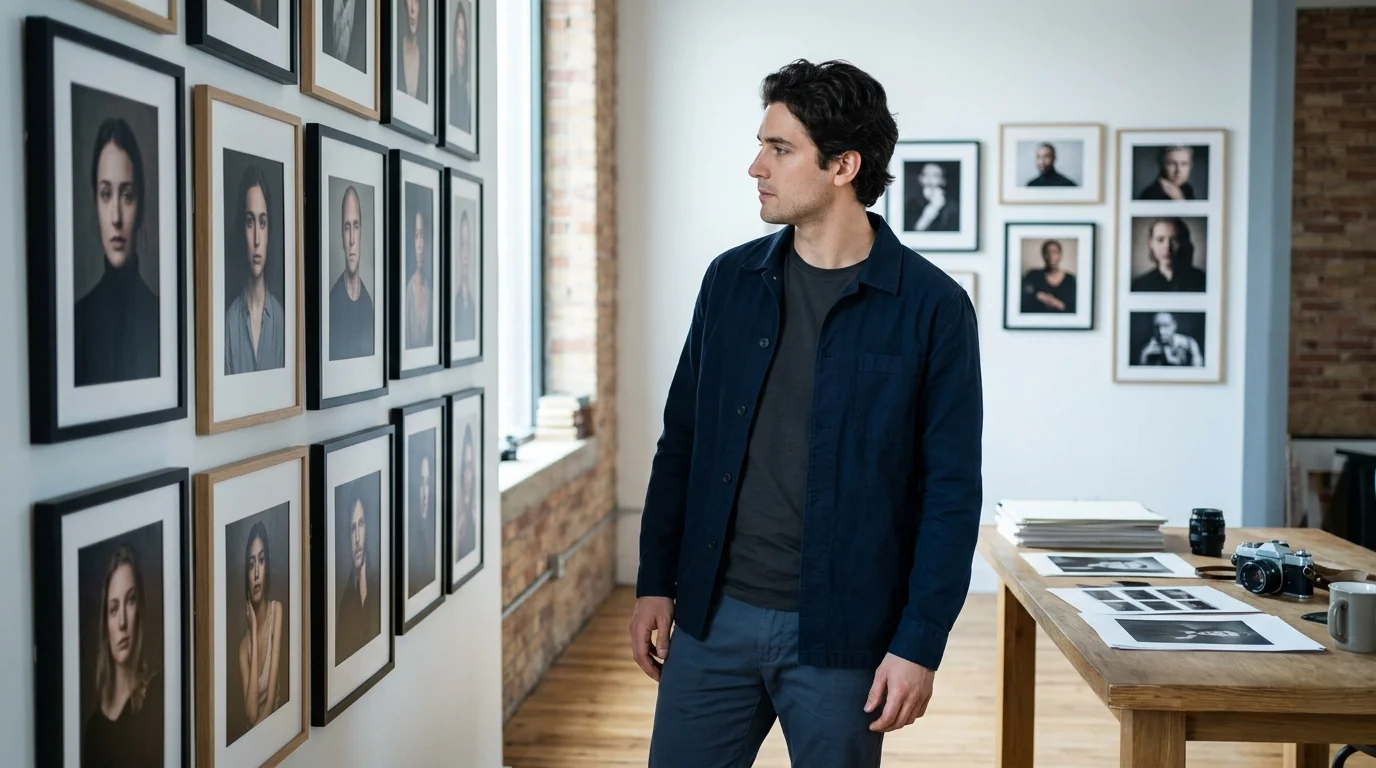
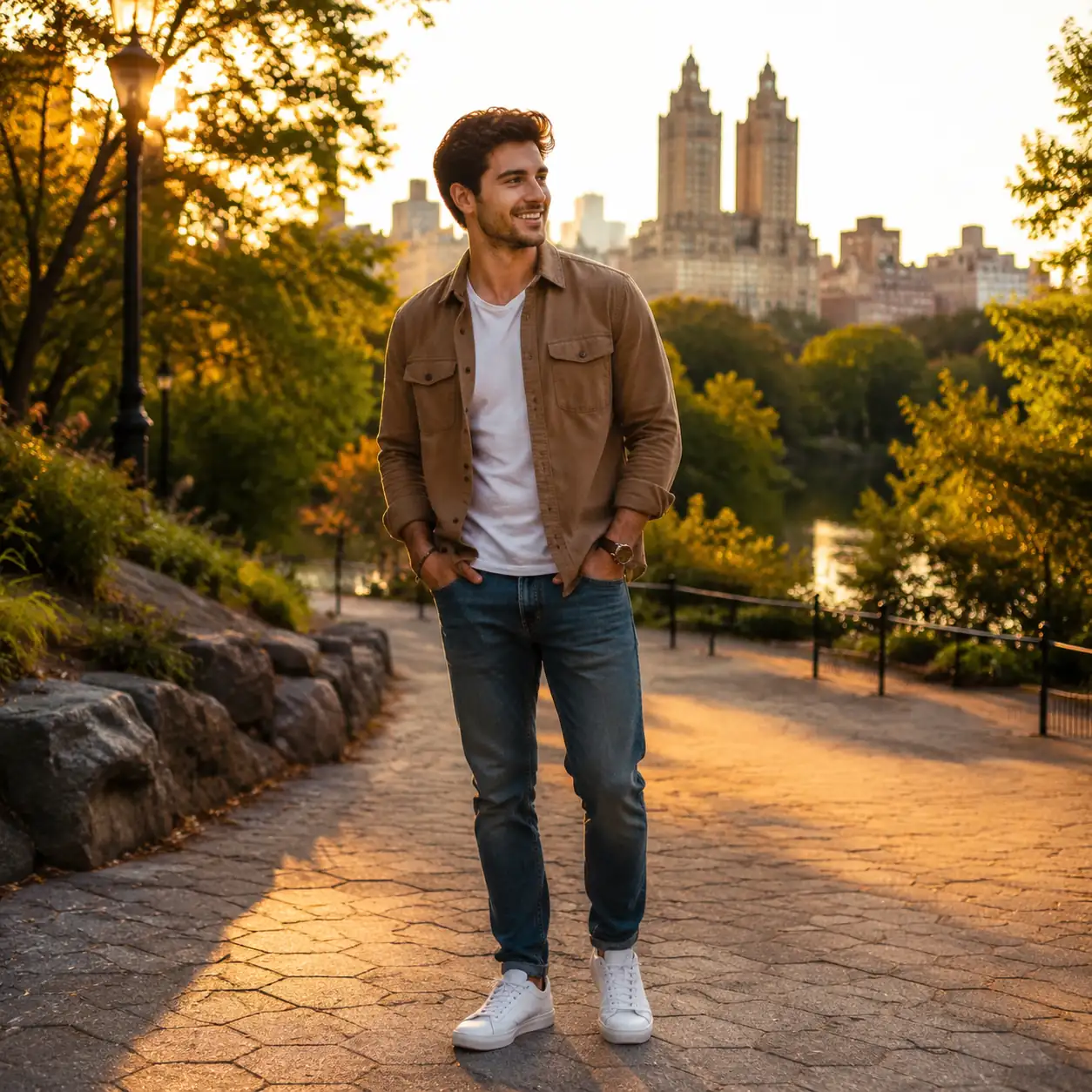
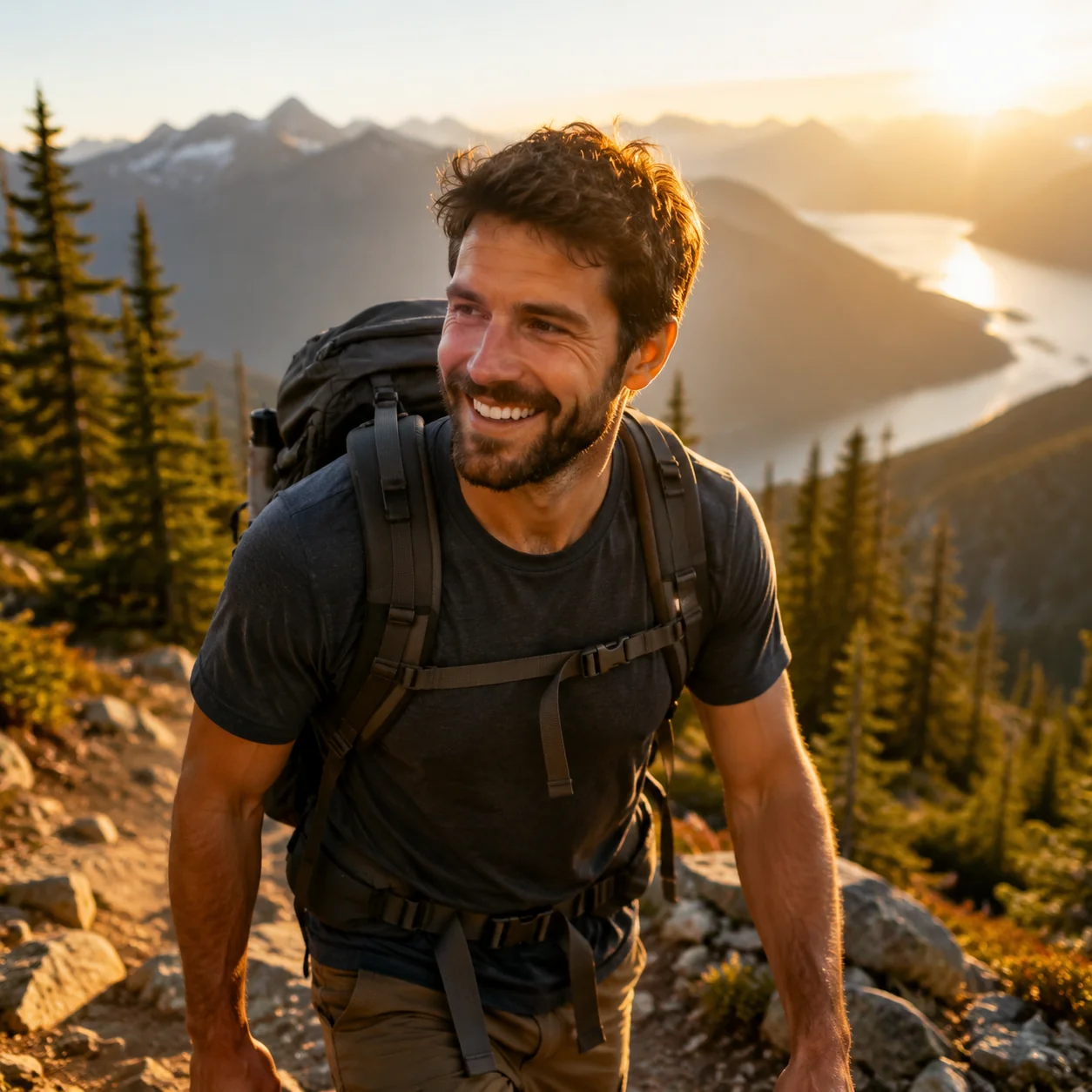
You opened Bumble, ran your photos through the in-app feedback tool, and got a polite suggestion that one or two shots could be stronger. Helpful, but vague. The truth is, Bumble photo feedback tells you which single photos look weak; it does not tell you why your whole lineup is underperforming, what order to use, or which trust signals are missing. This guide picks up where Bumble's feedback stops and walks through what to actually change next.
If you have already read our take on why Bumble's AI photo feedback isn't enough on its own, this is the practical follow-up: a fix-by-fix playbook for rebuilding a Bumble profile photo set that holds attention past the first swipe in 2026.
Key Takeaways
Bumble feedback is photo-level, not lineup-level. It misses order, variety, and trust signals that drive matches.
Your first photo decides 70%+ of the outcome. Fix that one before anything else.
Variety beats polish. Six near-identical "good" photos still feel flat.
Trust signals matter more in 2026. Bumble users expect to see a real face, real settings, and a real life.
What Bumble Photo Feedback Actually Tells You
Bumble's in-app feedback (powered by their internal photo quality model) generally scores individual photos for things like sharpness, lighting, face visibility, and group-photo confusion. According to Bumble's Help Center, the goal is to nudge users toward clearer, on-policy photos, not to optimize your dating outcomes.
That distinction matters. The tool can correctly say "this photo is blurry," but it won't tell you that:
Your first and second photos are basically the same shot.
All six photos are indoor selfies.
You have no full-body photo, so people assume the worst.
Your lineup looks AI-heavy without a single grounded, candid moment.
So treat Bumble's feedback as a spell-check, not an editor. It catches obvious mistakes. The real work of building a lineup that converts is still on you.
Check Your Photos Before Bumble Does
Use our free AI Realness Score Analyzer to see how authentic and trust-worthy each Bumble photo looks before you upload.
Free analysis • Instant results • No signup required
Most guys see a Bumble photo flagged and immediately swap it for another selfie from the same day. That's how lineups stay stuck. Instead, run this 60-second diagnostic on your current six photos.
Open your profile and ask, photo by photo:
What role does this photo play? (Hero shot, full body, social proof, hobby/lifestyle, personality, closer.)
Could a stranger guess my height, build, age, and vibe from this set alone?
Are two photos doing the same job? If yes, one needs to go.
Where was each photo taken? If five out of six are indoors, that's a problem.
You're not grading photo quality here. You're grading lineup coverage. Bumble's feedback can't do this. Only you can.
The Fix Order That Actually Matters
Not all fixes are equal. Bumble's algorithm and Bumble users both weigh your first photo far more than your sixth. Here's the priority order I'd recommend for any Bumble profile photos rebuild in 2026:
Priority
Fix
Why It Matters
1
Replace your first photo
Drives the majority of swipes; weak hero = no profile views
2
Add a clear full-body photo
Removes the #1 source of suspicion ("what is he hiding?")
3
Diversify settings and outfits
Signals a real life, not a one-day photo session
4
Add one candid or activity shot
Builds trust and gives openers something to mention
5
Remove redundant or low-effort photos
Six strong photos beat eight mixed ones
Fix in this order. If you only have time for #1 and #2 this week, that alone will outperform a full rebuild with the wrong priorities.
What Works on Bumble in 2026
Bumble's audience has shifted. The platform skews slightly older than Tinder, and users, especially women who message first, have gotten much better at spotting low-effort or off-vibe profiles. A few patterns are working well right now.
AI is officially allowed on Bumble when it represents you accurately and doesn't violate Bumble's Community Guidelines on authenticity and misrepresentation. The trick in 2026 is using AI as fill, not foundation: 2–3 high-quality AI photos that match your real face and build, alongside 3–4 grounded real photos. For platform-specific guardrails on this mix, see our Bumble AI photos guide.
What to Avoid on Bumble Specifically
These are the patterns that quietly tank Bumble profiles even when each individual photo "passes" the in-app feedback.
Six photos from the same day. Same shirt, same lighting, same haircut. It reads as a one-time effort.
All AI, no anchor. Even great AI shots feel uncanny without one or two clearly real photos.
Group photo as photo #1. Bumble users won't squint to find you. Your hero must be solo.
Sunglasses and hats in 3+ photos. You're now hiding your face on most of the profile.
Mirror selfies as primary content. They're not banned, but on Bumble they signal low effort. Use sparingly, never as photo #1.
Heavy filters or beauty smoothing. These trigger both human suspicion and platform moderation. Bumble's photo guidelines increasingly favor unfiltered shots.
If your profile was recently flagged or restricted, the Bumble flagged profile appeal guide walks through the recovery path before you change your lineup.
Step-by-Step: Rebuilding Your Bumble Photo Lineup
Here's the workflow I'd run if I had to fix a Bumble profile in one afternoon.
Step 1: Audit what you have
Pull every Bumble-eligible photo you've taken in the last 12 months into one folder. Don't edit yet. You want raw inventory.
Step 2: Assign roles, not rankings
Go through and tag each photo with one of: hero, full-body, activity, social, personality, closer. If a category has zero candidates, that's your shooting list for the next week.
Step 3: Shoot, or generate, the gaps
For missing roles, you have two options: take new photos this week, or use AI to fill specific gaps (especially activity or environment shots that are hard to stage). If you go AI, keep them grounded to your actual face, body, and life. Generic glossy AI photos are the fastest way to lose Bumble matches in 2026.
Step 4: Test the order
Place your strongest solo hero photo at #1, full-body at #2 or #3, then alternate between context, activity, and personality. End on a closer photo with strong eye contact and a smile. Avoid putting two photos with the same outfit back-to-back.
Step 5: Run a realness check
Before uploading, run each photo through a realness check. You're looking for two things: does it look authentically you, and does it look authentically now? Anything that fails either test gets cut.
Step 6: Give it 72 hours, then judge
Bumble's algorithm rebalances after profile changes. Don't panic-edit on day one. Wait 72 hours, then compare match quality and message rates to your old baseline.
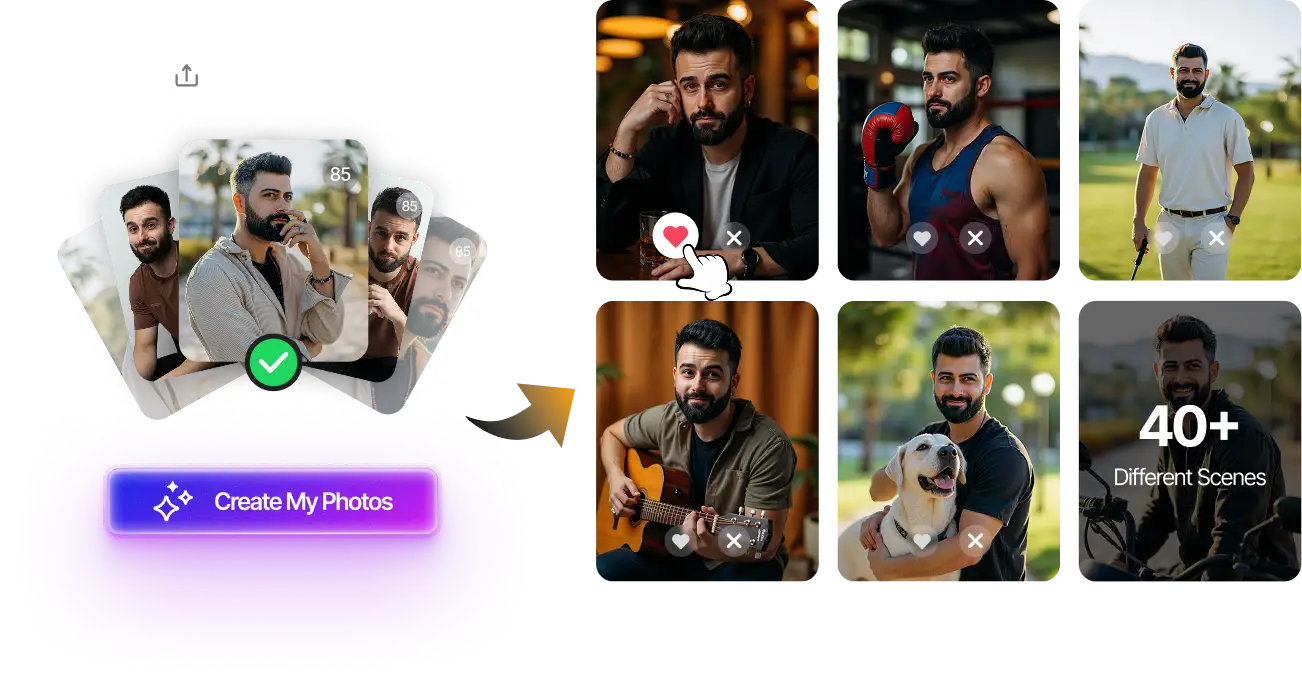
Transform Your Dating Profile Today
Upload your selfies, get 80-200 AI-optimized dating photos in just 20 minutes. No photoshoot needed.
Bumble photo feedback is a useful starting point. It catches the obvious stuff. But it can't see your lineup, your story, or the missing trust signals that decide whether a stranger swipes right or scrolls past. The real fix for weak Bumble profile photos in 2026 is structural: stronger hero photo, clear full-body shot, varied settings, and a thoughtful mix of real and AI images that actually represents you.
Pick the top two priorities from this guide and ship them this week. You don't need a perfect profile. You need one that tells a believable, attractive story across six photos. That's the part Bumble's feedback tool will never do for you, but it's also the part that moves the needle.
FAQ
How accurate is Bumble's photo feedback?
Bumble's photo feedback is accurate at flagging technical issues like blur, poor lighting, face visibility, and group-photo confusion. It's less useful for strategy: it doesn't evaluate photo order, variety, or how your six photos work together as a lineup.
Should I delete a photo Bumble flagged as weak?
Not automatically. First check whether the photo plays a unique role in your lineup (full-body, activity, social proof). If it's the only photo of that type, fix it rather than delete it. If it's redundant with a stronger photo, remove it.
How many AI photos can I use on Bumble in 2026?
Two to three high-quality AI photos, alongside three to four real photos, is the safest mix in 2026. The key is that your AI photos must match your actual appearance and not violate Bumble's community guidelines on authenticity.
Why are my Bumble matches dropping after I improved my photos?
Bumble's algorithm temporarily resets profile distribution after major photo changes. Give it 72 hours before judging. If matches stay low after that, the issue is usually lineup variety or a weak first photo, not the new photos themselves.
Do I need a professional photographer to fix my Bumble photos?
No. A strong lineup needs variety and authenticity more than studio quality. A mix of well-lit phone photos, candid shots from friends, and a few well-matched AI photos almost always outperforms a single professional photoshoot, because it tells a more believable story.