Your tinder first photo isn't just trying to catch a human eye anymore. It's also being scored, ranked, and queued by Tinder's recommendation system before another user ever sees it. If that first image doesn't pass both filters, your profile barely gets shown — let alone swiped right.
Here's the practical shift for 2026: clarity, face visibility, lifestyle signal, and low fake-risk are now algorithmic inputs, not just aesthetic preferences. Below is how to build a first photo that wins the human in 1.5 seconds and the algorithm in the background.
Key Takeaways
The first photo carries the early swipe decision. Tinder's current Photo Insights documentation says photo suggestions account for photo quality, visual patterns, and what tends to perform well on Tinder (Tinder Photo Insights).
Algorithm signals matter as much as looks. Face clarity, single subject, and natural lighting help Tinder confidently rank your card.
Lifestyle context beats studio polish. A clear shot with a real-life setting outperforms an over-edited portrait.
Low fake-risk is non-negotiable. Heavy filters, obvious AI artifacts, or mismatched photo styles can trigger trust penalties.
How Tinder's Algorithm Reads Your First Photo
Tinder has gradually moved away from the old ELO-style ranking and toward a system that learns from how recently and consistently you get right-swiped, who you swipe on, and how your photos perform in early impressions (Tinder Safety & Trust).
Your first photo is the linchpin because it sets the early signal. If your card gets ignored or left-swiped in its first impressions, the system shows it to fewer people. If it earns quick right-swipes, distribution expands. That's the algorithm half of the fight.
The human half is faster and more brutal: research on online dating consistently finds users make swipe decisions in 1-2 seconds, mostly driven by the lead image. So your first photo has to be readable at a glance and high-signal enough that the algorithm wants to keep showing you.
What the Algorithm Rewards in 2026
Based on patterns across recent Tinder moderation updates and dating-app trust trends, four practical signals stand out for a strong tinder first photo:
Signal
What It Means
Why It Matters
Clarity
Sharp focus, no blur, decent resolution
Helps both moderation and ranking confidently process the image
Face visibility
Face takes up 30-60% of frame, eyes visible, no sunglasses
Drives human trust and lets face-detection signals work
Lifestyle signal
Background or outfit hints at how you live
Gives swipers a reason beyond looks; reduces "stock photo" feel
Low fake-risk
Natural skin, real-world setting, no obvious AI artifacts
Avoids being penalized by Tinder's authenticity checks
Notice what's missing: model-tier looks, expensive cameras, or perfect symmetry. Those help, but they're not what tips the algorithm. The four signals above are the ones you can actually control.
Check Your Photos Before Tinder Does
Use our free AI Realness Score Analyzer to check if your first photo might trigger detection systems or trust penalties.
Free analysis • Instant results • No signup required
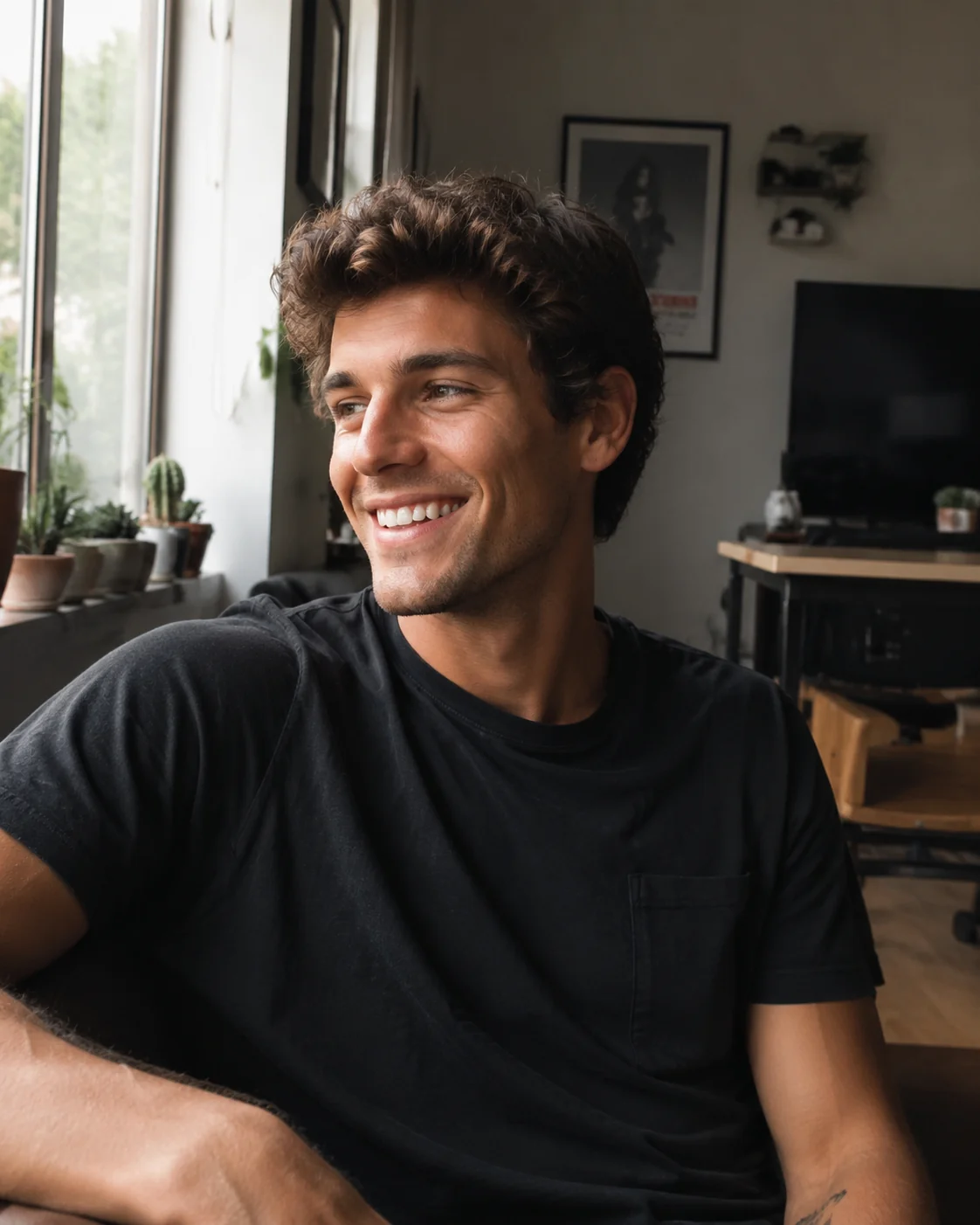
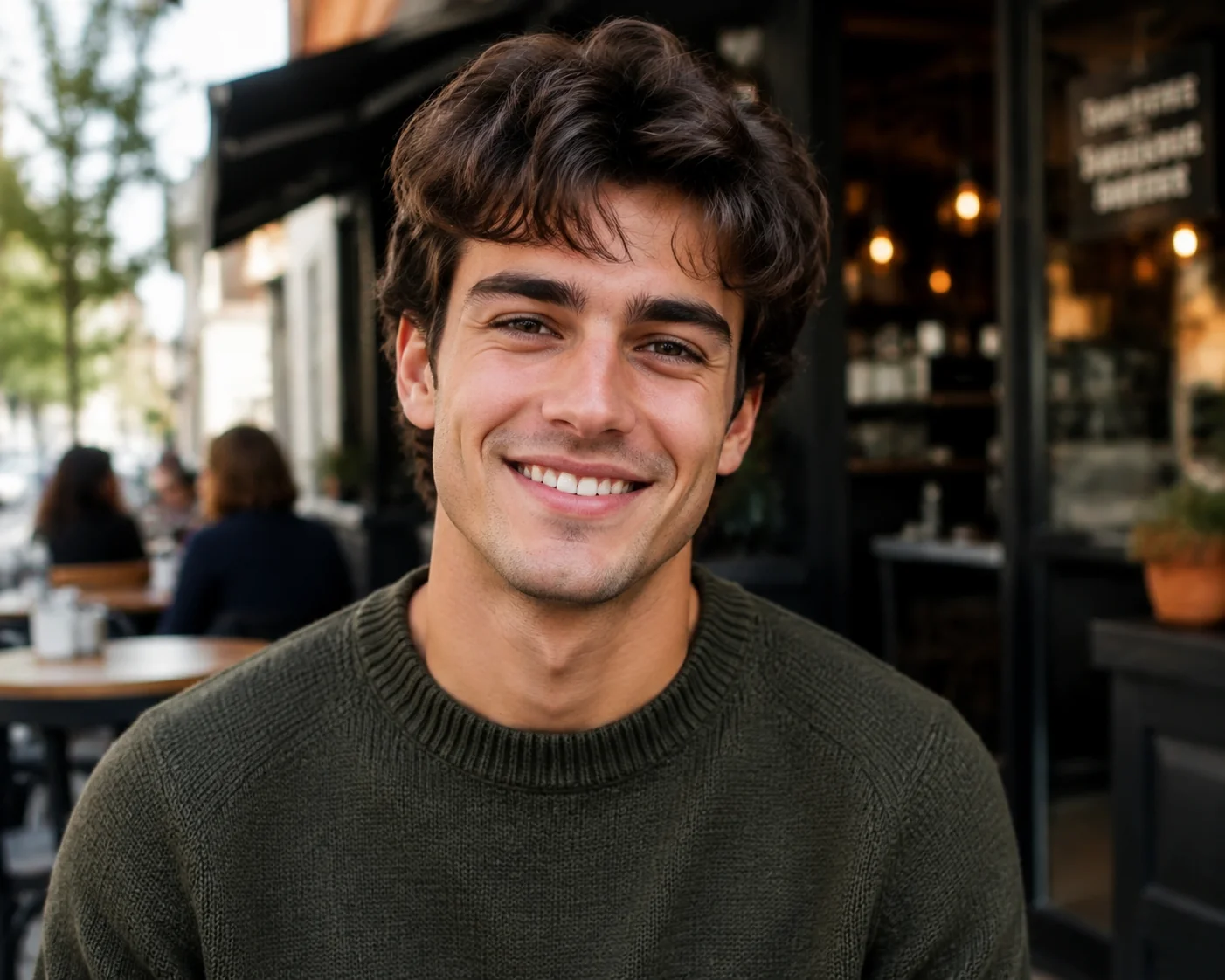
Analyze Your Photos Free →A strong first photo: clear face, natural light, and a real lifestyle background.
What Works for the First Photo on Tinder
This is where Tinder differs from Hinge or Bumble. Tinder is a one-image-at-a-time stack, so your first photo carries almost all the weight. Hinge can spread context across prompts and six photos; Tinder cannot. Treat the first photo like a movie poster, not a portfolio.
The headshot with context
The strongest tinder first photo in 2026 is usually a medium-close shot: chest-up, looking toward the camera (not always directly into it), with a real background that hints at your life, a coffee shop, a hike, your kitchen, a city street. It reads as a person, not a casting headshot.
Natural light, simple frame
Outdoor or window light beats studio lighting on Tinder because it looks honest. Keep one subject in the frame: you. Group photos as the first image consistently underperform because viewers don't know which person they're judging.
One genuine expression
A real, slightly asymmetric smile outperforms a perfect grin. Closed-mouth smirks work well for some men. The point is simple: it should look like a moment, not a pose. Pair this with a deeper guide on the best Tinder photos for men, AI vs professional if you're rebuilding your full lineup.
What to Avoid on Tinder
The fastest way to lose both human and algorithmic momentum is to lead with a photo that creates doubt. The most common first-photo mistakes I see:
Group shots as photo #1. Even if you're obviously the most attractive person, viewers spend their 1.5 seconds figuring out who you are, then swipe left.
Sunglasses, hats, and masks. Tinder's trust signals lean heavily on face visibility. Hiding your eyes hurts both swipe rate and ranking.
Heavy filters or beauty smoothing. Plastic skin, blown-out eyes, and over-sharpened edges read as fake, even when the original photo is real.
Mirror selfies for photo #1. They can work later in the stack, but as a lead photo they suggest you couldn't get anyone to take your picture.
Obvious AI artifacts. Six fingers, melted ear, warped glasses, inconsistent earrings. These get flagged by both humans and Tinder's detection systems (The Verge on Tinder's AI features).
Here's a repeatable process to choose or build a first photo that satisfies both halves of the equation.
1. Audit your current lead photo
Open Tinder and look at your first photo at thumbnail size. If you can't immediately tell what you look like, what you're doing, and whether you seem approachable in 1.5 seconds, it's failing the human filter, regardless of how nice the photo is full-screen.
2. Score it against the four signals
Rate the photo on clarity, face visibility, lifestyle signal, and fake-risk. A first photo should be strong on at least three of the four. Weakness on "face visibility" or "low fake-risk" is the most damaging.
3. Shoot or generate three candidates
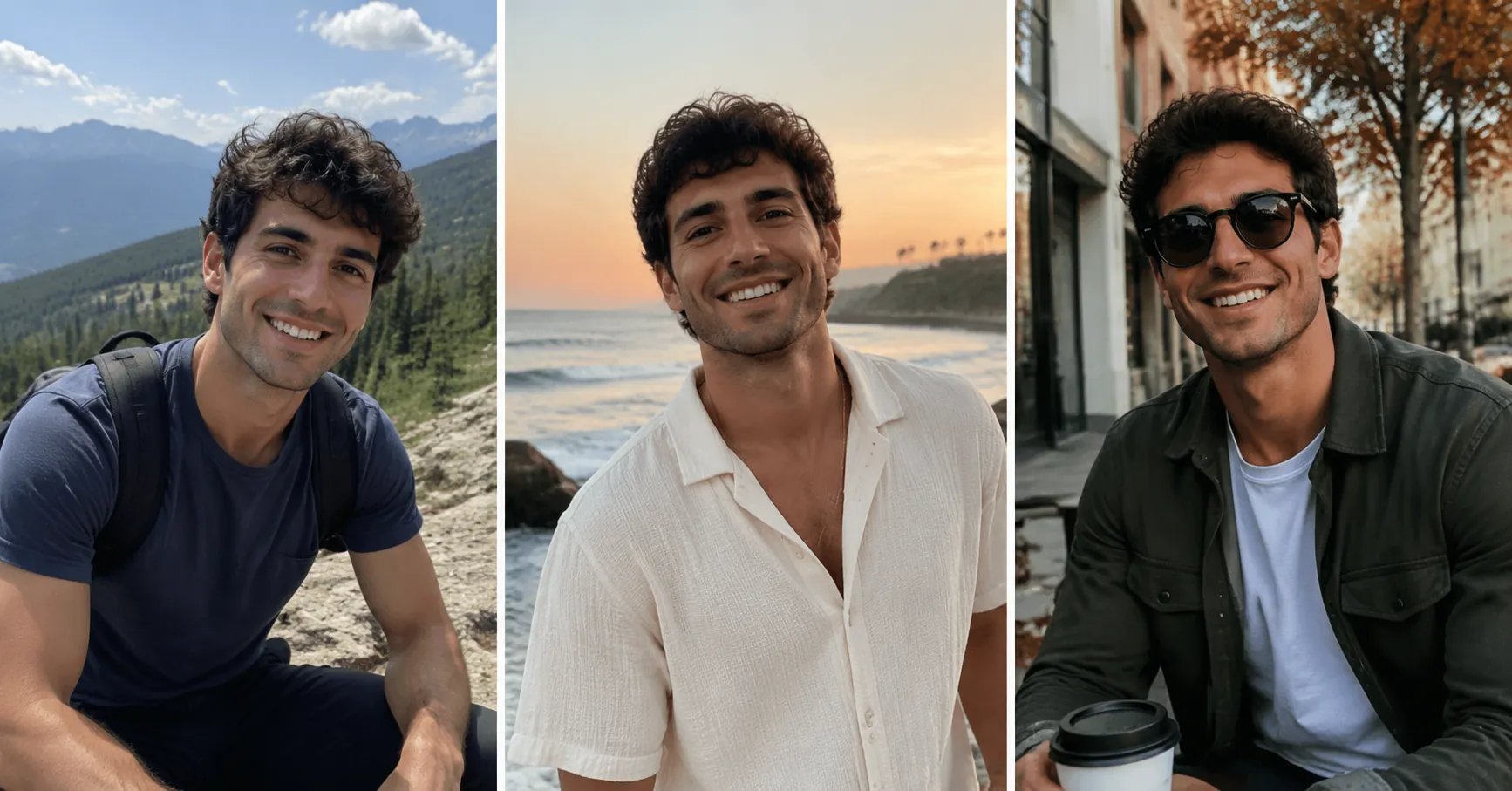
Don't bet everything on one photo. Capture or generate three candidates with different backgrounds, outfits, and expressions. Window light, mid-morning outdoor light, and golden hour all work. Keep the framing consistent: chest-up, single subject, clean background.
4. Stress-test the candidates
Show three candidates side by side to two friends and ask only one question: "Which photo would you swipe on, and what's the vibe in three words?" The winner usually wins decisively. If results split, your photos are too similar. Push variation harder.
5. Check fake-risk before you upload
If any candidate is AI-generated or heavily edited, run it through a realness check before it becomes your lead. A first photo that triggers a trust penalty drags the rest of your profile down with it. For a full landing-page walkthrough of how to build a Tinder-ready set of AI-assisted shots, see our Tinder AI photos guide.
6. Watch the first 48 hours
After uploading, give it 48 hours. Compare match velocity to your previous baseline. If matches drop sharply, your new lead photo is being penalized in distribution. Swap it back and try a different candidate.
Make Sure Your First Photo Passes the Test
Before you upload your new lead photo, run it through our free Realness Score Analyzer to catch fake-risk issues that hurt distribution.
Free analysis • Instant results • No signup required
AI-assisted dating photos are now mainstream, but Tinder's trust systems have also matured. The rule for 2026 is simple: your first photo, specifically, should be the most realistic one in your stack. Save more stylized AI shots for positions 3-6, where the swiper has already committed to looking at your full profile.
That means even if you're generating photos from selfies, the lead image should be the one that looks most like an actual moment from your life: natural lighting, plausible setting, real-world outfit. If you can't tell it apart from a phone photo a friend took, you're in the safe zone for both human trust and algorithmic ranking.
Final Thoughts
Your tinder first photo in 2026 has two judges: a swiper who will decide in under two seconds, and an algorithm that will decide how many swipers ever see you. The good news is they reward the same things: clarity, a visible face, a real lifestyle signal, and a low fake-risk feel.
If you fix only one thing on your Tinder profile this month, fix the first photo. Audit your current lead, generate or shoot three real alternatives, stress-test them, and watch the 48-hour match velocity. That single change usually moves results more than any bio rewrite or prompt tweak. The final CTA below is the easiest place to start a full upgrade.
Transform Your Dating Profile Today
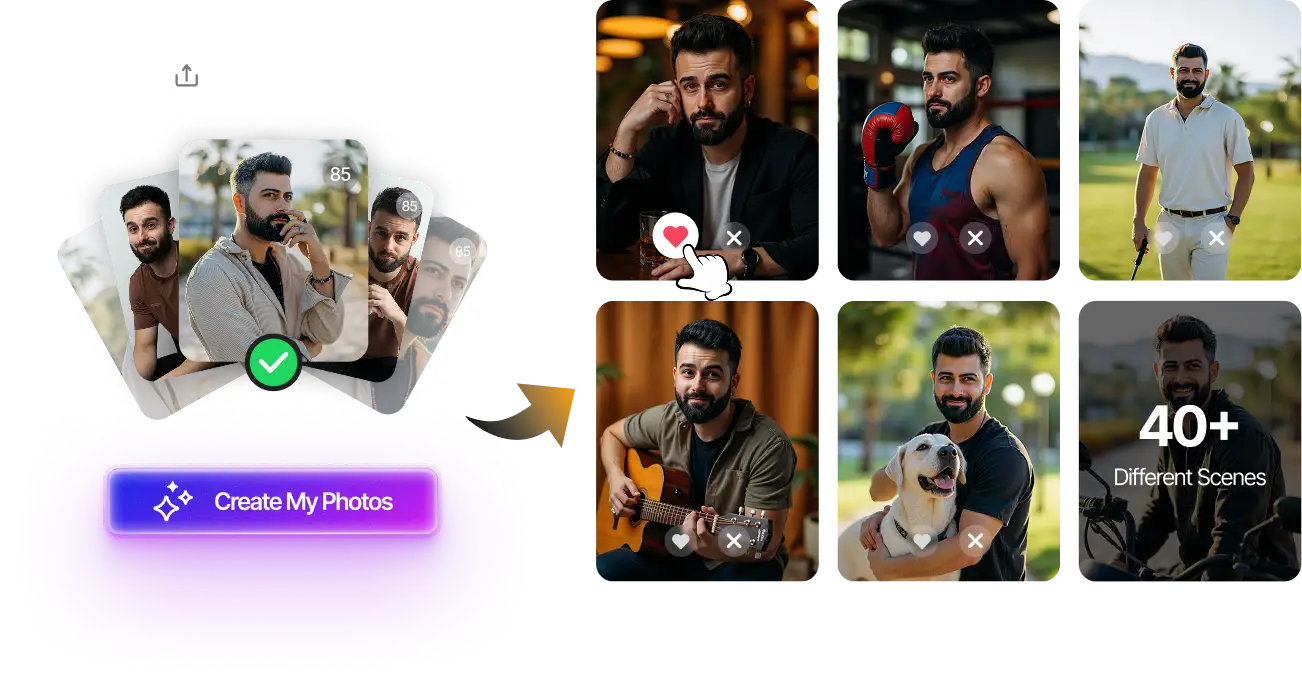
Upload your selfies, get 80-200 AI-optimized dating photos in just 20 minutes. No photoshoot needed.
Does Tinder's algorithm really treat the first photo differently?
Yes. The first photo is what most users see in the card stack, so it drives the early right-swipe and left-swipe signals that Tinder uses to decide how widely to distribute your profile. Weak first photo = weak early signal = lower distribution.
Should my first Tinder photo be a smiling headshot?
Usually yes. A chest-up shot with a visible face, a genuine expression, and a real background tends to outperform full-body shots, group photos, or stylized portraits as the lead image.
Can I use an AI-generated photo as my first Tinder photo?
You can, but it should be the most realistic AI photo in your set. Lead with photos that look like real moments, and save more stylized AI shots for positions 3-6 where users have already committed to viewing your profile.
How long should I test a new first photo before swapping it?
Give it about 48 hours of normal usage. That's usually enough to see whether match velocity is higher, lower, or flat compared to your previous lead photo.
Do group photos ever work as a first photo on Tinder?
Almost never. Even if you look great in a group shot, viewers spend their decision time figuring out which person you are, and most swipe left rather than guess.