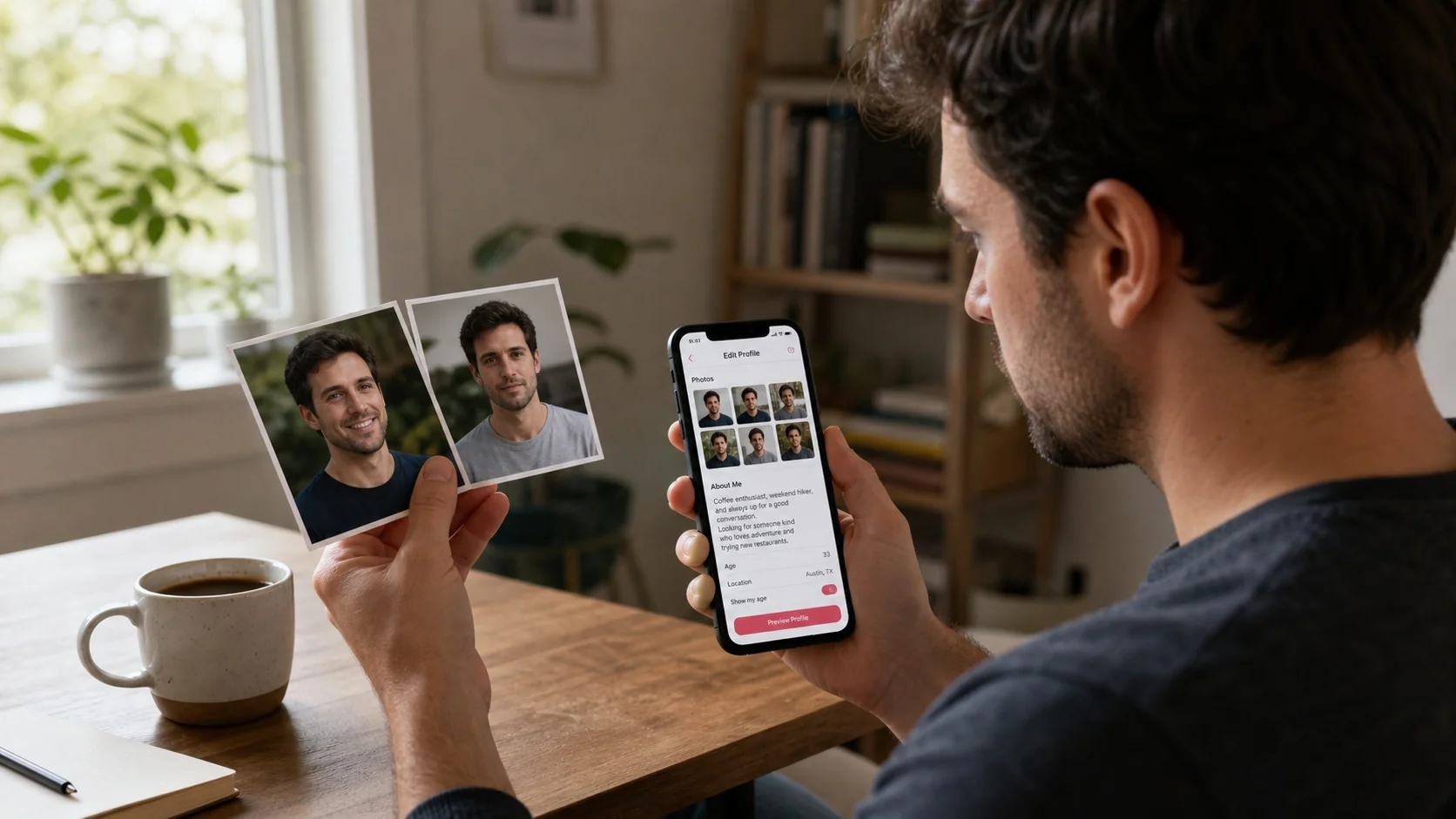
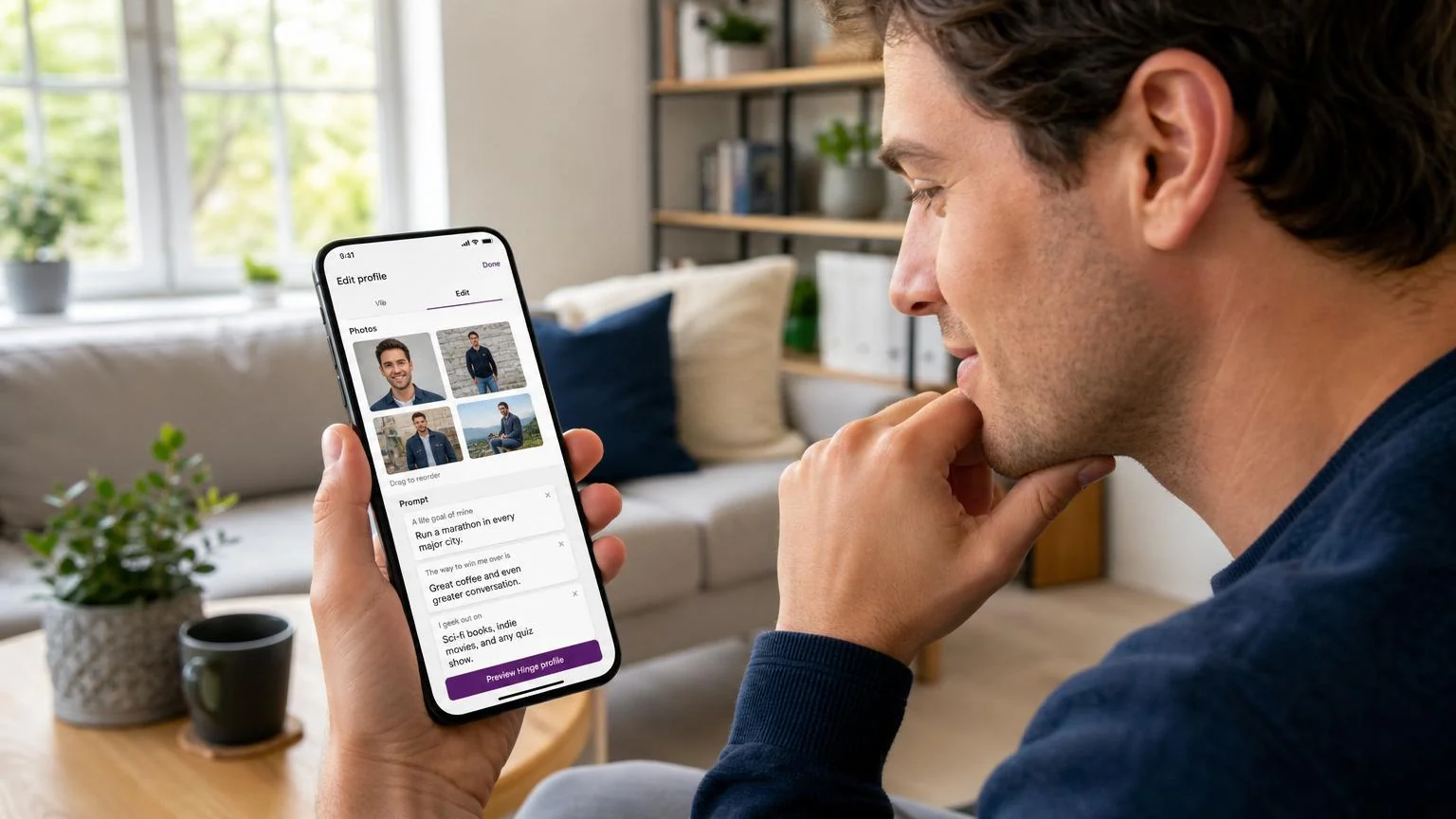
If your Hinge profile photos look great but you're still not getting likes, the problem usually isn't your lighting, your jawline, or your camera. It's that your photos don't say anything about who you are. Hinge is built around prompts and personality signals, so polished headshots that could belong to anyone tend to disappear into the feed.
This guide skips generic dating-photo advice and focuses on how Hinge actually works: each photo should pair with a prompt, hint at a story, or give someone a reason to comment. Below, you'll find photo types tied to specific Hinge prompts, what works on this app versus Tinder or Bumble, and what to avoid even if the shot looks technically perfect.
Check Your Photos Before Hinge Does
Use our free AI Realness Score Analyzer to check if your photos look natural enough for Hinge's culture and detection systems.
Free analysis • Instant results • No signup required
Hinge rewards personality, not polish. A slightly imperfect photo that hints at a hobby beats a flawless studio shot.
Every photo should pair with a prompt. Think of your six slots as visual evidence for the stories your prompts tell.
Comment bait wins. Hinge's like-with-comment model means your photo should give people something specific to ask about.
Avoid Tinder-style energy. Group party photos, mirror selfies, and shirtless gym shots underperform here, even when they're technically good.
Why Hinge Photos Aren't Like Tinder Photos
Hinge markets itself as "the dating app designed to be deleted," and its UX reflects that. Users like specific photos or prompts, not whole profiles. According to Hinge's own design research, profiles that showed more personality cues received significantly more meaningful conversations than profiles built around attractiveness alone.
That changes what a "good" photo means. On Tinder, a strong jawline shot can carry you. On Hinge, the same photo can stall because there's nothing to comment on. Your photos need to do two jobs at once: show you clearly, and give someone a reason to send a thoughtful first message.
This is also why platform-specific photo strategy matters. The shot that crushes on Tinder can quietly underperform on Hinge, even with identical lighting and styling.
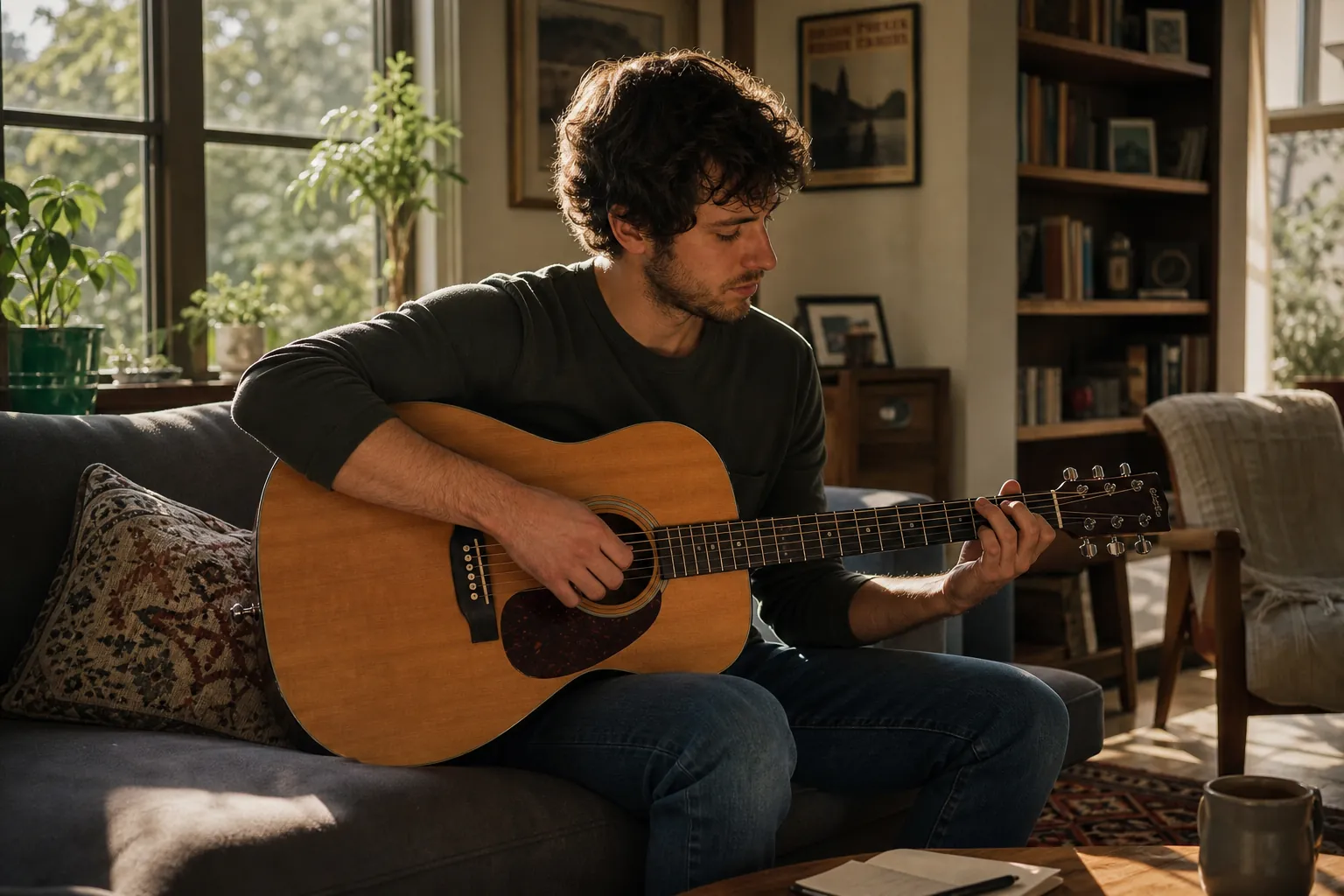
A hobby-in-action shot gives someone a specific thing to comment on — far better than a generic headshot.Six Hinge Photo Types (Each Tied to a Prompt)
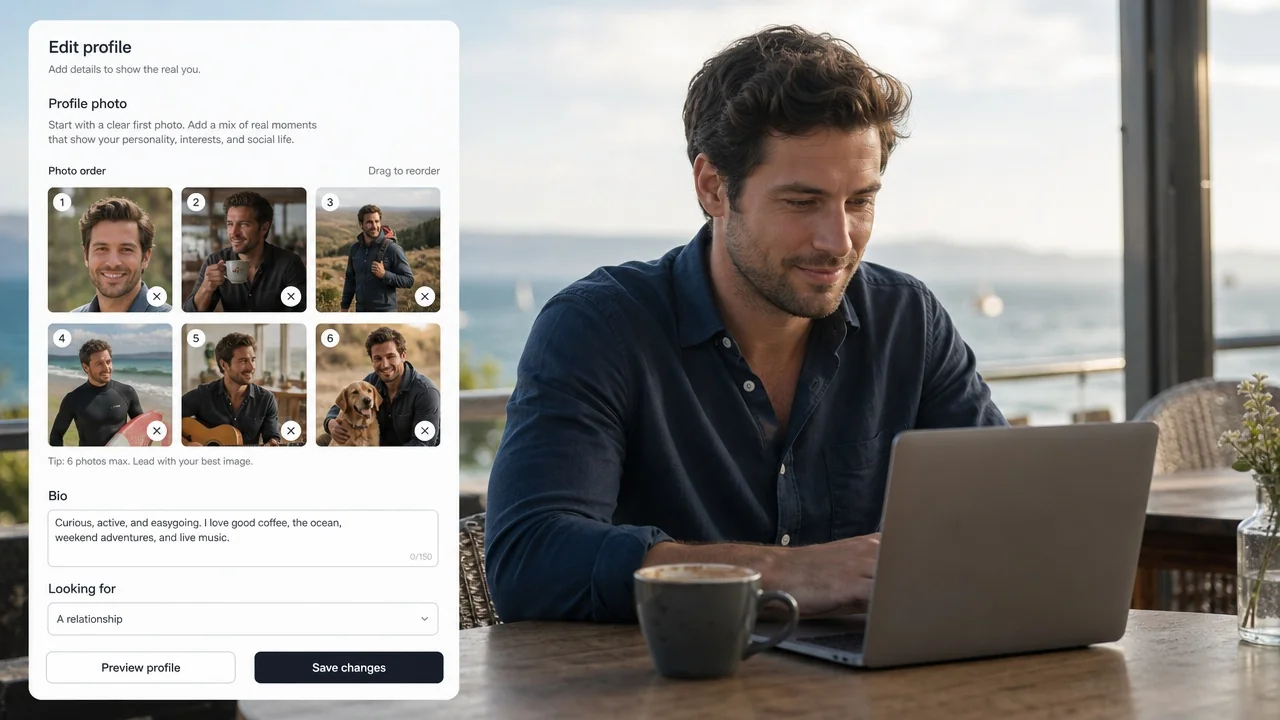
Hinge gives you six photo slots. Instead of filling them with variations of the same headshot, treat each one as evidence for a specific personality signal. Here's how to match photo types to Hinge's prompt library.
Slot
Photo Type
Pair With Prompt
Personality Signal
1
Clear face shot, natural smile
"My simple pleasures"
Approachable, easy to talk to
2
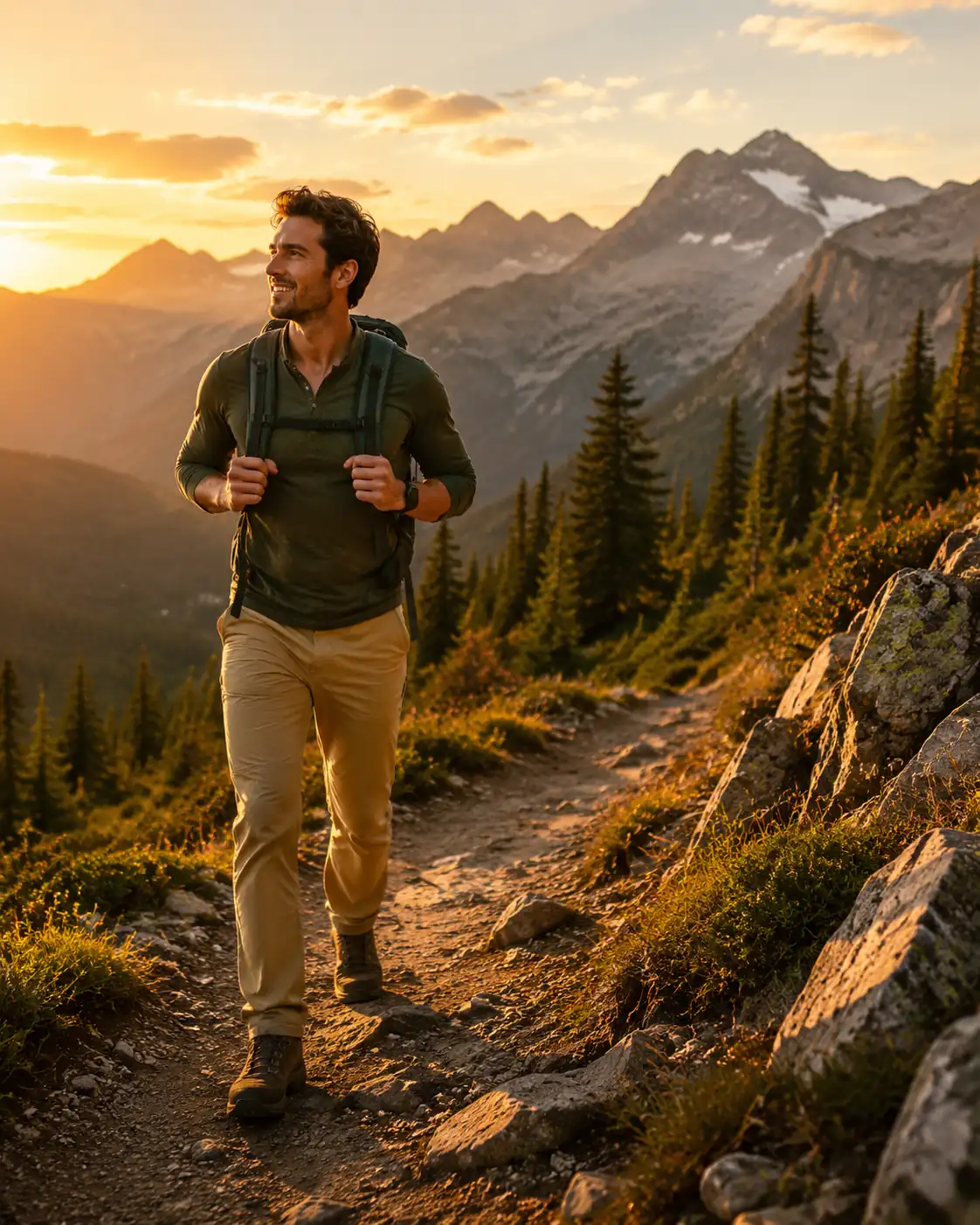
Full-body context shot (hiking, cooking, café)
"A perfect Sunday looks like…"
Lifestyle, weekend compatibility
3
Hobby in action (climbing, painting, playing guitar)
"I'm weirdly attracted to…"
Passion, depth, conversation starter
4
Travel or location shot
"The last place I traveled to…"
Curiosity, openness
5
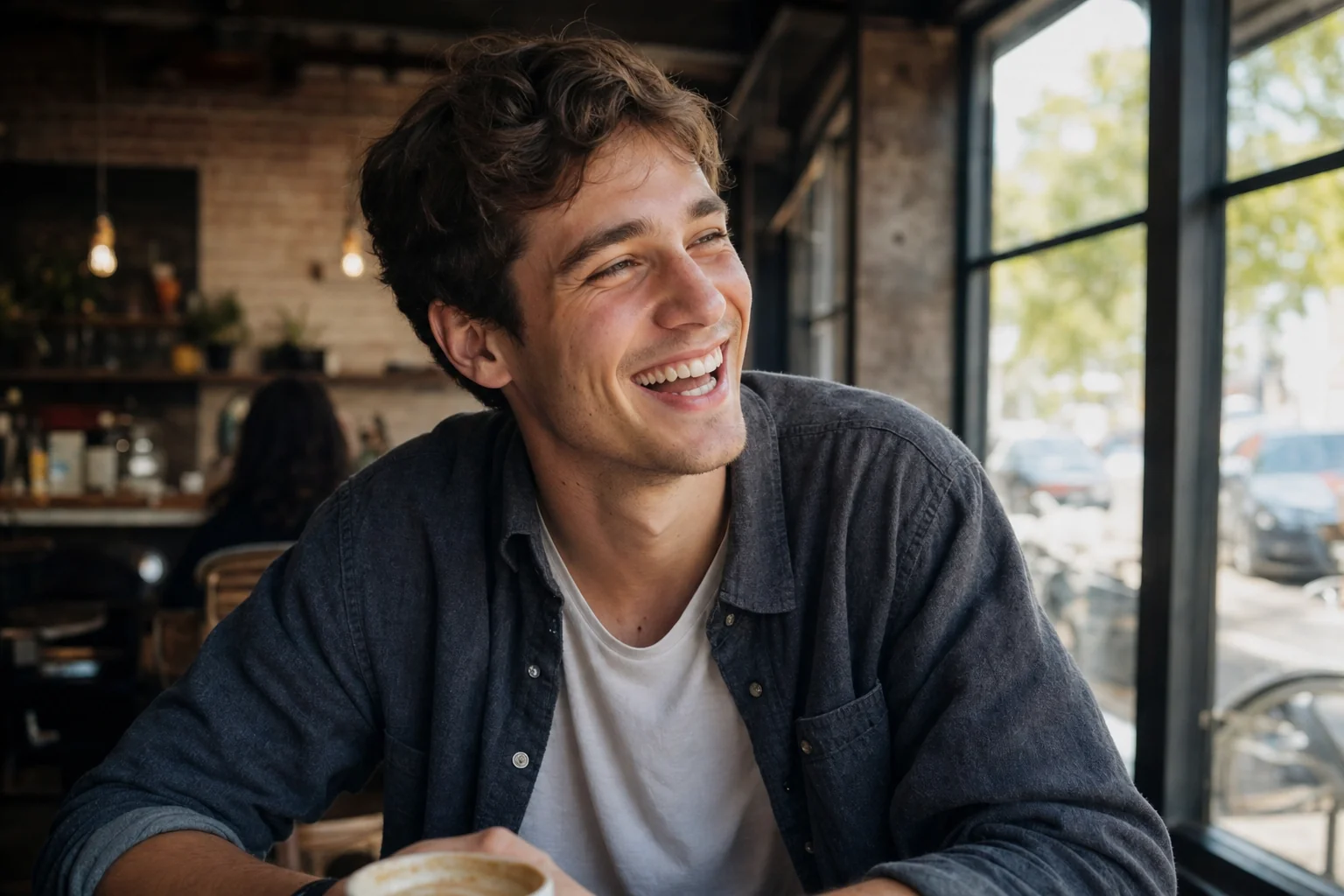
Candid laughing or talking shot
"Two truths and a lie"
Warmth, sense of humor
6
Quirky or specific shot (pet, instrument, food project)
"Dating me is like…"
Uniqueness, comment bait
Notice that none of these slots are "shirtless mirror selfie" or "group photo with five friends." That's intentional. Hinge's audience skews toward people looking for relationships, and the photos that perform best mirror that intent.
A hobby-in-action shot gives someone a specific thing to comment on, far better than a generic headshot.
What Actually Works on Hinge
Across the profiles that get consistent likes and comments, a few patterns repeat. None of them require a professional photographer or a studio setup. They require intention.
1. Specificity over polish
A photo of you holding a sourdough loaf you actually baked beats a flawless studio headshot every time. Specificity creates comment hooks. When someone sees "is that a tartine recipe?" forming in their head, they're already drafting a like-with-comment.
2. Real environments, not blurred backgrounds
Hinge users tend to mistrust photos with aggressively blurred or generic backgrounds. They read as either dating-app stock or AI-generated. Real coffee shops, real living rooms, real trails work better. If you use AI-generated photos, the background should still feel like a specific place, not a soft gradient. Our guide on AI photo backgrounds for dating apps goes deeper on this.
3. One photo with other people (carefully)
Unlike Tinder, where group photos confuse swipers, one well-composed photo with friends or family can work on Hinge, but only if it's clear which person is you and the context signals something (a wedding, a hike, a dinner you cooked). Skip the bar group shots.
4. Eye contact in at least two photos
Direct eye contact reads as confident and present. Hinge profiles that bury the user behind sunglasses, hats, and side-angles in every photo tend to get fewer comments because viewers can't form a connection with a face they haven't really seen.
5. Photo-prompt alignment
This is the single biggest difference between profiles that get likes and profiles that don't. If your prompt says "I geek out on…ramen," one of your photos should show you with ramen, in a ramen shop, or cooking it. The visual evidence makes the prompt land.
Check Your Photos Before Hinge Does
Run your current Hinge photos through our free Realness Score Analyzer to spot the ones that look too polished, too AI, or too generic.
Free analysis • Instant results • No signup required
Hinge's culture punishes some photo types that perform fine on other apps. If your profile leans heavily on any of these, you're likely losing matches you'd otherwise get.
Shirtless gym mirror selfies. Even with great lighting and a strong physique, these read as low-effort and Tinder-coded.
Multiple group photos in a row. Hinge users want to know who you are within the first two slots, not solve a Where's Waldo puzzle.
Photos where you're wearing sunglasses or a hat in 3+ slots. You're effectively hiding your face. Hinge's prompt-driven UX needs facial expressions to land.
Heavily filtered or over-edited photos. Hinge's audience reads these as untrustworthy, and the platform's design tilts toward authenticity signals over polish.
Six versions of the same shot. Same outfit, same setting, same expression. Even if each photo is technically good, the profile feels one-dimensional.
Photos with exes cropped out. Hinge's review process flags these, and they read as red flags to users too.
Generic AI-generated photos with no specificity. Hinge's moderation has gotten better at flagging this, and users are increasingly skeptical. If you use AI photos, they should pass for natural. See our guide on how to use AI photos on Hinge for the specifics on what flies and what doesn't.
How to Audit and Rebuild Your Hinge Photo Lineup
If you're not getting the volume or quality of likes you want, here's a step-by-step audit you can run in about 30 minutes.
Step 1: Pull all your current photos into one folder
Look at them side by side, outside the Hinge app. You'll notice patterns you can't see when scrolling one at a time, too many of the same expression, the same outfit, or the same setting.
Step 2: Map each photo to a prompt
For each photo, ask: "What prompt could this photo back up?" If a photo doesn't connect to anything you'd write about yourself, it's filler. Replace it.
Step 3: Score each photo on "comment-ability"
Imagine someone looking at this photo and trying to write a comment. Is there a specific thing to ask about, a book, a place, a piece of gear, a food? If not, the photo is doing aesthetic work but no conversational work.
Step 4: Check variety across the six slots
You should have a mix of indoor and outdoor, solo and (maybe one) with people, posed and candid, close-up and full-body. If all six photos are headshots, you're losing context. If all six are wide environmental shots, viewers won't know what you look like.
Step 5: Rewrite prompts to match your strongest photos
This is the step most people skip. Once you've identified your three best photos, write or rewrite prompts that specifically reference what those photos show. Photo-prompt pairing is what Hinge is built around. For full prompt examples, see our list of Hinge prompts that pair with AI photos.
Step 6: Test for two weeks before changing again
Hinge's algorithm needs time to recalibrate after a profile change. Don't keep swapping photos every two days. Give the new lineup at least 10–14 days to show real performance.
If You're Using AI Photos on Hinge
AI photos can work on Hinge, but the bar is higher than on Tinder. Hinge users notice when something feels off: uniform skin texture, hands that don't quite work, backgrounds that are suspiciously blurred. The fix isn't to avoid AI photos. It's to make sure they read as natural and specific.
A few rules if you're going this route: keep at least two unmistakably real photos in your lineup, choose AI shots with specific environments rather than gradient backgrounds, and make sure each AI photo backs up a prompt you'd actually answer in conversation. "I painted this last weekend" works. "Generic man in generic café" doesn't.
Final Thoughts
Strong Hinge profile photos aren't the ones with the best lighting. They're the ones that give someone a reason to comment. The app is built around prompts and personality signals, so every slot in your lineup should pull double duty: show you clearly, and tell a story someone can ask about.
Run the audit above, pair each photo to a prompt, and resist the urge to swap your lineup for polished-but-generic shots. The best Hinge photos look like moments from your actual life, not portfolio pieces.
Transform Your Dating Profile Today
Upload your selfies, get 80-200 AI-optimized dating photos in just 20 minutes. No photoshoot needed.
Fill all six slots. Hinge's algorithm and UX both favor complete profiles, and each empty slot is a missed chance to give someone something to comment on. Variety matters more than quantity beyond six.
Do AI photos work on Hinge?
Yes, but with caveats. AI photos that look natural, show specific environments, and pair with real prompts can perform well. Generic AI headshots with blurred backgrounds underperform and increasingly get flagged. Keep at least two real photos in your lineup.
What's the best first photo on Hinge?
A clear, well-lit face shot with a natural smile and direct eye contact. Avoid sunglasses, hats, and group shots in slot one. Viewers need to know who you are immediately.
Should my Hinge photos match my prompts?
Yes. Photo-prompt pairing is the single biggest factor in whether your profile gets likes-with-comments. If your prompt mentions a hobby or place, one of your photos should visibly back it up.
Why am I getting fewer likes on Hinge than Tinder with the same photos?
Hinge's audience and UX reward personality and specificity, not just attractiveness. Photos that lean on jawline, abs, or party energy underperform here. Swap in hobby shots, candid moments, and prompts that give people something specific to ask about.