The Six-Photo Dating Profile Lineup That Feels Real
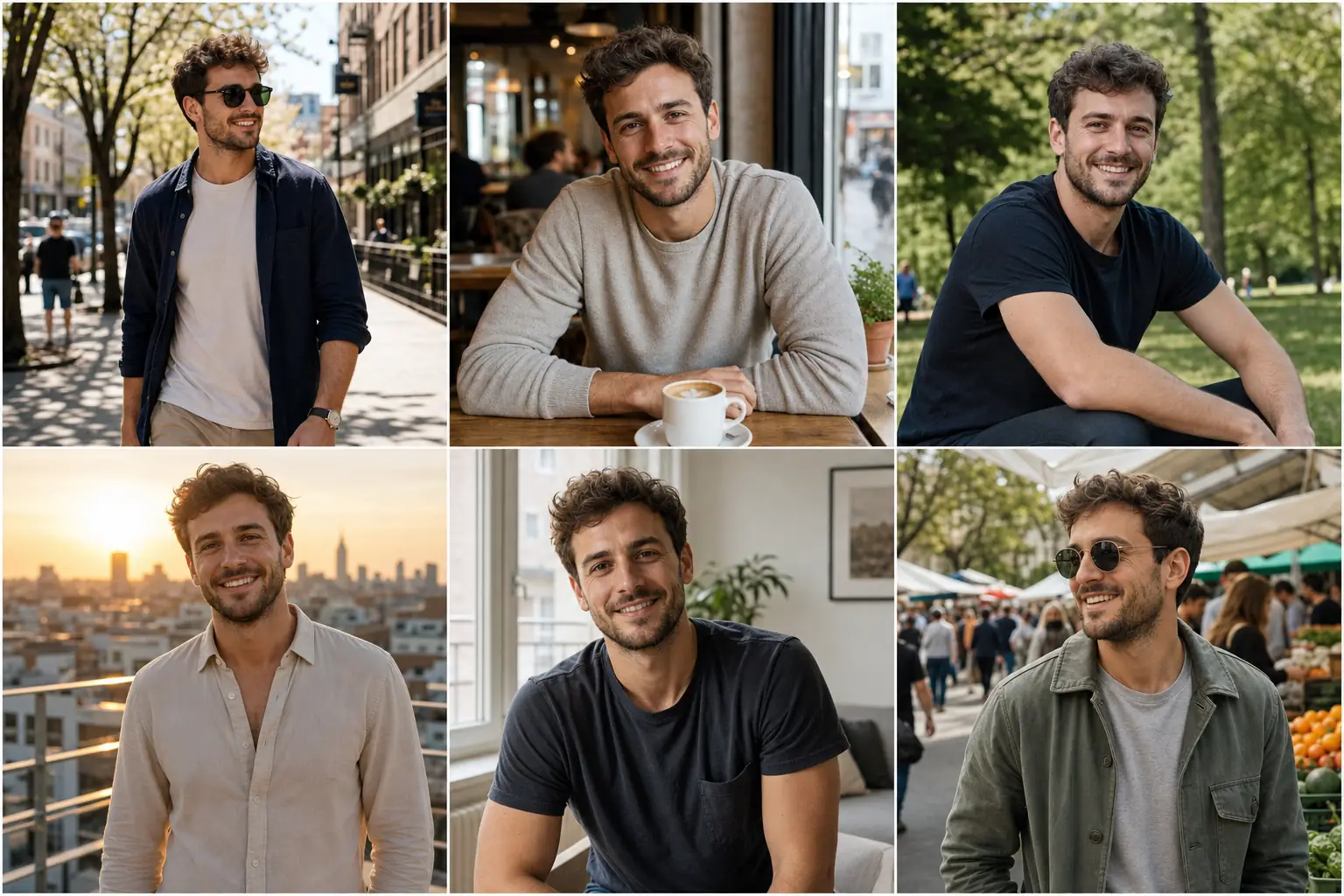
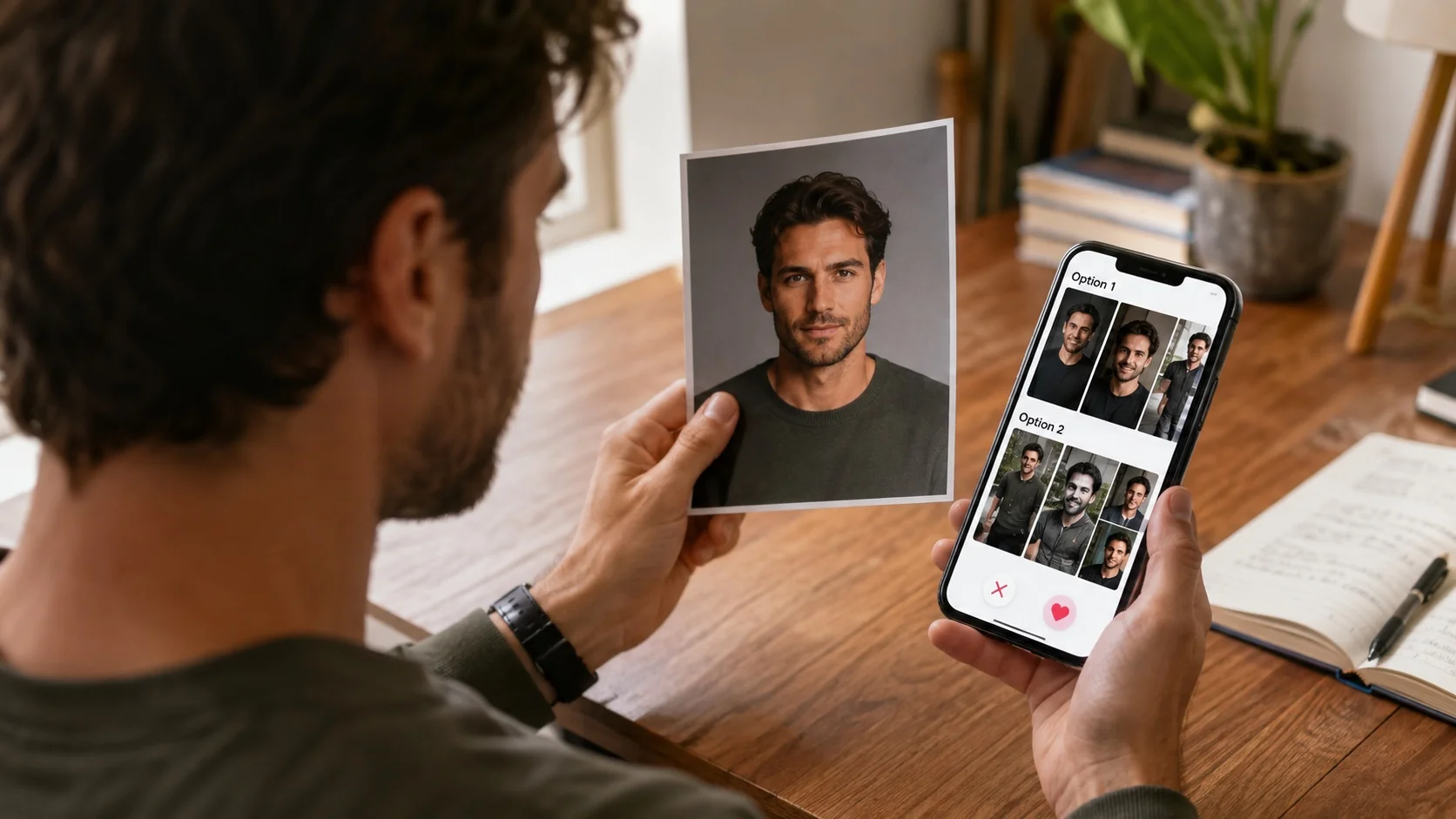
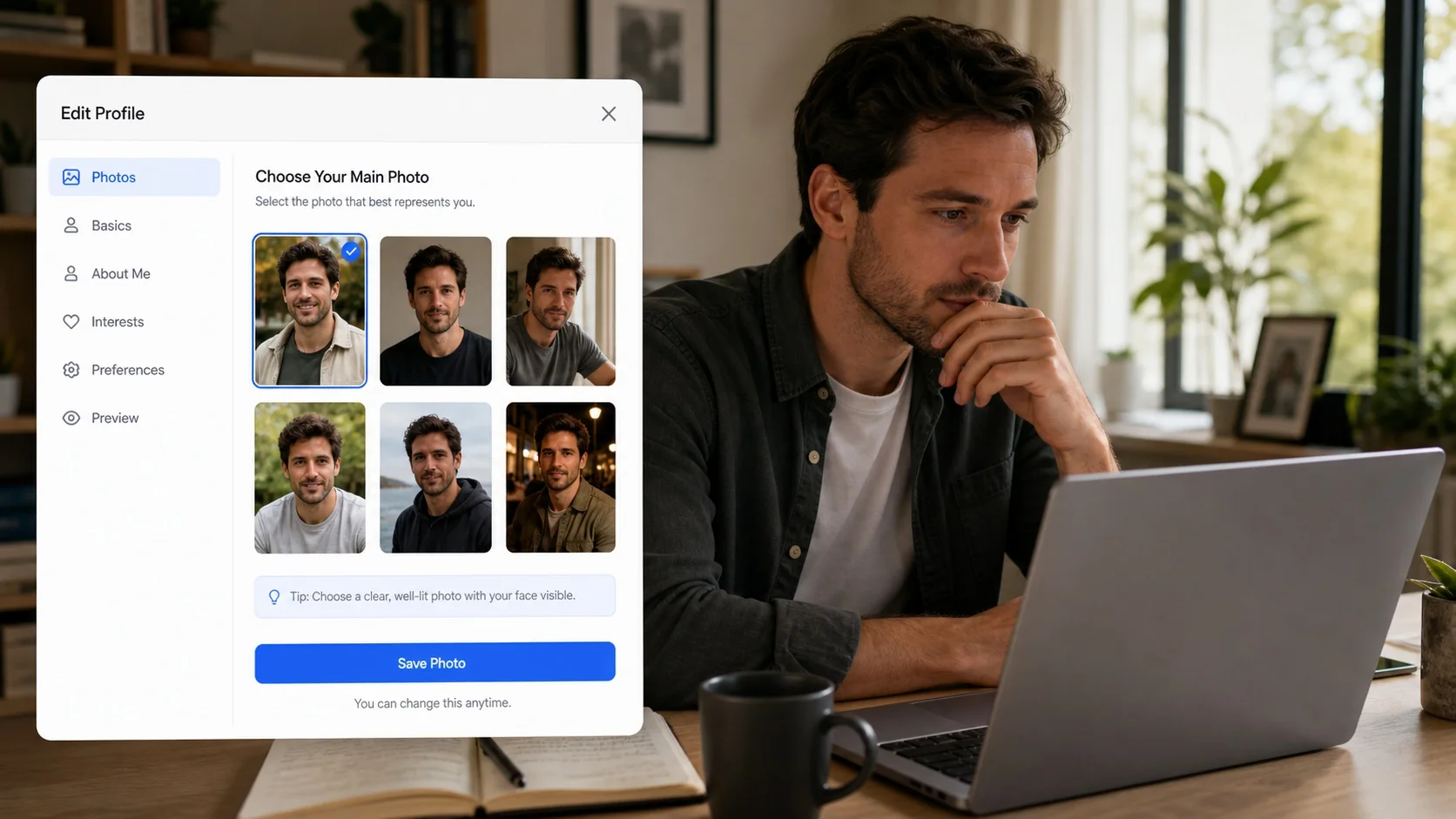
The fastest way to build a dating profile photo lineup that feels real is to stop thinking about "good photos" and start thinking about roles. Six photos, six jobs: a lead portrait, a social proof shot, an activity shot, a full-body shot, a personality shot, and a low-pressure closer. That sequence is what makes a profile feel like a person, not a portfolio.
Most people fail not because their photos are ugly, but because they're redundant. Five flattering headshots in front of the same wall tell a viewer nothing. A lineup with distinct roles answers the silent questions every swiper has: What do you look like? Do other humans like you? What's your life actually like? Would I be comfortable meeting you? Get those answered in order, and you don't need ten photos. You need six good ones.
Key Takeaways
- Six is the sweet spot. Enough variety to feel real, few enough that nothing weak drags you down.
- Each photo needs a job. Lead portrait, social proof, activity, full-body, personality, and a relaxed closer.
- Order matters more than you think. Your strongest portrait leads; your most human shot closes.
- Variety beats polish. Six distinct settings and outfits will outperform six perfect photos taken on the same day.
- The lineup tells a story. If a swiper screenshots all six and lays them out, they should see one consistent person living a recognizable life.
Why Six Photos Is the Right Number
You'll see advice ranging from "use all nine slots" to "three is enough." Both are usually wrong. Three doesn't give a viewer enough to feel confident swiping right. Nine almost always includes filler — and filler is what gets you unmatched after the conversation starts.
Six works because it's the smallest number that can cover every role without repeating one. You get a clear face, evidence you exist in the world, a hint of how you move and dress, and a sense of personality. Anything beyond that is usually a variation of something already in the set. For a deeper look at the math behind this, see our breakdown of how many photos you should actually have.
One quick reality check before we get into roles: a six-photo lineup only works if all six are deliberate. One bad photo in a six-slot profile does more damage than one bad photo in a nine-slot profile, because it's a bigger share of the set. So the bar for inclusion goes up.
The Six Roles, In Plain English
Here's the lineup at a glance. The rest of this guide breaks each one down with what to shoot, what to avoid, and how to know it's working.
| Slot | Role | What It Proves | Common Mistake |
|---|---|---|---|
| 1 | Lead Portrait | What you look like, clearly | Sunglasses, group, or low light |
| 2 | Social Proof | Other people enjoy your company | Hard-to-find you in the crowd |
| 3 | Activity | You have a life outside the app | Generic gym mirror selfie |
| 4 | Full-Body | Your build and style | Hidden behind objects or angles |
| 5 | Personality | How you think or what makes you laugh | Inside jokes nobody else gets |
| 6 | Low-Pressure Closer | You'd be easy to meet for coffee | Trying to be impressive again |
Slot 1: The Lead Portrait
This is the photo that earns the second swipe. It needs to do one thing: show your face, clearly, in good light, with an expression that doesn't look like a hostage photo or a LinkedIn header.
The rules are boring but non-negotiable. Face the camera or close to it. Natural light if possible, soft window light if not. No sunglasses. No hat low over the eyes. No group shot. A small genuine smile beats a big forced one, and a relaxed mouth beats both if your eyes are doing the work.
If you only nail one photo in the whole lineup, nail this one. Everything that follows is judged against it. For more on how the first photo is increasingly weighted by app ranking systems, see why your first Tinder photo is now competing with an algorithm.
Check Your Photos Before Tinder Does
Use our free AI Realness Score Analyzer to check if your photos might trigger detection systems.
Free analysis • Instant results • No signup required
Analyze Your Photos Free →Slot 2: The Social Proof Shot
This is where most lineups go wrong. The social proof shot is supposed to show you with other people enjoying themselves. The mistake is making it impossible to figure out which person is you.
Rules that actually work:
- You're clearly identifiable — center frame, in focus, or the only one making eye contact with the camera.
- Two to four other people, max. A photo with eleven people in it reads as "crowd," not "friends."
- Everyone looks like they're having a normal time. No props, no themed costumes, no bachelor party energy.
- It's recent enough that you actually look like that now.
One thing worth noting: a social proof photo with friends will almost always outperform an AI-generated solo shot in this slot, because the whole point is that other humans chose to be near you. For a closer look at that trade-off, see group photos vs AI solo photos.
Slot 3: The Activity Shot
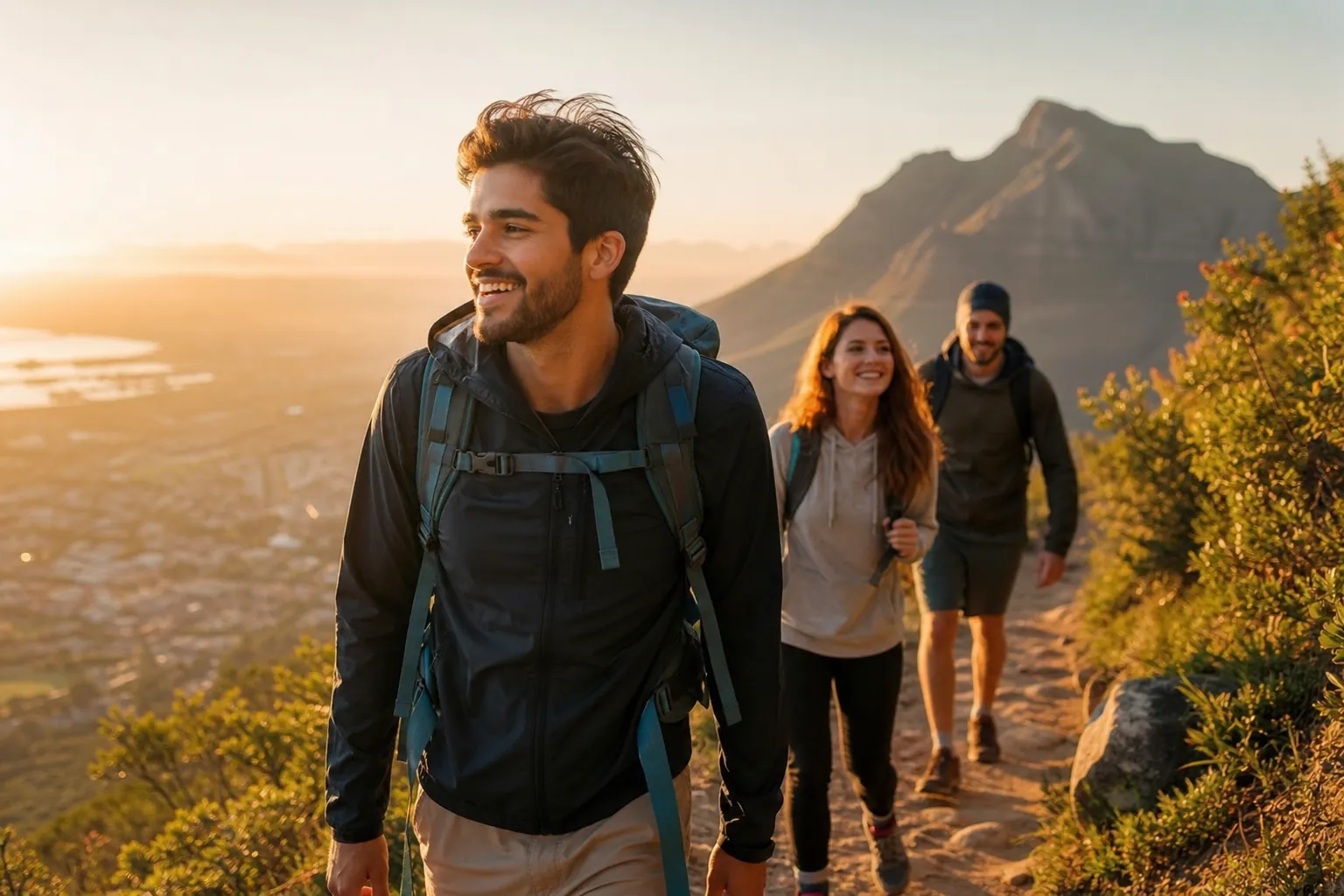
The activity slot answers the question "what does this person do when they're not on the app?" Hiking, cooking, playing an instrument, surfing, climbing, walking the dog, riding bikes — anything where you're absorbed in something instead of posing for a camera.
The trick is making it look incidental. The best activity shots feel like someone took the photo of you mid-activity, not like you stopped, set up the shot, and pretended to climb. Mid-laugh, mid-step, mid-stir, mid-cast. Motion sells the moment.
Skip the activities that have become app clichés unless they're genuinely yours: holding a fish you caught, mid-deadlift gym selfies, and the rented-tux wedding photo are all overrepresented. If hiking really is your thing, shoot it. If you went on one hike in 2023, find something else.
Slot 4: The Full-Body Shot
Skipping this slot is the single most common mistake in dating profiles. People assume hiding their body builds curiosity. It does the opposite — it builds suspicion. A profile with five face shots and no full-body photo reads as "hiding something," which is worse than whatever you think you're hiding.
What a good full-body shot needs:
- You're standing or walking naturally, not statue-posing.
- Your outfit fits and matches the kind of person you are off the app.
- The background isn't competing with you. A street, a park, a doorway — fine. A crowded festival — too much.
- Shot from a normal eye-level distance, not from a drone or a friend lying on the ground.
Honest framing matters more than "flattering" framing here. If your photos suggest one body and you arrive at the date with a different one, the date is already going badly before you sit down.
Slot 5: The Personality Shot
This is the slot that separates a profile that gets swipes from a profile that gets messages. The personality shot has to show a glimpse of how you think, what amuses you, or what kind of weird you are — without being so inside-joke that nobody else can get on board.
Examples that tend to work: you mid-laugh at something off-camera, you reading on a couch with a dog half on top of you, you in a kitchen mid-disaster, you holding something specific to a hobby in a way that invites a question. The viewer should walk away with at least one possible opener: "Wait, is that a [thing]?"
Examples that don't work: ironic peace signs, deadpan stares, anything that requires a caption to make sense. If you'd have to explain the photo to a stranger, a stranger swiping at 11pm definitely isn't going to figure it out. For more on how personality is becoming the differentiator on Hinge specifically, see why Hinge profile photos need personality, not just better lighting.
Slot 6: The Low-Pressure Closer
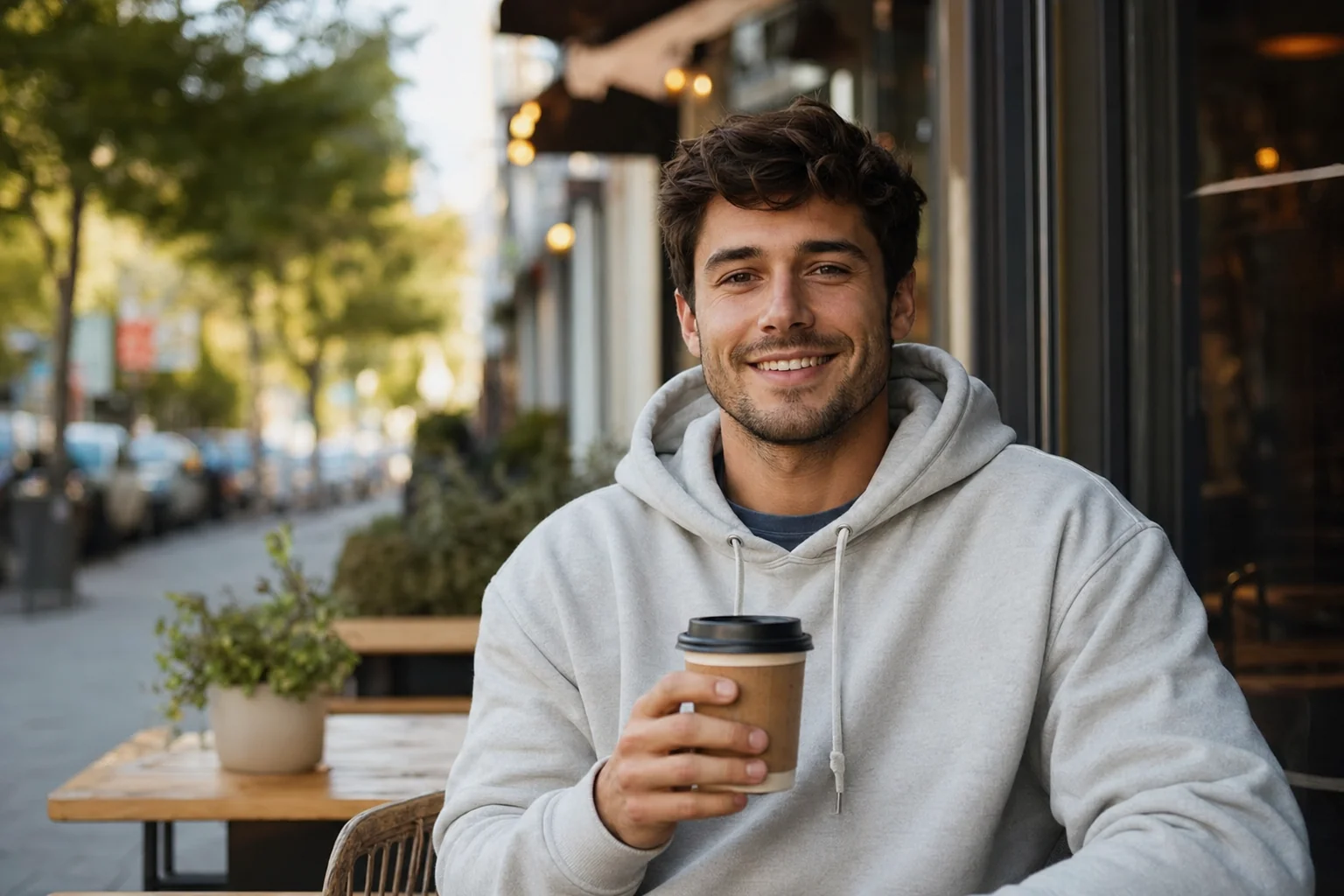
The closer is the photo that says "meeting me would be easy." After five photos that have been quietly making the case for you, the last slot pulls back and lowers the stakes. This is not the slot for your best portrait, your most impressive achievement, or your most stylish outfit.
A good closer is something like: you in a hoodie with a coffee, you at a casual outdoor table with a beer, you sitting on the floor with a cat in your lap, you in regular weekend clothes doing nothing in particular. The vibe is, "if we met, this is what hanging out would actually feel like."
This is also the slot where a relaxed AI photo can quietly do real work — a low-pressure casual shot in natural settings is one of the easier roles to fill if your camera roll is short. If you're filling gaps in your lineup, our dating photo generator is designed around exactly these role-based shots rather than just generating ten variations of the same headshot.
How to Order Your Six Photos
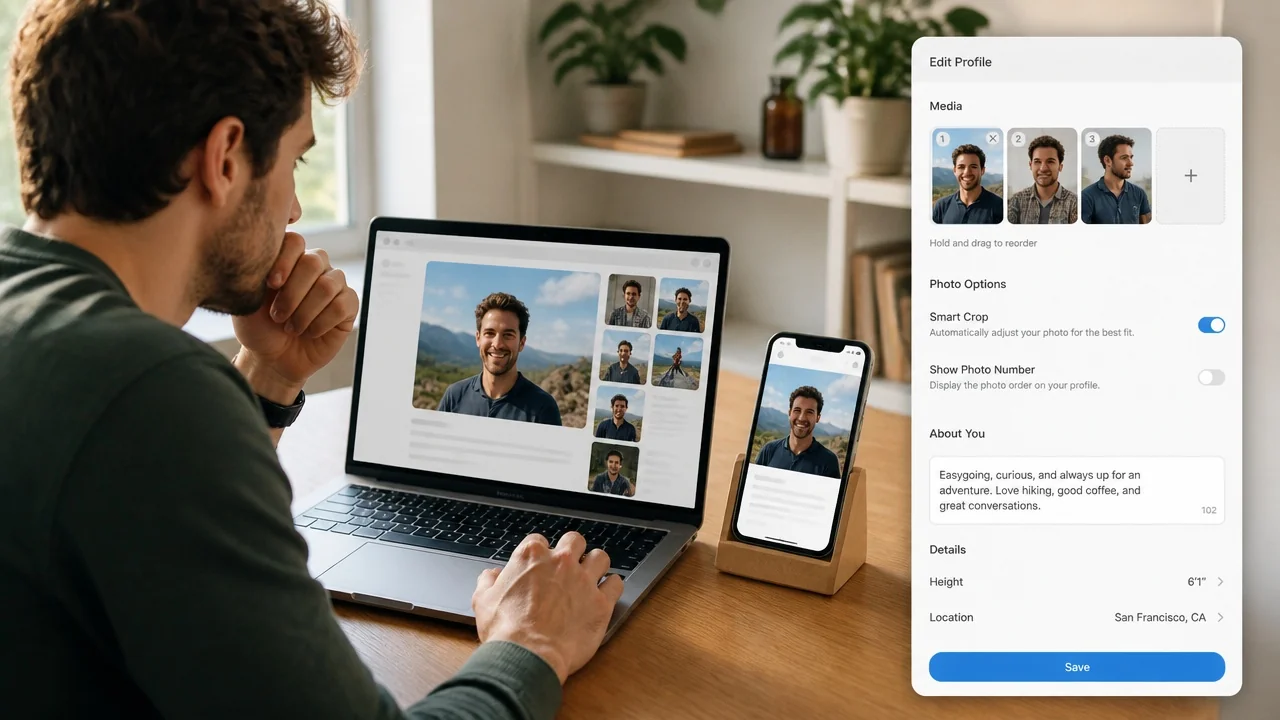
Order is doing more work than most people realize. Apps weight earlier photos more heavily in their ranking and in how viewers form an impression. A profile with the right six photos in the wrong order can underperform a weaker set in the right order.
The default sequence that works for most people:
- Lead portrait — earns the first swipe.
- Full-body — answers the silent body question before suspicion builds.
- Activity — shows a life.
- Social proof — confirms you're a normal person other people enjoy.
- Personality — gives them something to message you about.
- Low-pressure closer — leaves the impression that meeting would be easy.
You can swap slots 2 and 3 depending on which photo is stronger, and you can move the personality photo earlier if it's exceptional. The two slots that are basically fixed: the lead portrait first, and the closer last. For more on placement strategy when you're mixing AI and real photos, see photo order on dating apps: AI vs real placement.
Common Mistakes That Wreck a Six-Photo Lineup
- Two photos doing the same job. Two portraits, two gym shots, two beach trips. Each slot should answer a different question.
- All photos from the same day. Same haircut, same outfit, same lighting across all six reads as a single photoshoot, not a life.
- Group photo as the lead. Viewers have less than two seconds to figure out which one you are. They won't.
- Hiding the full body. Cropping at the shoulders for all six photos is the loudest possible signal that you're hiding something.
- Trying too hard in the closer. The final photo isn't where you peak — it's where you exhale.
- Sunglasses in more than one slot. If a viewer can't see your eyes in any photo, the rest of the profile is doing rescue work it shouldn't have to.
For a broader audit of what each photo type should and shouldn't do, our guide to the 10 photo types every dating profile needs covers the variations within each role.
Final Thoughts
A great dating profile photo lineup isn't six flattering photos — it's six photos doing six different jobs. The lead portrait earns the swipe, the social proof and full-body shots build trust, the activity and personality shots give someone a reason to message, and the closer makes meeting feel easy. When all six roles are filled by distinct photos, the profile reads as a real person, not a marketing campaign.
If you're staring at a camera roll that doesn't cover all six roles, you don't need a new wardrobe or a photographer — you need to figure out which roles are missing and fill them deliberately. Start by laying your current photos out in order and asking, for each one, what job is this doing? Any photo you can't answer for is a photo that's taking a slot from one that could be working harder.
Transform Your Dating Profile Today
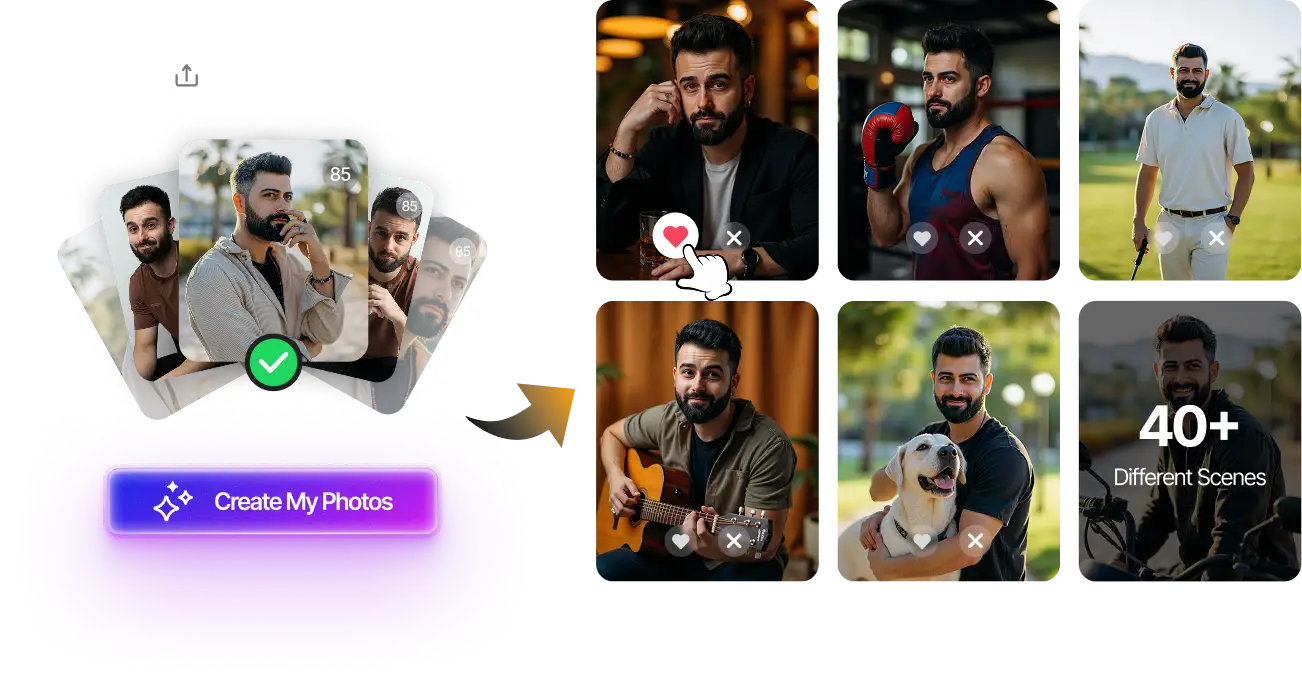
Upload your selfies, get 80-200 AI-optimized dating photos in just 20 minutes. No photoshoot needed.
100+ unique photos • Privacy-first • One-time payment
Get Started Now →FAQ
How many dating photos should I have on my profile?
Six is the sweet spot for most people. It's enough variety to cover every role — portrait, social proof, activity, full-body, personality, closer — without forcing you to include filler photos that quietly drag the profile down. Three is too thin to feel real; nine almost always includes at least two redundant shots.
Does the order of dating profile photos really matter?
Yes. Earlier slots get more visual weight from both viewers and the app's ranking signals. The lead portrait should always go first because it earns the second swipe. The low-pressure closer should always go last because it sets the impression viewers leave with. Everything in between can shift based on which photos are strongest.
Should every photo be a different outfit and location?
Different is better than identical, but you don't need six different cities. Aim for six distinct visual signatures — different settings, different lighting, ideally different outfits — so the lineup reads as a life, not a single photoshoot. Two photos shot on the same day in the same shirt should never both make the cut.
Can I use AI photos for some of the six roles?
Yes, especially for roles where your camera roll is thin — full-body shots, activity shots, and the low-pressure closer are the easiest to fill with AI. The lead portrait and social proof shot are harder to replace because viewers are scanning hardest at those moments. The goal is a profile that feels consistent, whether each individual photo was taken by a friend, a tripod, or a model trained on your selfies.
What if I don't have a good social proof photo?
If you genuinely don't have a clean group shot, skip the slot before you force a bad one in. A profile with five strong photos beats a profile with five strong photos and one awkward group shot where nobody can tell which person is you. You can fill the empty role with a second personality or activity shot until you get a real one.